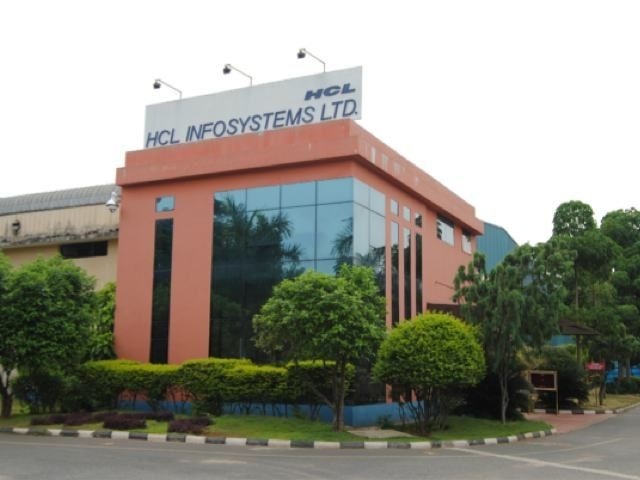
HCL Infosystems FY26: A ₹33 Crore Loss, a Dismantled Business, and the Ultimate Promoter Lifeline
Section 1 — At a Glance
A severe multi-year destruction of corporate value has left HCL Infosystems Limited in a state of operational standstill. In the financial year ended March 31, 2026, the company recorded a consolidated net loss of ₹32.91 crore, bringing yet another chapter of red ink to an enterprise whose net worth has been entirely eroded. The consolidated reserves have plummeted deep into negative territory, ending the fiscal year at ₹-362.41 crore. Operating as a hollow corporate shell, the company has shut down nearly all of its historic business segments, including its distribution, hardware solutions, and learning operations. It now exists solely to service legacy system integration projects and outstanding annual maintenance contracts, with absolutely no new business expected to be onboarded.
Investor attention remains intensely focused on the company’s precarious status as a going concern. Total current liabilities have ballooned to exceed total current assets by a staggering ₹48,369 lakhs on a consolidated basis, creating a state of structural insolvency that would instantly collapse without massive external intervention. Survival is completely contingent upon interest-free unsecured loans, non-convertible debentures, and corporate guarantees provided by its ultra-resourceful promoter entities, HCL Corporation Private Limited and HCL Capital Private Limited. A business model cannot permanently substitute operational cash generation with continuous promoter infusions without facing terminal structural decay. While a major arbitration award against the Unique Identification Authority of India (UIDAI) has been won, it remains locked in bitter high-court litigation, leaving the company’s immediate future entirely dependent on the strategic patience and deep pockets of its parent group.
Section 2 — Introduction
HCL Infosystems Limited was incorporated in 1986, emerging during the early waves of India’s technology boom as a pioneering giant in IT hardware manufacturing, computer distribution, and massive system integration solutions. For decades, it was a household corporate name, carrying the prestige of the HCL brand alongside its multi-billion-dollar sister entity, HCL Technologies.
However, mismanaged high-risk legacy contracts, persistent project delays, severe margin erosion, and unrecoverable public sector receivables dragged the company into a catastrophic financial downward spiral. Over the past several years, management executed a systematic retreat, orchestrating a complete structural shutdown of its core hardware products, learning, and distribution businesses. Today, the once-sprawling hardware empire has been completely dismantled, leaving behind a highly distressed legacy clean-up operation tasked with honoring old maintenance agreements and battling through multi-year arbitration courtrooms to salvage frozen dues.
Section 3 — Business Model: WTF Do They Even Do?
If you pick up a historical brochure of HCL Infosystems, you will see glorious descriptions of a highly diversified technology powerhouse split across four distinct business segments: IT Distribution, Hardware Products and Solutions, Learning Systems, and Infrastructure Services.
Let us clear up the confusion: that business no longer exists.
Management has systematically liquidated and shut down every single operational division. The core business model today is essentially a corporate janitorial service for old projects. The company operates exclusively through a single residual activity: executing its remaining long-term System Integration (SI) projects and servicing legacy Annual Maintenance Contracts (AMCs) that run up to the year 2031. They do not pitch for new contracts, they do not onboard new enterprise channel partners, and they do not manufacture hardware. Their daily operations revolve around managing legal arbitrations against non-paying clients and waiting for their promoter parent to mail them the cash required to keep the office lights turned on.
Section 4 — Financials Overview
Figures are consolidated, in ₹ crore.
Metric
Latest Year (FY26)
YoY Change (%)
Revenue
₹21.61
-12.19%
EBITDA / Operating Profit
₹-59.18
Loss Increased
PAT
₹-32.91
Loss Increased
EPS
₹-1.00
Loss Increased
The company files its results on a quarterly frequency, concluding its full financial year in March 2026. Headline consolidated revenue for FY26 arrived at a microscopic ₹21.61 crore, marking a 12.19% drop from the ₹24.61 crore recorded in FY25, highlighting the continuous decay of the residual service billing. The operational metrics are remarkably grim: the company posted an EBITDA loss of ₹59.18 crore, proving that running this dismantled corporate engine costs far more than the trickling revenues it brings in. Net loss for the year widened to ₹32.91 crore against a loss of ₹21.11 crore in the previous fiscal year.
A severe divergence between operational performance and reported net numbers occurs when non-operational lifelines mask the core bleeding of a business. This year, the final net profit line was heavily insulated by “Other Income” of ₹31.31 crore—which consists of non-operating interest and miscellaneous write-backs—without which the bottom line would look even more catastrophic. There are no recent earnings conference call transcripts available for the current periods. When a business model has been reduced to an empty room of legal files and promoter support letters, there is very little forward guidance left for management to confidently communicate to the market.