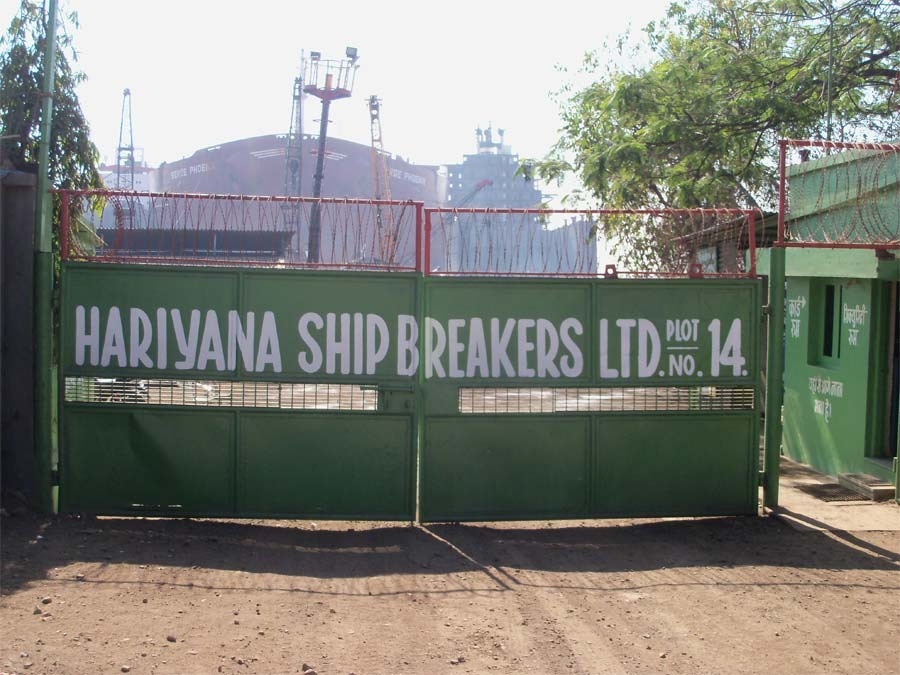
Hariyana Ship Breakers Ltd Q2/H1 FY26 – ₹1.30 Cr Sales, ₹2.25 Cr PAT, 359% Profit Jump but ROE Still Stuck at 1%: Welcome to the Scrapyard of Surprises
1. At a Glance – Scrap Yard Mein Sannata, P&L Mein Patakha
If you ever wondered how a company can post ₹2.25 crore quarterly profit on just ₹1.30 crore sales, welcome to Hariyana Ship Breakers Ltd (HSBL), where Other Income works harder than core operations. As of 8 January morning chai-time, the stock trades at ₹111, giving it a market cap of ~₹68.7 crore—basically the valuation of a decent Alang scrapyard plus emotional premium. The stock has delivered –3.1% return over 3 months, –9.8% over 1 year, yet magically shows ~17% CAGR over 3 years, proving once again that time heals portfolios… selectively.
Valuation metrics look like they were assembled by a bored CA on a Friday evening: P/E ~18, Price-to-Book ~0.46, ROCE 3.2%, ROE 1.1%, Debt-to-Equity 0.10. The company sits on ₹15.7 crore debt, but also on a pile of investments and other income streams that keep the profit engine idling even when ship-breaking cranes are on tea break. Latest quarter profit growth? A dramatic 359% YoY, the kind that makes Telegram channels hyperventilate before reading the fine print.
So is this a turnaround, a balance-sheet magician, or just a scrapyard with a side hustle? Let’s put on our funny auditor hat and walk into the Alang dust. Ready?
2. Introduction – Welcome to Alang, Where Ships Come to Die (Financially, Too)
Hariyana Ship Breakers Ltd was incorporated in 1981, back when dismantling ships was considered heavy industry and not a metaphor for corporate balance sheets. Part of the Haryana Group, HSBL operates in the Alang–Sosiya ship-breaking belt of Bhavnagar, Gujarat, on land leased from the Gujarat Maritime Board. The plot measures 4,185 sq. meters with 45 meters frontage—small, compact, and efficient, just like its revenue line these days.
Over the years, HSBL evolved from pure ship-breaking into a multi-income jugaad model: scrap sales, trading in hot rolled coils, interest income from surplus funds, investments in shares and securities, and even real estate partnership interests. In short, when ships don’t come, the company doesn’t starve—it just opens another Excel tab.
But here’s the catch: core operating performance has been weak for years, with sales collapsing from triple-digit crores a decade ago to almost negligible numbers recently. Yet profits survive. How? Other Income—the unsung hero, villain, or side character depending on your worldview.
So the big question: is HSBL a cyclical ship recycler patiently waiting for a global shipping scrap boom, or has it quietly transformed into a finance-and-investment company that occasionally breaks ships for nostalgia? Keep reading, detective.
3. Business Model – WTF Do They Even Do?
On paper, HSBL is a ship-breaking company. In reality, it’s more like a scrapyard with diversified hobbies.
Core Activity: Ship Breaking
Ships at the end of their economic life are dismantled at Alang. Steel scrap, non-ferrous metals, machinery—everything gets sold. This is a highly cyclical business, dependent on global shipping rates, steel prices, environmental regulations, and how badly shipowners want to scrap old vessels.
HSBL holds RINA certification, which means it follows environmentally sound and safe ship recycling practices. This matters because green-certified yards are increasingly preferred, especially by global shipping companies trying to look ESG-friendly on LinkedIn.
Secondary Hustles:
When ship-breaking slows down, HSBL doesn’t just sit idle:
Trading of ferrous and non-ferrous metals & hot rolled coils