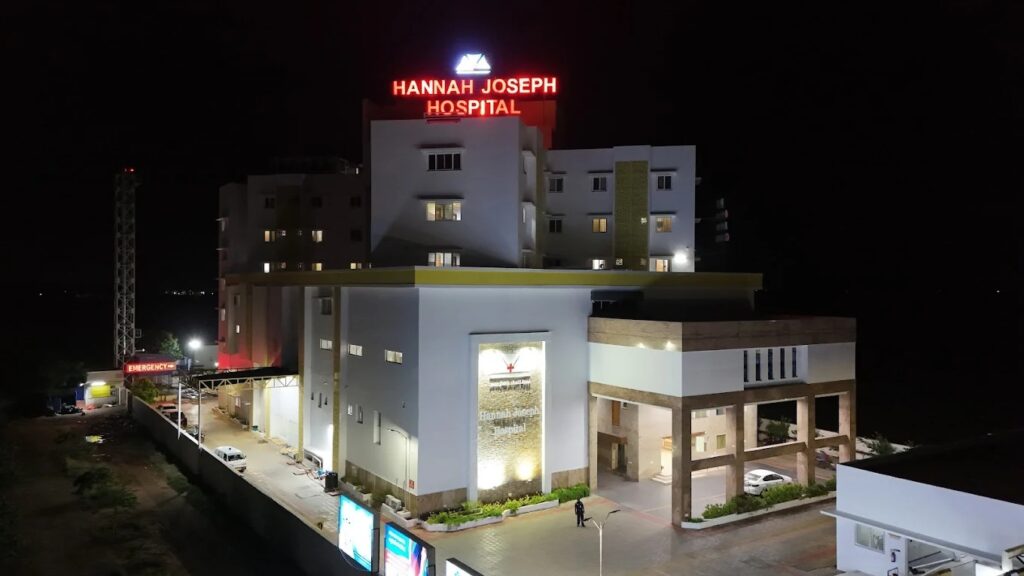
Welcome to Hannah Joseph Hospital Limited, a Madurai-based multi-specialty hospital walking into the public markets with a ₹42 crore fresh issue, priced between ₹67–₹70 per share. Pre-IPO market cap stands at ₹158.89 crore, which in SME IPO language means: “small enough to grow, big enough to hurt if ignored.”
Retail investors need to cough up ₹2.1 lakh minimum for 3,000 shares. Yes, this is not a chai-sutta IPO. This is a full-body health check IPO. EBITDA margin at 27.38% (Sep 2025), PAT margin at 12.03%, and Debt/Equity of 0.55 suggest the hospital is not surviving on glucose drips alone.
Promoter holding drops from 93.57% to 68.83%, which is dilution, not promoter exit panic. The IPO opens Jan 22, 2026, lists Jan 30, 2026, and chooses BSE SME as its recovery ward.
So the big question: Is this a scalable healthcare asset… or just a well-painted hospital building with fancy MRI machines?
Let’s scrub in.
2. Introduction – A Hospital IPO That Actually Makes Money (Shocking, I Know)
Hospitals are emotional businesses. People enter crying, leave smiling, and pay bills like they just bought an iPhone Pro Max Ultra Plus. Yet, not all hospital IPOs are healthy investments.
Hannah Joseph Hospital Limited was incorporated in 2011, not yesterday. It runs a 150-bed multi-specialty hospital on a 2-acre campus in Madurai, Tamil Nadu. This isn’t a tiny nursing home pretending to be Mayo Clinic. It focuses on Neurology, Cardiology, Trauma, Orthopaedics, and Psychiatry – basically departments where bills are high and demand never sleeps.
Financially, the company has gone from ₹1.01 crore PAT in FY23 to ₹7.21 crore in FY25, and already clocked ₹5.12 crore PAT in just six months (Sep 2025).
That’s not hype. That’s execution.
But healthcare IPOs are tricky. Capex-heavy. Doctor-dependent. Regulation-loving. And expansion is expensive.
So before you apply and tell relatives “I invested in a hospital,” let’s check if this patient is stable or just pumped on steroids before IPO.
3. Business Model – WTF Do They Even Do?
Hannah Joseph Hospital runs a single-location, high-acuity, specialty-focused hospital.
Translation for lazy investors: They don’t do everything. They do critical stuff.
Core Departments:
Neurosciences – Neurology & Neurosurgery
Cardio Sciences – Cardiology
Trauma Care – Orthopaedics, Oral & Maxillofacial Surgery
Psychiatry
These are high-margin, high-skill departments. You don’t need 1,000 beds if your ARPU per bed is strong. This model works when:
Doctors are reputed
Occupancy is decent
Equipment is fully utilised
As of Nov 30, 2025, the hospital employs 364 staff, which indicates operational scale, not a family-run clinic.
The IPO money is largely going into Radiation Oncology Centre capex (₹34.98 Cr). This signals:
Expansion within the same campus
Move into oncology (long-term, repeat revenue)
Higher capex, but also higher ticket sizes
Question for you: Do you prefer hospitals that expand horizontally (more beds) or vertically (more specialties)?
4. Financials Overview – Numbers Don’t Need Painkillers
All figures in ₹ Crore
Metric
Latest (Sep 2025)
FY25
FY24
FY23
Total Income
42.75
77.90
63.63
54.90
EBITDA
11.65
20.52
17.98
16.38
PAT
5.12
7.21
4.07
1.01
EBITDA Margin
27.38%
26.47%
28.26%
29.84%
PAT Margin
12.03%
9.30%
6.40%
1.84%
EPS Logic (Half-Yearly Results detected – LOCKED): Latest reported period is Half Year ended Sep 30, 2025 ➡ Annualised EPS = H1 EPS × 2
Post-IPO EPS: ₹4.51
P/E at ₹70: ~15.52x
For a profitable hospital with stable margins, this is not crazy pricing.