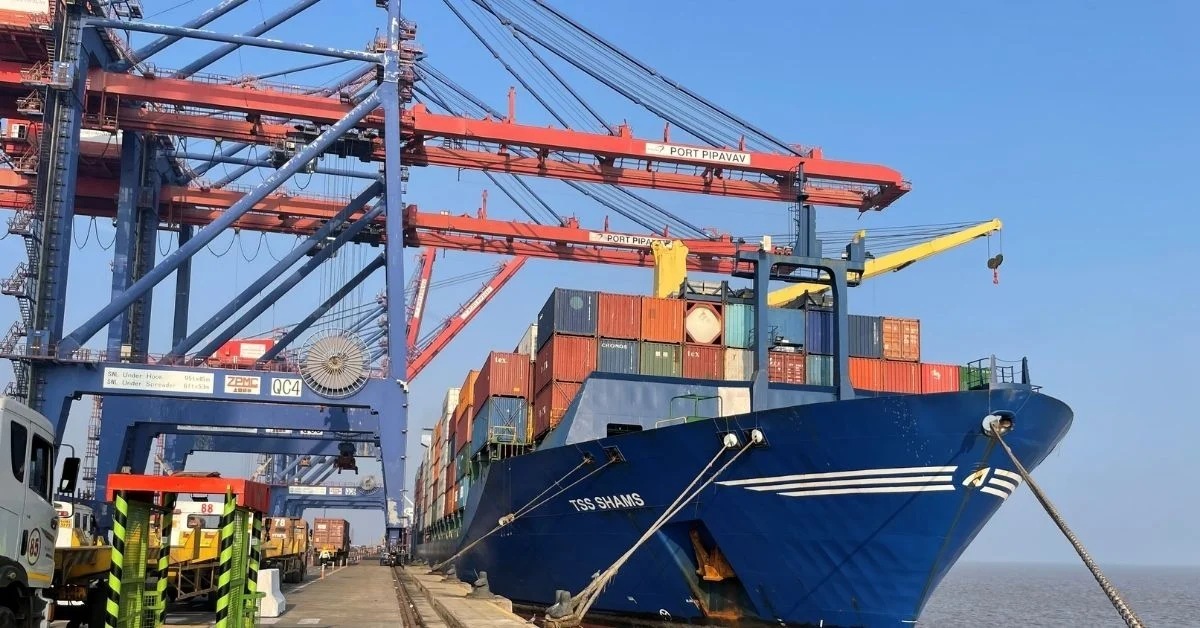
1. At a Glance – The Port That Prints Cash While Ships Wait
Gujarat Pipavav Port Ltd is trading at ₹178 with a market cap of ₹8,627 crore. Stock P/E? 19.6. Dividend yield? A juicy 4.60%. ROCE? 24.9%. ROE? 19%. Debt? Practically chai-paani level at ₹50.6 crore.
Latest quarterly sales: ₹292 crore. Latest quarterly PAT: ₹101 crore. OPM: 55%.
Translation? This port runs at operating margins that most manufacturing CEOs see only in dreams.
Three-year profit growth at 27%. One-year stock return at 30.6%. Promoter holding stable at 44%.
And while others are drowning in debt, this one has a Debt-to-Equity of 0.02.
So the big question: Is this a silent compounder hiding in plain sight… or just riding the Maersk wave? Let’s dock and inspect.
2. Introduction – India’s First Private Port, Now Acting Like a Dividend ATM
This isn’t just any port. This was India’s first private sector port. Located strategically on Gujarat’s southwest coast near Bhavnagar, it sits right on international maritime routes connecting India to the US, Europe, Africa, Middle East and the Far East.
Basically, if global trade is a highway, Pipavav is a toll booth collecting fees quietly.
And here’s the kicker — its promoter is APM Terminals, holding 44%. That’s not some random promoter group. That’s part of AP Moller Maersk — one of the largest shipping giants globally.
Maersk itself accounts for 23% of revenue. That’s both comforting and slightly scary. Comforting because the parent is strong. Scary because concentration risk is real.
Revenue grew 33% between FY22 and FY24. Containers drive 60–70% of revenue. And they’ve been ranked among the Top 50 most efficient ports globally for three consecutive years.
Not bad for a port that some investors barely track.
But here’s where things get spicy — dry bulk volumes declined due to fertiliser imports falling and coal handling being suspended temporarily.
So is this smooth sailing… or are there storms forming offshore?
3. Business Model – WTF Do They Even Do?
Let’s simplify.
They move stuff. Lots of stuff.
Four main cargo types:
- Containers
- Dry bulk
- Liquid bulk
- RoRo (cars)
Container capacity: 1.35 million TEUs.
Bulk capacity: 4–5 million MT.
Liquid capacity: 2 million MT.
About