Gujarat Natural Resources Ltd Q2 FY26 – When a 24-Metre Hydrocarbon Zone Meets a 771x P/E Ratio: The Cambay Comedy Show
1. At a Glance
If there was an Oscar for “Most Confusing Combination of Exploration and Valuation,” Gujarat Natural Resources Ltd (GNRL) would already be giving its acceptance speech. The ₹1,227 crore market-cap oil explorer is currently trading at ₹95.5 — with a P/E ratio that makes even AI startups look humble at 771x. That’s right — it’s producing oil, but the real gas here is in the valuation.
In Q2 FY26, the company reported revenue of ₹8.65 crore and PAT of ₹3.84 crore, showing an insane 935% YoY profit growth. Yet, the return ratios — ROE (-2.87%) and ROCE (-0.56%) — look like they’ve been drilled straight into the loss-making Cambay basin.
And did we mention? The promoters are holding a glorious 1.93%, down from over 10% a few quarters back. Investors, if you blink, even the promoter might have exited.
But wait — in true Gujarati entrepreneur fashion, GNRL just completed a K#17 well in the Kanawara Field, discovering a 24-meter hydrocarbon zone. Oil, drama, and a P/E of 771? Grab your popcorn — this basin’s getting spicy.
2. Introduction
GNRL is like that student who was always under the radar, suddenly starts topping one subject (Q2 PAT up 935%), but still fails half the exam (ROE negative, working capital days 1,386).
Incorporated in 1991, Gujarat Natural Resources Ltd ventured into the glamorous world of oil & gas exploration — long before “energy transition” became the new boardroom yoga mantra. Through its step-down subsidiary GNRL Oil & Gas Limited (formerly Heramec Ltd), it operates six producing blocks in the Cambay basin, being the operator in five.
The company’s revenue pie looks simple: 93% from oil & gas, 5% from interest income, and 2% from “other mysterious income.”
And yet, investors aren’t here for the fundamentals. They’re here for the thrill — the Bollywood meets OPEC story of a smallcap explorer drilling deeper into hope than hydrocarbons.
So how does an oil explorer with negative ROE, low promoter holding, and a 771x P/E manage a 377% one-year return? Simple — Indian retail FOMO is the most renewable energy source on earth.
3. Business Model – WTF Do They Even Do?
Imagine a Gujarati family deciding to explore for oil instead of opening another textile shop. That’s Gujarat Natural Resources Ltd.
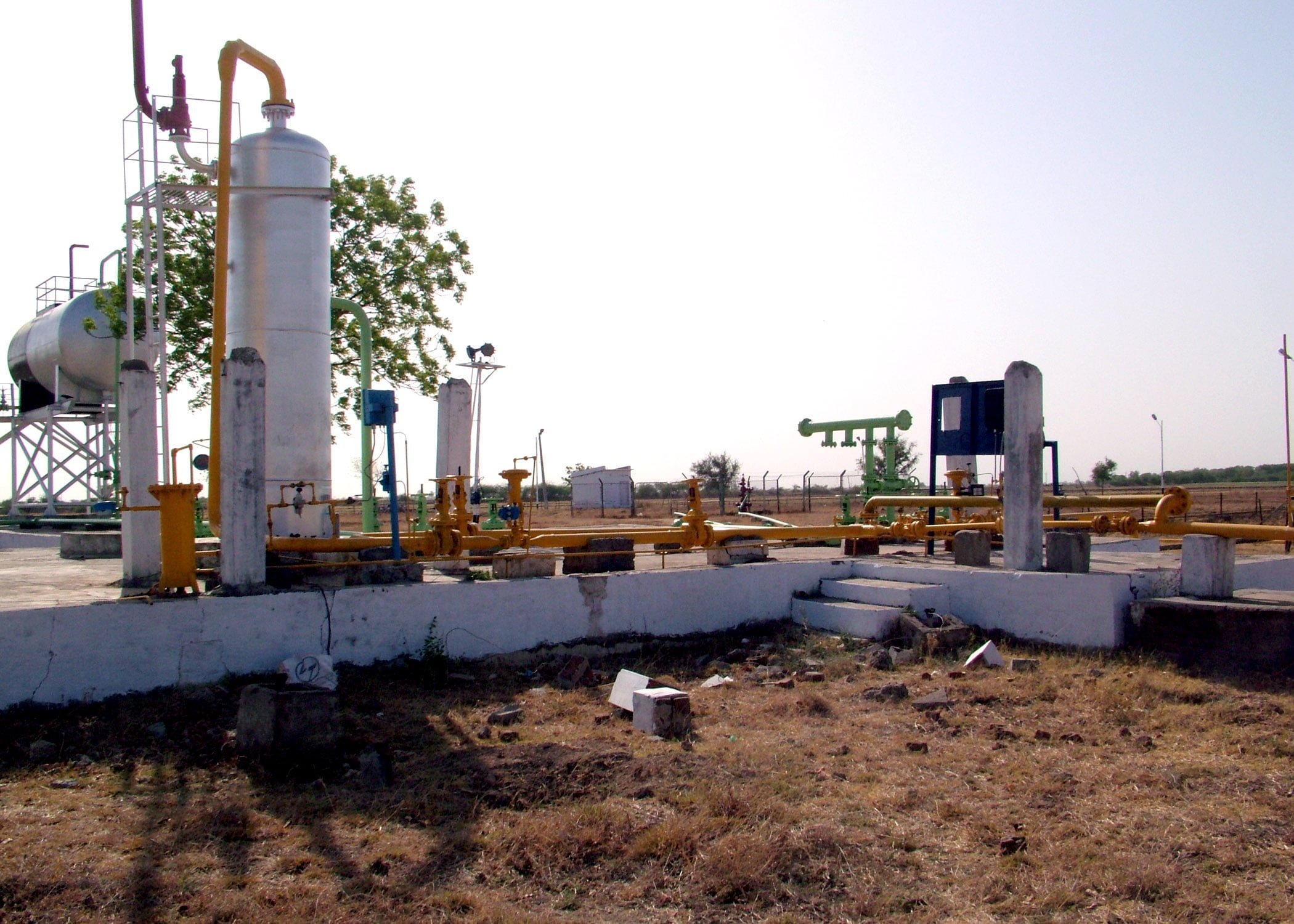
The company plays in the upstream oil & gas exploration space — the “digging holes and praying for crude” part of the industry. GNRL doesn’t refine, distribute, or retail fuel — it just digs, produces, and sells. The heavy lifting happens through GNRL Oil & Gas Ltd, which has operational stakes in Kanwara, North Kathana, Allora, Dholasan, North Balol, and Unawa fields — all part of the Cambay basin, Gujarat’s own mini-OPEC.
GNRL also provides technical advisory services to its subsidiaries through a consultancy tie-up with Ajapa Integrated Project Management Consultancy Pvt Ltd, which handles drilling project management.
Basically:
Subsidiaries dig the wells
Ajapa advises on how not to mess it up
GNRL consolidates the numbers and tells shareholders “We struck oil!”
They also have related-party arrangements worth ₹100 crore with entities like Ashoka Metcast, Ashnisha Industries, Lesha Industries, and Rhetan TMT — all of which seem to exist in the same Ahmedabad ecosystem of industrial siblings.
So while the company claims to find oil, one can’t help but wonder — are they exploring hydrocarbons or synergies between family companies?
4. Financials Overview
Source table
Metric
Latest Qtr (Sep’25)
YoY Qtr (Sep’24)
Prev Qtr (Jun’25)
YoY %
QoQ %
Revenue (₹ Cr)
8.65
4.93
3.35
75.5%
158.2%
EBITDA (₹ Cr)
4.84
1.70
0.27
184.7%
1,692.6%
PAT (₹ Cr)
3.84
-0.46
1.93
934.8%
99.0%
EPS (₹)
0.30
-0.04
0.15
—
100%
Annualised EPS = ₹0.30 × 4 = ₹1.20. At CMP ₹95.5, that’s a P/E of 79.6, not 771 (which probably reflects trailing net losses). Either way, that’s like paying for diesel and getting perfume.
Commentary: Revenue doubled, profit exploded, and EPS revived — but the balance sheet still looks like it came out of a stress test. For a company this small, even one successful well can change everything — or nothing, depending on how fast they burn through the oil money.