Search for stocks /

Gujarat Ambuja Exports Ltd Q1FY25–FY25: 20% Maize Monopoly, 35% Exports Push, But Profits Melting Like Vanaspati


1. At a Glance

GAEL is India’s largest maize processor with 20% share, selling starch, sorbitol, glucose, cattle feed, soya oil, yarn, and even vanaspati ghee (because why not?). Q1FY25 sales jumped 18% YoY to ₹1,291 Cr, but PAT slipped 15% to ₹65 Cr—thanks to maize/soya price volatility chewing margins harder than cattle chewing cud. CMP: ₹111, Market cap: ₹5,063 Cr, P/E: 21x. The stock is down 21% in 1 year, proving that even agro-giants can get indigestion.


2. Introduction

If you thought Ambuja meant only cement, surprise—Gujarat Ambuja Exports (GAEL) has been quietly running a food-to-feed empire since 1991. From corn starch that lands up in your soft drink, to soya DOC feeding poultry, to vanaspati powering halwai laddoos, GAEL’s product basket looks like Big Bazaar’s old aisles.

Unlike FMCG players who flaunt brand ambassadors, GAEL flaunts 1,000 TPD maize expansions and capacity utilizations of 90%. Instead of Bollywood stars, their clientele includes ITC, Dabur, HUL, Colgate, Mondelez—basically the who’s who of food and pharma supply chains.

But here’s the kicker: While maize processing revenue grew 30% between FY22 and FY24, margins slipped from 15% → 12%. Why? Inventory losses as maize/soya prices corrected. In agro, volatility is the only permanent crop.

So, is GAEL a hidden FMCG raw material kingpin, or just another agro-commodity rollercoaster that gives investors heartburn?


3. Business Model – WTF Do They Even Do?

GAEL is a multi-product agro processor with four main dishes on the thali:
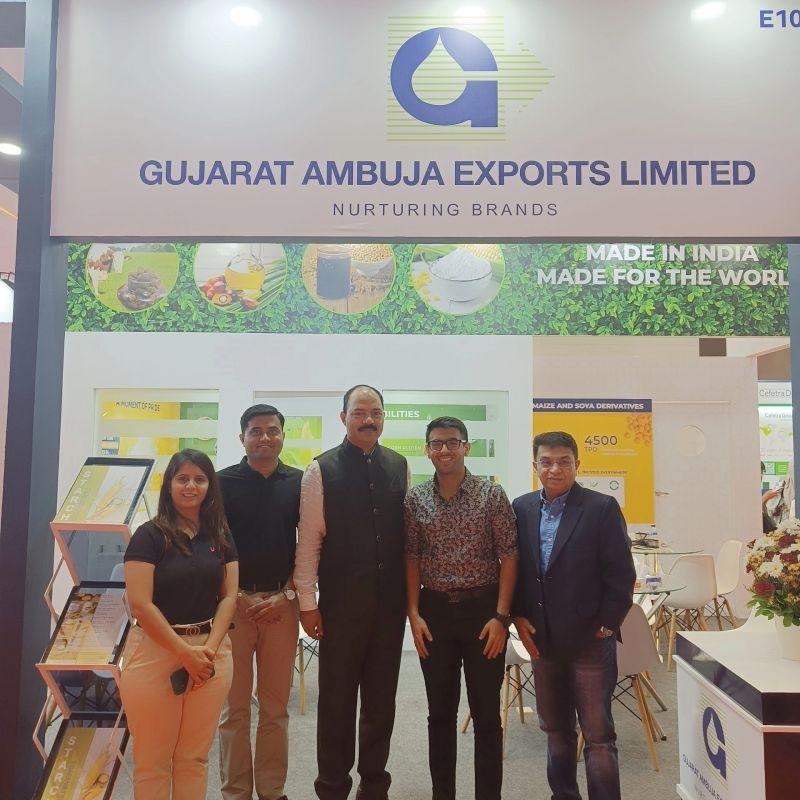
  1. Maize Processing (~68% revenue Q1FY25):
    • Starches, sorbitol, glucose, dextrose, maltodextrin, HFCS.
    • 4,000 TPD capacity (going to 6,000 TPD by FY26).
    • 20% domestic market share, 100+ export countries.
    • Utilization: 90%.
  2. Other Agro Processing (~30%):
    • Soya oil & DOC, vanaspati (Ambuja Moon, Triveni), wheat flour (Ambuja Gold), cattle feed (Ambuja Gold Dan).
    • Basically your kitchen, dairy farm, and halwai shop rolled into one.
  3. Spinning (~2%):
    • 65,520 spindles, cotton/poly yarn.
    • Once ~6% of revenue, now reduced to a sideshow.
  4. Renewables:
    • 10 MW wind, 2 MW solar, 8 MW biogas.
    • Enough to impress ESG funds, but too small to move the needle.

Translation: GAEL takes crops, squeezes every molecule into food, feed, chemicals, and energy. Waste not, profit not.


4. Financials Overview

MetricLatest Qtr (Q1FY25)YoY Qtr (Q1FY24)Prev Qtr (Q4FY25)YoY %QoQ %
Revenue₹1,291 Cr₹1,090 Cr₹1,267 Cr18.4%1.9%
EBITDA₹96 Cr₹106 Cr₹62 Cr-9.4%54.8%
PAT₹65 Cr₹77 Cr₹32 Cr-15.2%103%
EPS (₹)1.421.670.70-15%103%

Commentary:
Sales up, but profits down—classic “topline growing, bottomline dieting.” QoQ recovery strong though (PAT doubled from ₹32 Cr to ₹65 Cr). Annualised EPS = ₹5.7 → P/E ~19.4x (close to peers).

Question: Is this a turnaround quarter, or just maize prices playing temporary cricket?


5. Valuation Discussion – Fair Value Range

Method 1: P/E

EPS FY25E ~₹5.5–6.0.
Assign 15–22x (commodity business with value-add).
Range: ₹82 – ₹132.

Method 2: EV/EBITDA

EV = ₹5,282 Cr.
FY25E EBITDA (annualised) ~₹400 Cr.
EV/EBITDA = 13x vs peers 10–15x.
Fair range: ₹4,000–₹5,600 Cr EV → ₹90–₹126/share.

Method 3: DCF (basic)

Growth 8–10%, discount 11%, terminal 3%.
DCF spits out: ₹100–₹120.

Final Fair Value Range: ₹82–₹132.
(Current CMP ₹111 sits mid-pack).

⚠️ Disclaimer:

Eduinvesting Team

https://eduinvesting.in/

Leave a Reply

Don't Miss

error: Content is protected !!