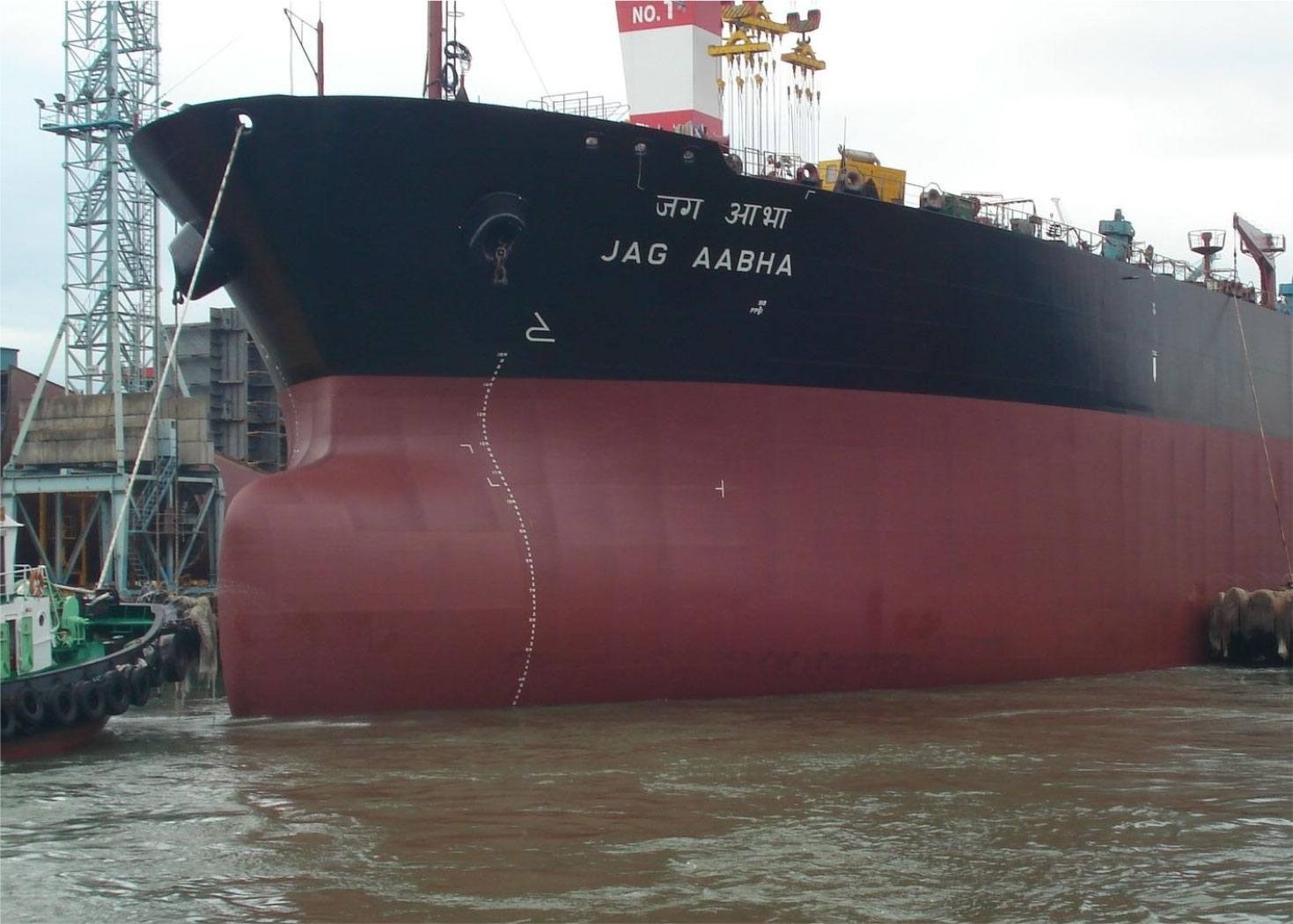
Great Eastern Shipping Company Ltd Q4 FY26: Net Cash Surges to ₹6,919 Crore as Management Refuses to Buy Peak-Asset Ships
1. At a Glance
The shipping industry has long been treated as the ultimate graveyard of destructor capital—a lawless, cyclical vortex where over-leveraged fleets go to die when global trade cooling hits the brakes. Yet, Great Eastern Shipping Company Ltd (GESHIP) has just dropped a bombmatic bomb in its audited financial results for the full year and quarter ended March 31, 2026. While the rest of the world frets over structural macro slowdowns, GESHIP has delivered a masterclass in cash accumulation, recording a spectacular Consolidated Profit After Tax (PAT) of ₹1,044.09 crore for Q4 FY26 alone—a massive 187.56% spike compared to the ₹363.09 crore recorded in the same quarter last year.
The real intrigue, however, does not sit at the bottom of the profit and loss statement. It sits in the absolute fortress that is its balance sheet. GESHIP’s management has pulled off one of the greatest deleveraging acts in corporate history, mutating from a legacy peak net debt position of USD 361 million in FY19 into a staggering net cash position of ₹6,919 crore ($500 million+) as of the close of fiscal 2026. The company’s overall borrowings have been absolutely vaporized, plunging from ₹2,163.49 crore in FY25 to a meager ₹1,049.37 crore by March 2026.
But behind this wall of capital lies an intense operational standoff. The stock trades at a persistent 25% to 30% discount to its consolidated Net Asset Value (NAV). Activist-minded investors are knocking on the boardroom door, screaming for massive share buybacks or aggressive capacity expansion. Yet, management, led by Chairman and Managing Director Bharat K. Sheth, is flatly refusing to buy ships at current peak asset prices. Instead, they are content to sit on a mountain of liquid treasury assets, collecting interest income while watching a massive global orderbook overhang develop in the background. Are they being brilliantly conservative, or is this massive cash pile creating an unbearable drag on structural return metrics? Let’s find out.
2. Introduction
Established in 1948, Great Eastern Shipping Company Ltd is India’s largest private-sector shipping and oilfield services provider. Over more than seven and a half decades, this corporate entity has developed an elite institutional memory, successfully navigating multiple brutal maritime downturns that wiped out less disciplined global flag carriers.
The corporate architecture operates via two core engines. The primary shipping division controls the global transportation of crude oil, refined petroleum products, liquified petroleum gas (LPG), and dry bulk commodities. The secondary offshore division operates via its wholly owned subsidiary, Greatship India Ltd (GIL), which delivers specialized logistics, drilling, and engineering support to deep-water energy exploration and production majors.
Operationally, GESHIP has structurally pivoted its revenue footprint away from the domestic Indian market. Today, a striking 69% of top-line generation is derived strictly from international waters, liberating the firm from localized structural bottlenecks but leaving it exposed directly to the harsh realities of global geopolitical shifts, oceanic choke points, and the erratic supply-demand dynamics of global shipping freight rates.
3. Business Model – WTF Do They Even Do?
To the uninitiated, GESHIP’s business model seems beautifully simple: they own floating metal hulls, fill them with heavy global commodities, and navigate them from Point A to Point B across the planet. But if you think this is a simple asset-owning utility business, you are completely missing the picture. GESHIP is fundamentally an options-trading hedge fund disguised as a maritime transport business.
The operational magic lies in how they play the Spot Market versus Time Charter (TC) game. Spot freight rates are hyper-volatile, swinging wildly based on whether a war breaks out, a canal clogs, or an energy embargo gets imposed. Time charters are long-term, fixed-price contracts that offer boring, predictable utility cash flows. While amateur operators lock in multi-year fixed contracts at the bottom of the cycle out of pure panic, GESHIP retains heavy spot exposure during cyclical upturns to catch sky-high daily yields. For instance, in Q3 FY26, crude carriers captured an astonishing Average Time Charter Yield of USD 47,281 per day.
The secondary aspect of their business model is the asset recycling play. They buy modern, clean vessels when the shipping market is bleeding out and asset values are depressed. They then operate them with absolute operational efficiency, maintain them to impeccable international environmental standards, and selectively dump them into secondary transaction markets for massive capital gains when global vessel supply tightens. If asset values are too high, they refuse to buy and purposefully contract the fleet size, prioritizing equity value accretion over the vanity of fleet expansion.
4. Financials Overview
The performance of GESHIP over the final stretch of FY26 reveals a business running on highly efficient operational cylinders, capturing global spot rate spikes with precision.
Consolidated Financial Performance Comparison
(All financial values expressed in ₹ Crores, except EPS)
Financial Metric
Latest Quarter (Q4 FY26)
Same Quarter Last Year (Q4 FY25) (YoY)
Previous Quarter (Q3 FY26) (QoQ)
Revenue from Operations
1,511.40
1,223.04
1,454.44
EBITDA
1,123.01
711.66
1,061.80
Profit After Tax (PAT)
1,044.09
363.09
812.52
Annualised EPS (₹)
294.31
145.24
227.65
Calculated P/E Ratio
5.76
11.68
7.45
Note: In accordance with the locked quarterly reporting structure, Annualised EPS for Q4 is calculated based on the actual full-year reported basic EPS of ₹206.11 (without artificial multiplier manipulation). The calculated P/E ratio is derived against the closing market price of ₹1,696.50.
Concall Validation & Analytical Commentary
A cross-examination of the latest financial execution against past management commentary reveals that leadership has completely walked the talk. In the previous analyst calls, management explicitly stated they would remain unhedged and highly exposed to the spot market across crude and dry bulk segments because they anticipated major structural displacements in trade routes.
This macro view has been vindicated. Revenue grew 23.58% YoY, while net profits exploded by 187.56% over the same period. This massive operational leverage was driven directly by geopolitical trade re-routing. When India backed off from buying sanctioned Russian barrels, it created a massive trade dislocation. Barrels had to be pulled from the Middle East and South America, structurally extending ton-miles (the distance ships must travel). Because GESHIP kept its fleet