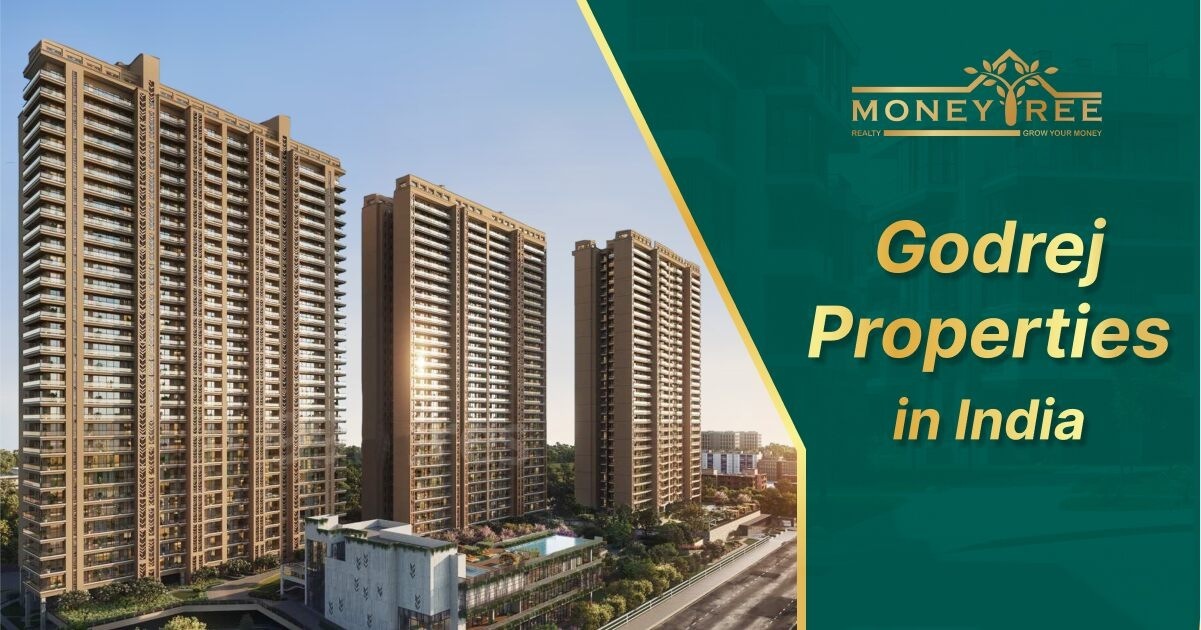
Godrej Properties Q2FY26 – ₹8,505 Crore Bookings, ₹403 Crore Profit, and the Great Indian Land Grab(A real estate fairy tale told with balance sheets, bulldozers, and Bombay sarcasm.)
Date of Publishing -
Spotted a factual error — a wrong number, date, or fact? Tell us and we will check the source.
1. At a Glance
Ladies and gentlemen, the house that Jamshyd built is back — and it’s building houses for everyone else. Godrej Properties Ltd (GPL) — the real estate arm of the 127-year-old Godrej empire — just dropped its Q2FY26 results like a plot twist in a K-drama.
Bookings? ₹8,505 crore. That’s up 64% year-on-year, making even DLF sweat a little. Collections? ₹4,066 crore — up 44% YoY. Profit after tax? ₹403 crore. All this while the real estate sector is busy debating whether it’s “the next IT” or “the next collapse.”
At a market cap of ₹66,099 crore and a P/E of 42.6x, the company trades like it’s Apple in Andheri. The stock currently hovers around ₹2,194, about 28% below its 52-week high, perhaps reminding investors that good brands don’t guarantee good entry points.
Operationally, the Q2FY26 margin looked like a Mumbai apartment — small and shrinking. OPM is still negative at -18.3%. But hey, who cares about profits when the bookings graph looks like India’s population chart?
2. Introduction – A Family That Builds Together, Holds Together
When your surname is Godrej, your “house” literally builds houses. From cupboards that locked India’s secrets in the 1950s to skyscrapers locking in bookings worth thousands of crores today — it’s the same dynasty, just with better tiles and an IPO.
Godrej Properties, established in 1990, has become India’s largest developer by homes sold in FY23. Think of them as the “Netflix of real estate launches” — always trending, sometimes overhyped, and occasionally releasing a blockbuster like Godrej Aristocrat (₹2,667 crore in bookings for one project).
The company operates with an asset-light model — a fancy way of saying “we’ll build on your land, but the cheque book stays with us.” With access to over 215 million sq. ft. of saleable area across 99 projects, they’re playing Monopoly in 10 Indian cities.
It’s also the developer with the lowest funding cost in the business — just 5.95% per annum, courtesy of the Godrej name. Compare that with smaller builders whose cost of capital is somewhere between “personal loan” and “Sharmaji’s moneylender.”
Still, the balance sheet tells us this is not a fairy tale — borrowings have jumped from ₹10,679 crore in FY24 to ₹16,324 crore by Sep 2025. Apparently, being asset-light doesn’t mean being debt-light.
3. Business Model – WTF Do They Even Do?
In simple terms: they don’t just build homes; they build Excel sheets that make investors smile.
Godrej Properties develops residential and commercial projects through joint developments, joint ventures, and outright acquisitions. The model’s beauty lies in its flexibility — they rarely buy the land outright, preferring partnerships that minimize upfront costs.
In return, they share profits with landowners. This “asset-light” model lets GPL launch multiple projects across metros — NCR, Pune, MMR, Bengaluru, and Chennai — without sitting on piles of idle land.
Each project becomes a self-contained profit center, backed by the Godrej brand. It’s like franchising, but with bulldozers.
Recent highlights:
Godrej Aristocrat, Gurugram: ₹2,667 crore in bookings.
Godrej Ananda, Bengaluru: ₹574 crore booked faster than a weekend resort.
Godrej Avenue 11, MMR: ₹687 crore in just 4 months.
Their new project in North Bengaluru — a 62-acre township worth ₹5,000 crore — is under a profit-sharing model. The message is clear: “We’ll build your dream home, but the dream profits are ours.”