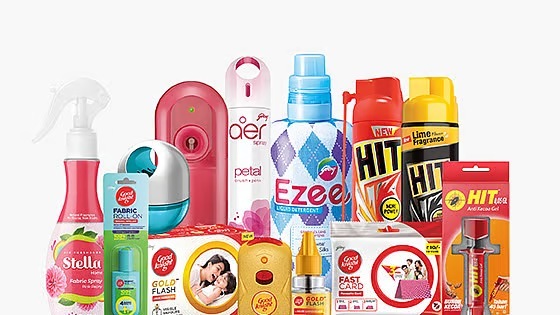
Godrej Consumer Products Ltd (GCPL) has just dropped its Q4 FY26 results, and the numbers are shouting louder than their television commercials. We are looking at a company that is finally shaking off the “weather-dependent” tag and flexing its distribution muscle across India and Africa.
With a consolidated revenue growth of 11% in the final quarter, GCPL is proving that its strategic bets on high-margin categories like Air Care and Liquid Detergents are paying off. But wait—there’s a massive accounting twist involving how they report revenue that every investor needs to understand before looking at the top line.
1. At a Glance
The FMCG giant has been on a rollercoaster, but the latest data suggests the tracks are finally leveling out for a high-speed run. GCPL is no longer just a “soap and coil” company. It is transforming into a sophisticated personal and home care beast.
Investors are flocking because the company managed an 11% sales variance this quarter, a significant jump compared to the sluggish mid-single digits seen in previous years. The India business is leading the charge with a 9% underlying volume growth (UVG), which is nearly double the industry average.
However, let’s talk about the elephants in the room—Red Flags.
- The Stock P/E sits at 52.2, significantly higher than the industry median of 44.3. You are paying a massive premium for growth that has historically been inconsistent.
- Promoter holding has dropped by 10.2% over the last three years. While the Godrej family reorganization explains this, a shrinking promoter pie always demands a closer look.
- The Debt-to-Equity ratio has crept up to 0.35. Borrowings have surged from ₹1,130 Cr in 2023 to ₹4,416 Cr in March 2026. Management is burning cash for acquisitions (Muuchstac, Raymond) and capex, and the interest cover is feeling the heat.
The company is aggressively pushing into rural India, aiming to reach 80,000 villages. They are betting the house on a new molecule called RNF for mosquito repellents, claiming it’s 2x more effective. Is this a game-changer or just marketing fluff?
Stay tuned as we dissect whether this ₹1,05,947 Cr behemoth is a value trap or a compounding machine.
2. Introduction
Godrej Consumer Products is a household name that has spent the last few years trying to simplify a messy global empire. From the alleys of Vikhroli to the markets of Jakarta and Johannesburg, GCPL sells everything from Goodknight coils to Darling hair extensions.
The company operates in three primary segments: Home Care (41%), Hair Care (33%), and Personal Care (26%). While India remains the golden goose contributing nearly 60% of revenue and the highest margins (25-30%), their international foray has been a mixed bag of currency devaluations and macro headwinds.
In the last year, the narrative has shifted toward “Simplification.” They divested their East Africa business for $3.5 million and moved to a royalty model to protect the bottom line. They are also integrating high-profile acquisitions like the Raymond Consumer Care business (Park Avenue, Kamasutra) and the recent Muuchstac deal to capture the premium male grooming market.
Management is now obsessed with “Category Development.” Instead of just selling more soap, they want you to switch to body wash. Instead of just coils, they want you to use “legal” agarbattis and expensive aerosols. It’s a classic margin-expansion play, but in a price-sensitive market like India, execution is everything.
3. Business Model – WTF Do They Even Do?
GCPL is essentially a “Smell and Protection” company. If it kills a mosquito, makes your bathroom smell like jasmine, or dyes your hair, Godrej is probably the one selling it to you.
The Core Pillars:
- Home Care: This is the kingdom of Goodknight and HIT. They own the Indian mosquito repellent market. They’ve recently added Spic (toilet cleaner) and Fab (liquid detergent) to challenge the dominance of HUL and Reckitt.
- Personal Care: Think Godrej No. 1 and Cinthol