GOCL Corporation: FY26 Results—₹1,522 Crore Profit from ₹9.76 Crore Sales (Other Income Carries the Weight)
General information and entertainment, not investment advice. The author is not a SEBI-registered adviser or research analyst. No recommendation, no promised returns. Markets carry risk including loss of capital. Figures may not be current. Consult a registered adviser before acting.
FY26 delivered the strangest profit story on the board: ₹1,522 crore net profit on ₹9.76 crore revenue.
That ₹1,522 crore? Almost entirely due to one-time gains—primarily the sale of Kukatpally land (a 264-acre property) and the divestment of IDL Explosives subsidiary. The core business shrank to a whisper.
The company is holding ₹1,671 crore in other income (which includes unrealised FX gains and gains on asset sales) against operating losses of ₹31 crore. Borrowings fell from ₹1,115 crore to ₹1 crore.
Price referenced is ₹383.65 (June 2026), giving P/E of 1.25x on FY26 annualised EPS of ₹307.
The central tension: a company shedding operational bones, feeding on capital sales, while a major power acquisition hangs in regulatory limbo.
2. Introduction
GOCL Corporation, part of the Hinduja Group, was born in 1961 as Indian Detonators Ltd. Over six decades it became a player in explosives, energetics, and realty—a diversified small-cap in a shrinking explosives world.
FY26 marks a turning point: the company divested its wholly-owned subsidiary IDL Explosives Limited (which made commercial explosives and initiating devices) to Apollo Defence Industries for ₹107 crore. The Kukatpally land in Hyderabad—264 acres originally committed to Hinduja Group development—began a staged sale under a Memorandum of Understanding with Squarespace Builders: ₹3,418 crore consideration, of which ₹1,752 crore was received by Q2FY26.
The Ecopolis project in Bengaluru (38 acres, now mostly sold through joint development agreement with Hinduja Realty Ventures) moved toward monetisation: in March 2026, GOCL agreed to sell the remaining stake to Tata Realty and Infrastructure Limited for ~₹815 crore (deal advance: ₹1 crore received).
Separately, the board approved in principle the acquisition of Hinduja National Power Corporation Limited’s 1,040 MW thermal power operations. A merger scheme was formally approved in December 2025, subject to National Company Law Tribunal (NCLT) sanction and regulatory approvals.
3. Business Model: WTF Do They Even Do?
Pre-FY26, the answer was: explosives, initiating devices, metal cladding, realty. Post-FY26: mostly realty exit and land monetisation.
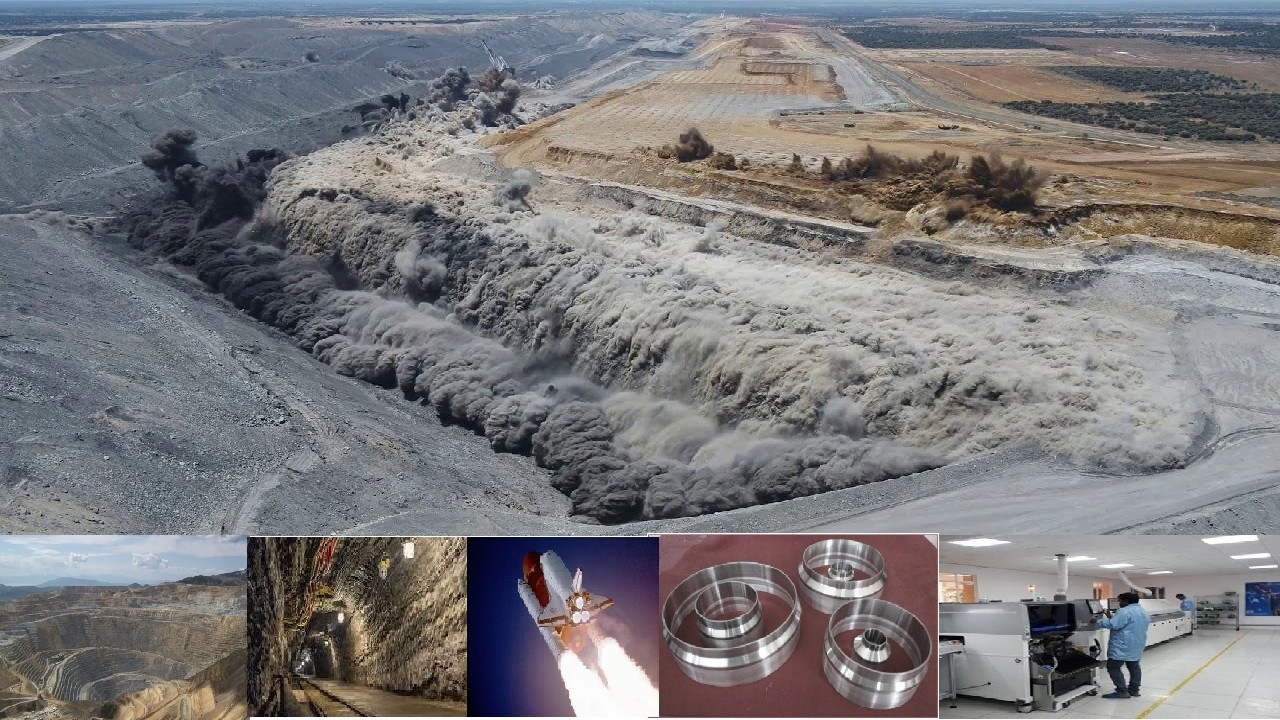
Explosives & Energetics (now discontinued): IDL Explosives Limited made bulk and packaged explosives for coal mining and infrastructure. Energetics made electric detonators, raydet (non-electric), detonating cords, and pentolite boosters. The bulk explosives division was 75% of explosives revenue. Exports went to 21 countries—Philippines, Southeast Asia, North Africa, Gulf, Middle East, Southern Europe. Clients: Coal India, Tata Steel, Hindustan Zinc, Ultratech, cement majors. The division’s order book stood at ₹430–766 crore (various years). Capacity: 270,000 TPA for explosives, 192 million units for energetics.
Energetics sales grew within the mix (36% of energetics sales in FY23 from electronic detonators alone, the highest ever). But overall business withered as Coal India reduced opencast mining, regulations tightened, and margins compressed.
Realty (land monetisation): the Kukatpally property sale (started in FY25) continued through FY26: 157.21 acres sold to date, with more in the pipeline. The Ecopolis project in Bengaluru, a 38-acre IT/SEZ plot jointly developed, moved to a buyer sale with Tata in March 2026. Proceeds reinvested in land purchases elsewhere or deployed into financial assets (loans to related entities, bank guarantees).
Finance & Guarantees (the hidden load): the company extended corporate guarantees to related parties—HNPCL and HEIL (Hinduja Energy India Limited)—totalling ₹1,316 crore secured by its own immovable property. These were ratified by the board and Audit Committee in May 2026, though shareholders’ post-facto approval is pending. Commission income on these guarantees: ₹16 crore per annum (₹34 crore accrued in FY23).
UK Subsidiary (HGHL Holdings): holds a 10% stake in the Old War Office (OWO) property development in London (part of the Raffles hotel-residential project). Expected returns on this £24 million investment were promised for post-completion (late FY23–FY24 timeline; status now pending).
The model: from manufacturing to land sales to guarantees to a pending power acquisition. A conglomerate unravelling and rebooting in real time.
4. Financials Overview
Figures are consolidated, in ₹ crore. Result type: Annual (Year Ended 31 Mar 2026).
Metric
FY26
FY25
YoY Change
Revenue from Operations
9.76
554.65
-98.2%
Other Income
1,671.17
343.86
+385.7%
Total Income
1,680.93
898.51
+87.1%
EBITDA
(31.0)
(27.0)
negative
PBT
1,588.87
196.97
+706.1%
Net Profit
1,521.95
157.21
+868.2%
EPS (₹)
307.01
31.71
+867.8%
What happened: revenue collapsed to a stub (₹9.76 crore, down from ₹554.65 crore). Other income spiked—₹1,671.17 crore—driven by:
Gain on sale of IDL Explosives: ₹6,379.89 crore (standalone basis; ₹14,150.75 crore consolidated)
Gain on land sales (Kukatpally + Ecopolis): ₹1,504.12 crore (net of both continuing and discontinued operations)
Unrealised foreign exchange gains on the OWO derivative: ₹1,300.43 crore (exceptional item)
Interest income on loans to related entities: ₹15,452.55 crore received (portion, already adjusted for some maturities)
These gains dwarfed the ₹31 crore operating loss.
Operating loss happened because the company held minimal productive capacity (explosives, energetics operations were discontinued and sold). Employee costs (₹7.77 crore), depreciation (₹2.38 crore), and other expenses (₹32.02 crore) against ₹9.76 crore revenue created the gap.
From the concall subsection (if available from investor presentations): Management flagged the electronics manufacturing services (EMS) facility at Gummadidala near Hyderabad, which received its factory licence in April 2026. EMS is intended as a new growth vector, but no revenue yet. The proposed merger with HNPCL—1,040 MW thermal capacity—hangs pending NCLT approval. If merged, consolidated turnover would jump substantially (HNPCL reported ₹2,436.94 crore revenue in FY25).
5. Market Expectations & Historical Multiples
This section describes how the market is currently pricing the company and how that compares with its own history and peer group. It