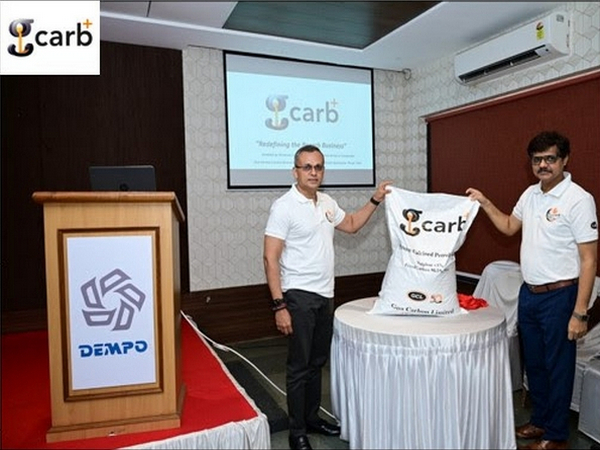
Goa Carbon Ltd: Coke Factory Drama – Profits Evaporate, Dividends Still Flow
1. At a Glance
Goa Carbon manufactures Calcined Petroleum Coke (CPC) – the black gold that aluminium smelters can’t live without. But FY25 was less “gold” and more “coal dust”: revenues fell, losses ballooned, and operating margins went negative (-5.7%). Their stock is down ~44% in one year, yet dividend yield stands at 4.5% – like gifting laddoos at a funeral. With Hindalco and Vedanta making up 90%+ of sales, this is less a company and more a captive supplier dressed up for NSE listing.
2. Introduction
Incorporated in 1967, Goa Carbon is part of the Denpo Group. Their main product – Calcined Petroleum Coke – is essential for aluminium smelters, electrodes, titanium dioxide plants, and a few niche industries. Sounds glamorous? Not really. CPC is literally the roasted form of petroleum coke, used to keep the aluminium party going.
The company has three plants – Goa, Bilaspur, and Paradeep – with combined capacity of 3.08 lakh TPA. Despite that, FY23 production was just 1.76 lakh MT – half the installed capacity, because apparently demand, power cuts, and shutdowns all have better attendance than their furnaces.
What makes Goa Carbon interesting?
Customer concentration: Hindalco + Vedanta = 90% of revenue. If they sneeze, Goa Carbon catches pneumonia.
Stock trend: CMP ₹446, way below 52-week high of ₹878. “Carbon se profits banega” turned into “Carbon se losses banega.”
Yet, dividend yield is a chunky 4.5%. This is like losing money on a wedding but insisting on giving gold coins in shagun to prove you’re rich.
Stick around—things get spicier two scrolls down.
3. Business Model – WTF Do They Even Do?
Imagine petroleum coke (petcoke) as raw atta. Goa Carbon bakes it into calcined petroleum coke (CPC) – like roasting bhindi until it’s edible. Aluminium smelters can’t run without CPC anodes, so Goa Carbon supplies the raw material to Hindalco, Vedanta, NALCO, and other heavyweights.
Revenue Mix (FY23):
Aluminium smelters – 97%
Everyone else (electrode, steel, titanium dioxide, chemical industries) – 3%
So, Goa Carbon is essentially an aluminium satellite. Its independence? About the same as a college kid living on parents’ UPI transfers.
Exports? Yes, but tiny – some supplies to France, Greece, Oman, and Saudi. But when 90% of your sales are to two Indian giants, “exports” are just for show in the PowerPoint deck.
4. Financials Overview
Source table
Metric
Latest Qtr (Jun’25)
YoY Qtr (Jun’24)
Prev Qtr (Mar’25)
YoY %
QoQ %
Revenue
₹199 Cr
₹128 Cr
₹132 Cr
+55.9%
+50.7%
EBITDA
-₹7.8 Cr
₹6.7 Cr
-₹4.8 Cr
-216%
-62%
PAT
-₹7.95 Cr
₹2.98 Cr
-₹6.54 Cr
-367%
-21.6%
EPS (₹)
-8.7
3.3
-7.1
N.A.
N.A.
Commentary: Revenues are up YoY, but profits are more negative than your neighbour aunty’s opinion of your career. EBITDA margin is -3.9%, making them one of the rare companies where producing more actually loses more.
5. Valuation – Fair Value Range Only
P/E Method:
EPS (TTM): -36 → P/E not meaningful.
EV/EBITDA Method:
EBITDA TTM: -₹33 Cr → EV/EBITDA also not meaningful.
DCF Method (assume revival):
If normalized EBITDA returns to ₹120 Cr (like FY23 peak) with 7% growth, and WACC 12%, then enterprise value