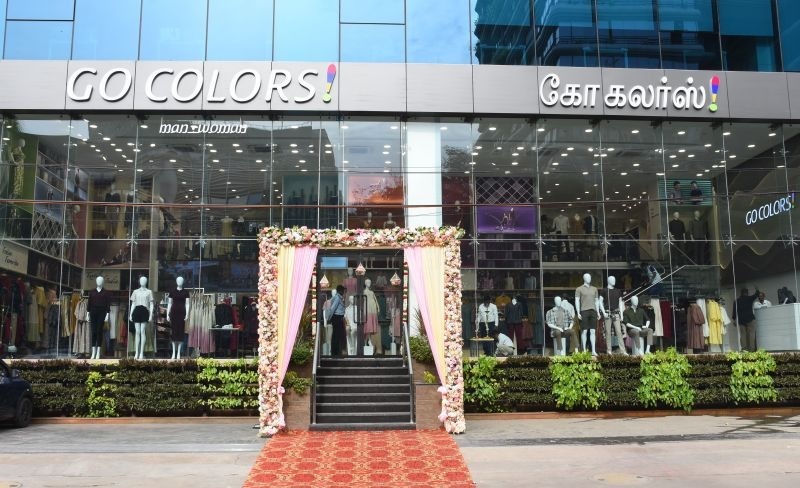
1. At a Glance – The Legging Empire That Slipped on Its Own Hemline
There was a time when Go Colors looked like the smartest guy in the Indian apparel party — a niche player selling only women’s bottom-wear and still minting money like a Kirana store during lockdown. One product category, insane SKU depth (120+ colors!), and a simple strategy: “You handle your tops, we’ll handle your bottoms.” Elegant, focused, profitable.
Fast forward to Q3 FY26 — and suddenly, this once-slick operator is standing in a mall wondering why nobody is entering the store. Revenue is ₹194.9 crore, PAT is ₹7.17 crore, and profit has taken a 70% YoY hit.
The management says: “Footfalls are down.”
Investors say: “Stock price is down 60% in a year.”
Reality says: “Something doesn’t add up.”
This is not a dying business. It’s worse — it’s a confused business in a confused industry.
The company still has:
- 800+ exclusive stores
- 2,500+ large format presence
- Strong brand recall
- 60%+ gross margins
And yet…
Customers aren’t walking in.
So what exactly went wrong?
Did fashion change?
Did consumers get bored?
Or did Go Colors overestimate how many leggings India really needs?
Let’s investigate.
2. Introduction – From Monopoly to “Mall Traffic Dependent” Startup
Go Fashion was built on a deceptively simple insight:
“Women wear bottoms every day, but brands focus on tops.”
Brilliant.
Underrated.
Highly scalable.
And it worked.
From 2017 to 2025:
- Revenue grew from ₹114 Cr → ₹848 Cr
- Profit grew from ₹8 Cr → ₹94 Cr
This was not just growth. This was domination.
But here’s the twist — the company didn’t lose because of competition alone. It lost because of consumer behaviour shifting faster than its business model.
Let’s break what management admitted in Q3 FY26 concall:
- “Challenging quarter due to lower footfalls”
- “Discretionary consumption moderation”
- “Uneven festive demand”
Translation in normal human language:
People stopped going to malls.
And when they did go… they didn’t buy leggings.
Even more interesting?
Management clearly said:
- Conversion rates are stable
- Product acceptance is fine
- Brand is still relevant
So the issue is not demand.
It’s traffic.
Now ask yourself:
👉 If your business depends on people physically entering stores… are you a