GKW Ltd FY26: A Once-Proud Warehouser Learning to Become a Property Fund
Section 1 — At a Glance
GKW was built in 1931 to warehouse things. Today, it warehouses ₹532 Cr of investments while its warehousing business earns ₹1.38 Cr. FY26 delivered a net loss of ₹2.31 Cr on ₹32.09 Cr of revenue—a company that once posted ROE of 33% now sits at negative territory. The stock trades at ₹1,823 on a market cap of ₹1,088 Cr. A ₹3,256 Cr stamp duty demand on a land JDA looms unresolved in court.
This is the story of a 95-year-old company pivoting hard, stumbling harder, and hoping a Mumbai real estate deal will fix what operations cannot.
Section 2 — Who Is GKW, Really?
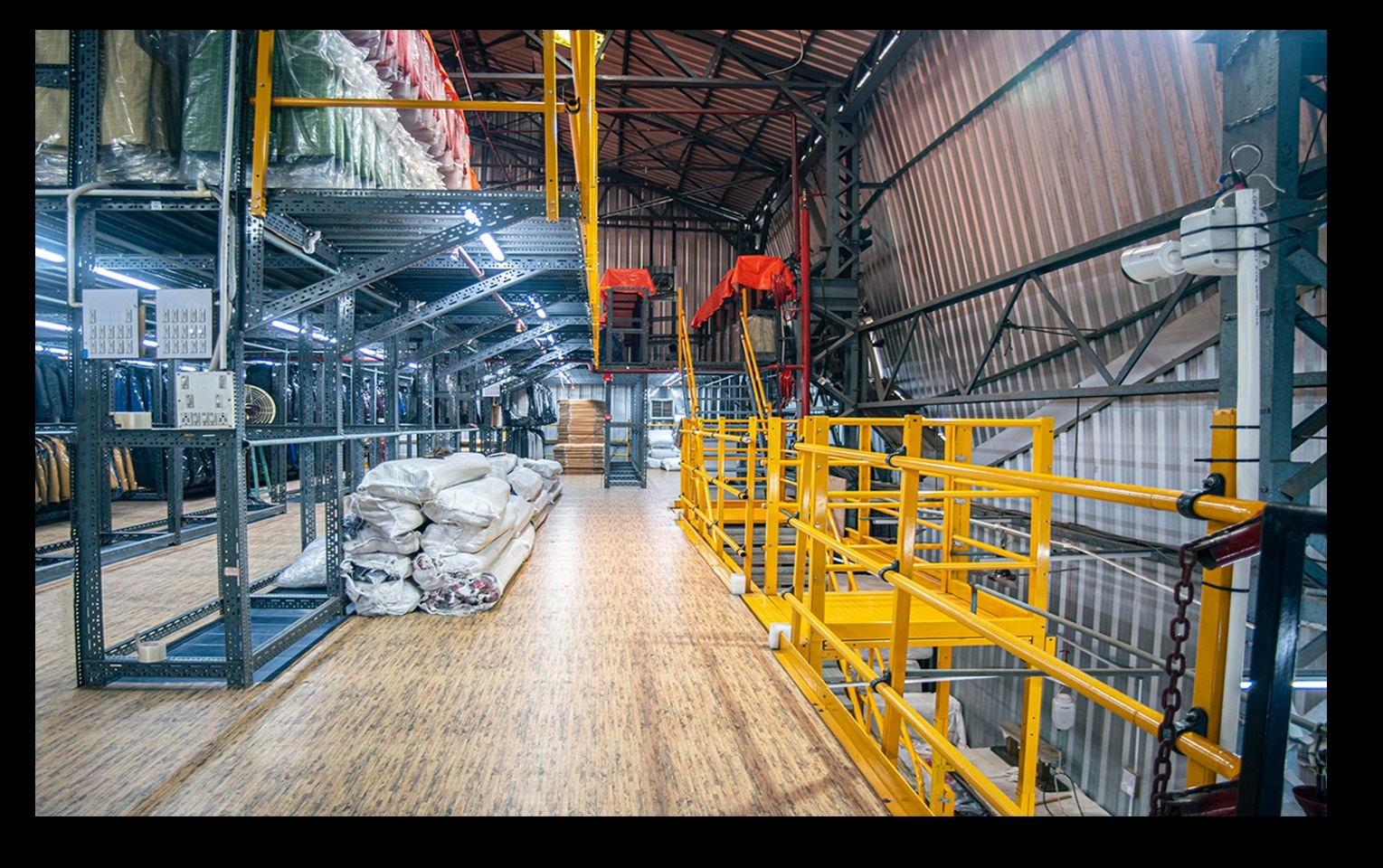
Incorporated in 1931—the year the Statue of Liberty’s lights were already 45 years old—GKW Ltd spent most of its century-minus-five years as a straightforward warehousing operator in Kolkata. Andul, Howrah: one of the city’s largest on-demand logistics hubs. Their bread and butter.
Then the land bank became the real estate. And suddenly, being a landlord looked more profitable than being a tenant’s storage vendor.
FY24 revenue split told the story: Warehousing ~29%, Investment and Treasury ~61%. By FY26, the balance sheet held ₹532 Cr in current investments (mutual funds, bonds, equities)—more capital deployed than the entire company’s market cap. Lease rentals, once a steady stream, now contribute ~29% of total revenue. The rest? Interest, dividends, and mark-to-market swings on a volatile portfolio.
The big play, announced November 2024: a Joint Development Agreement with Anthurium Developers (Mahindra Lifespace’s vehicle) for 36.87 acres in Bhandup, Mumbai. Mixed-use development, ~3.6 million sq. ft., primarily residential. A land parcel worth ₹19.95 Cr was sold in FY26 to a charitable trust (net profit recognition). The real money—the JDA consideration—remains pending.
But there’s a problem the filings bury in a footnote: a stamp duty demand of ₹3,256 Cr on the JDA execution. GKW filed an appeal in December 2025. The hearing is pending. If upheld, it would wipe out a decade of profits.
Does a company with ₹532 Cr of investments and a real estate jackpot really need to be on edge like this? The answer: yes. Because the investment book also lost ₹1.61 Cr to fair-value write-downs in FY26. Concentration risk is real.
Section 3 — The Business Model: Pivot or Drown
Two segments now, each a conversation.
Warehousing: Generated ₹1.38 Cr of segment revenue in FY26 (down from ₹2.02 Cr in FY25). Lease rentals from third parties, mostly stable. Operating profit margin on warehousing was 169% in Q4 FY26—meaning the segment turned tiny revenue into even tinier profit. The infrastructure is there (covered sheds, transformers, roads), but the occupancy appears thin or the lease rates weak. A logistics hub in Howrah is competing with DCs in Chakan, Talegaon, and Gujarat. GKW is losing that race.
Investment and Treasury: Generated ₹1.83 Cr of segment revenue in FY26 by holding and trading a portfolio of equities, bonds, and mutual funds. Mark-to-market gains/losses dominate. FY26 was a loss year here—the portfolio’s fair-value write-down exceeded realized gains. This segment is now a casino, not a source of sustainable earnings. Fair-value swings of ₹1 Cr to ±₹2 Cr per quarter are normal.
The reversion to “land-holding company pretending to be a warehouse” is visible in the business segment results. Warehousing’s segment asset base is ₹66 Cr. Unallocated assets (the investment portfolio, cash, receivables, and the Bhandup land asset) total ₹201 Cr.
A traditional investor would call this “a company worth the real estate value of its land, minus everything else.” Today, that math says: ₹3,231 Cr of total assets backing ₹1,088 Cr of market cap. The discount reflects the investment losses, the uncertain JDA, and the operational decay.
Section 4 — Financials Overview
Figures are consolidated, in ₹ crore.
Metric
FY26
FY25
Change
Revenue
32.09
32.78
-0.69 (-2.1%)
EBITDA
16.20
-9.71
25.91
PAT
-2.31
-18.47
16.16
EPS (₹)
-3.85
-30.78
27.93
The headline: FY26 was better than FY25, but only because FY25 was apocalyptic.
Revenue stayed flat. Sales of ₹32.09 Cr is down 2% YoY—the warehousing business is shrinking, and the investment portfolio is too small to fill the gap. Operating profit (PBT+Interest+Depreciation) of ₹4.13 Cr + ₹8.34 Cr interest + ₹3.73 Cr depreciation = EBITDA of ₹16.20 Cr is technically positive. But then you subtract ₹8.34 Cr of interest cost (very high for a ₹0.39 Cr borrowing company—mostly from loan covenants on the land JDA), ₹3.73 Cr of depreciation on the Bhandup asset revaluation, and ₹6.44 Cr of tax (yes, despite a loss, they paid tax; this is a deferred tax liability adjustment). Net result: -₹2.31 Cr.
EPS of -₹3.85 is better than FY25’s -₹30.78, but it’s still deeply negative. There is no annualisation trick here—Q4 EPS of -₹9.35 × 4 ≠ FY26 EPS. The full-year number is -₹3.85, and that’s what we use.
Section 5 — Valuation: What Does the Math Say? (Educational Only)
What follows is an educational look at what the numbers imply — not a price target, and not advice.
GKW trades at a negative P/E (not applicable given negative EPS). To value the company, we must use alternative frameworks.
The peer set is murky. Investment/finance holding companies trade on NAV multiples and asset discounts, not P/E. Warehouse REITs (if this were one) trade on yields and occupancy.
GKW is neither. Its peer set includes micro-cap holding companies: Tata Investment Corporation (P/E 78x, trading 1.16x BV), JSW Holdings (P/E 93.5x, 0.42x BV), and Mah Scooters (P/E 45.9x, 0.52x BV). GKW trades at 0.42x book value—a deep discount even within this group.
If we normalize FY26 EPS at 50% of the pre-loss FY24 level (₹23.08 × 0.5 = ₹11.54), and apply a peer average P/E of 50x, we’d estimate a “normalized value” of ₹11.54 × 50 = ₹577.
Implied range: ₹400–₹800 (depending on normalization assumptions and which peers we trust).
Current price of ₹1,823 sits well above this range.
This is extremely high for a company with negative earnings and a shrinking core business. Even a high-growth fintech at 10-15x EV/EBITDA looks cheap here.