1. At a Glance
Garware Marine Industries Ltd is a company where the surface level data and the underlying financial reality seem to be living in two different dimensions. On paper, it is a veteran in the ship repair industry, incorporated back in 1975. However, a closer look at the latest audited numbers for the year ended March 31, 2026, reveals a micro-cap entity struggling with stagnant growth and significant balance sheet baggage.
The most glaring red flag is the Auditor’s Qualification regarding trade receivables. The company is sitting on ₹355.15 lakhs (₹3.55 crore) of receivables that have been outstanding for more than three years. In a business where total annual revenue is barely above ₹10 crore, having over 30% of your typical turnover stuck in “old” debt is a massive liquidity risk. The auditors have explicitly stated they cannot comment on the recoverability of these funds, while the management continues to argue that these long-time customers will eventually pay up.
Furthermore, the company has a history of negative reserves, a hallmark of a business that has eroded its capital over time. While it managed a small profit of ₹0.15 crore for FY26, this is a sharp decline from the ₹0.43 crore profit recorded in the previous year. The market capitalization stands at a tiny ₹13.1 crore, yet the stock trades at a Price-to-Earnings (P/E) multiple of over 87x. This valuation seems completely disconnected from a company that delivered a poor sales growth of -3.64% over the past five years.
Investors are currently looking at a company that is almost debt-free, which is a rare positive, but one that suffers from an abysmal Debtor Days count of 1,720 days. To put that in perspective, it takes nearly five years for the company to collect cash from its sales. This is not just a “delay”; it is a systemic failure in credit management.
2. Introduction
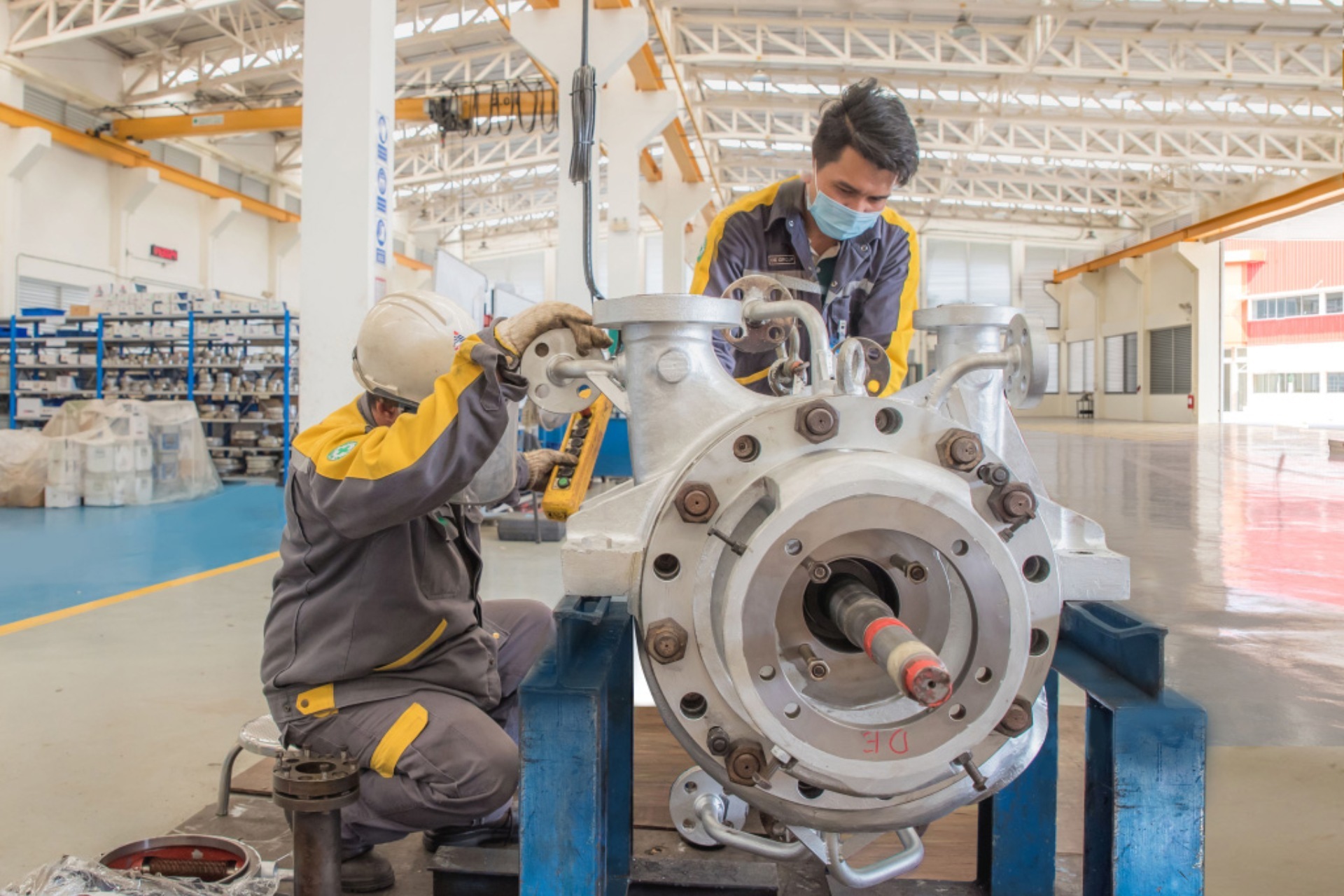
Garware Marine Industries Ltd (GMIL) operates primarily in the Ship Repair Division. Its operations involve the overhauling of engines, hydraulic repairs, and marine fabrication. While the maritime industry is often seen as a backbone of global trade, GMIL operates on a very small scale, servicing a limited number of shipowners.
The company’s recent performance has been characterized by extreme volatility and thin margins. In FY26, the company reported total revenue from operations of ₹1.08 crore (₹108.36 lakhs), which is a contraction compared to the ₹1.20 crore (₹120.18 lakhs) reported in FY25. Despite the long standing of the Garware name in the Indian industrial landscape, this specific entity remains a “nanocap” that has failed to scale.
A significant part of the current narrative revolves around its relationship with Global Offshore Services Limited (GOSL). GMIL recently extended a corporate guarantee of ₹10 crore on behalf of GOSL to help them secure a ₹40 crore loan. This is a massive commitment for a company with a market cap of just ₹13 crore. It ties the fate of GMIL even more closely to its promoters’ other ventures, adding a layer of related-party risk that cannot be ignored.
The company is currently facing legal drama in Chennai, with the EOW (Economic Offences Wing) issuing notices over alleged lease rental issues. This adds to the existing cloud of uncertainty. As we dive deeper into the financials, the question remains: is this a turnaround story or a slow drift into irrelevance?
3. Business Model – WTF Do They Even Do?
GMIL is essentially a specialized workshop for ships. Imagine a roadside garage, but for massive vessels that transport goods across oceans. They handle the “guts” of the ship—pumps, gearboxes, and engines. When a vessel is docked, GMIL’s “flying squads” (mobile repair teams) jump on board to fix mechanical issues so the ship can get back to making money.
The revenue model is strictly service-based. They don’t sell ships; they sell the labor and