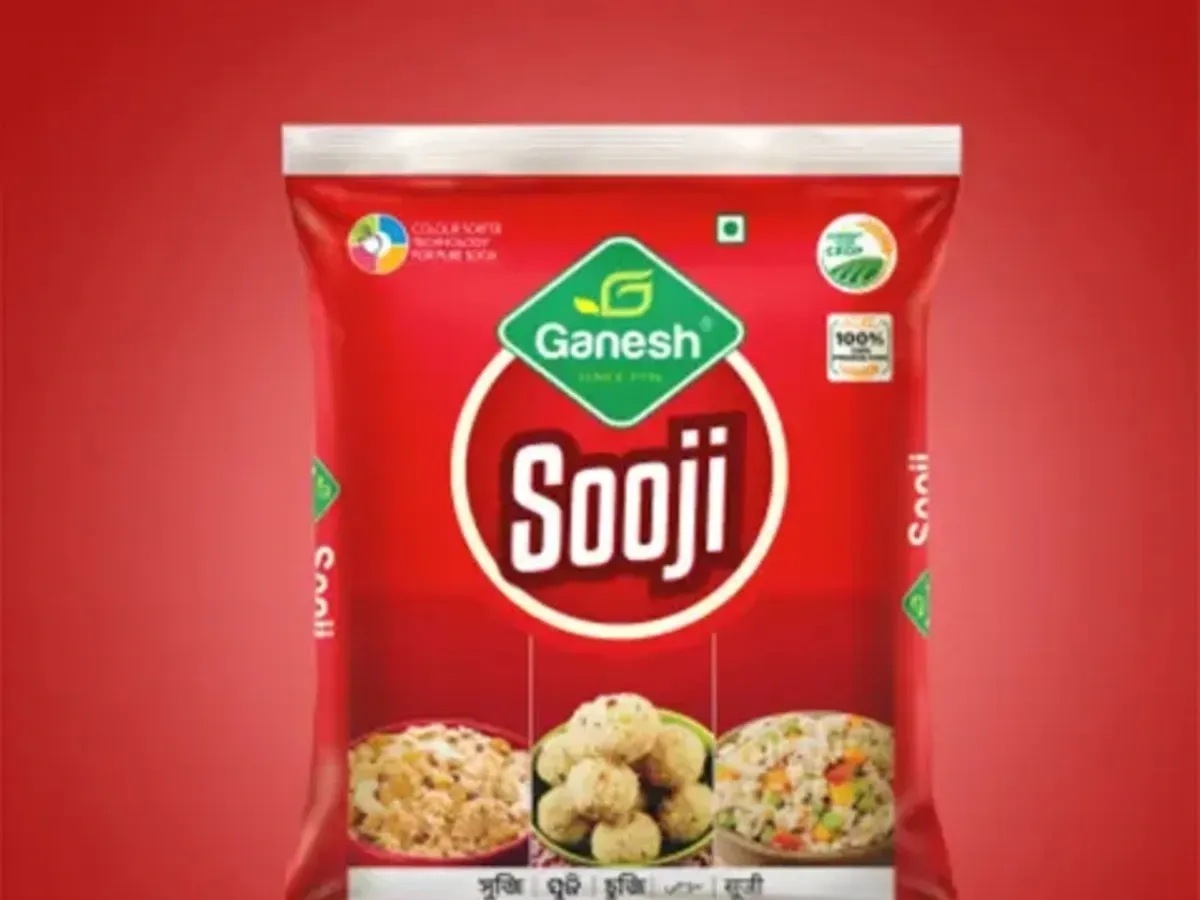
Ganesh Consumer Products Mar 2026: A 109% Profit Surge Bound by a 43% Sattu Fortress
Ganesh Consumer Products Limited delivered an multi-layered performance for the full year and final quarter ending March 31, 2026. The headline numbers present a striking contrast: net profit surged 108.75% year-on-year for the final quarter, even as quarterly sales contracted slightly by 0.94%. This dramatic margin expansion reflects an aggressive strategic pivot. Management intentionally walked away from low-margin business-to-business (B2B) bulk volumes to preserve capital and defend its core retail margins.
The company completed its ₹409 crore initial public offering in late 2025. This capital infusion has reshaped its financial foundation. Ganesh is now debt-free and holds over ₹110 crore in surplus cash. However, investor enthusiasm is tempered by intense local price wars, a high-profile new corporate entrant in its home market, and sudden leadership exits from its board of directors. The business remains highly concentrated in East India, where its long-term investment thesis rests on whether a commoditized staple processor can successfully transform into a high-margin regional packaged food powerhouse.
Section 2 — Introduction
Incorporated in 2000 and headquartered in Kolkata, Ganesh Consumer Products Limited has evolved from a regional staple manufacturer into a prominent fast-moving consumer goods (FMCG) brand in Eastern India. The company specializes in daily dietary essentials, navigating the high-volume, low-margin landscape of packaged flour and grain derivatives.
Following its public listing on September 29, 2025, which raised ₹409 crore, the company has focused on structural transition. The fresh issue component of ₹130 crore was earmarked to clear external borrowings and fund a new roasted gram flour facility in Darjeeling. This transition comes at a critical juncture. The post-IPO era demands that Ganesh defend its dominant home turf in West Bengal while expanding into value-added adjacencies to counter intense regional competition and soft rural demand.
Section 3 — Business Model: WTF Do They Even Do?
At its core, Ganesh takes basic agricultural commodities—wheat and gram—and processes them into consumer packs. It is a business where success is measured by the truckload and margins are fought over in paisas. The portfolio spans 42 products across 232 stock keeping units (SKUs). This includes standard whole wheat flour (atta), refined flour (maida), semolina (sooji), and porridge (dalia).
The operational flow begins with raw agricultural sourcing. This material moves into seven internal processing facilities currently running at a modest 55% to 60% capacity utilization. From there, output splits into two distinct structural channels: the core B2C retail engine, which commands 77% of total revenue and includes branded flours and spices, and the institutional B2B bulk and industrial by-product channel, which brings in the remaining 23%.
The real crown jewels of the business are its value-added regional staples. Ganesh commands a dominant 43.4% market share in packaged sattu (roasted gram flour) and a 31.2% share in sooji and dalia across East India. This retail engine is powered by an extensive distribution network of 28 C&F agents, 972 distributors, and a retail footprint covering over 350,000 touchpoints. The remaining institutional B2B sales and industrial by-products are segments management is actively treating like an unwanted corporate stepchild.
Section 4 — Financials Overview
Figures are consolidated, in ₹ crore.
Quarterly Performance Trend
Metric
Latest Quarter (Mar 2026)
YoY (%)
QoQ (%)
Revenue
218.04
-0.94%
2.97%
EBITDA / Operating Profit
17.50
36.61%
-23.45%
PAT
9.54
108.75%
-21.80%
EPS (₹)
2.36
87.30%
-21.85%
The final quarter highlights the reality of management’s “tactical reset.” Quarterly revenue remained virtually flat, dipping 0.94% to ₹218.04 crore. However, Operating Profit climbed 36.61% year-on-year to ₹17.50 crore, and PAT jumped 108.75% to ₹9.54 crore. This bottom-line surge was amplified by a sharp drop in interest expenses following IPO debt repayment.
Revenue quality often matters far more than raw top-line volume when a business faces intense competitive pricing pressure. During the earnings call, management confirmed that the sequential drop in operating margins from 10.80% in December to 8.03% in March was driven by carrying higher-priced wheat inventory into a softening commodity market. The CFO noted that 9M FY26 revenue from digital and quick-commerce channels grew 58% year-on-year. This high-velocity channel now delivers healthier contribution margins than traditional general trade without extended credit risk.
Section 5 — Valuation Discussion: Fair Value Range Only
To determine where Ganesh Consumer Products sits on the valuation spectrum, we evaluate its trailing numbers using multiple methodologies based on its current market capitalization of ₹794 crore and a current market price (CMP) of ₹197. With 4.04 crore equity shares outstanding, the reported full-year FY26 EPS stands at ₹10.49.
1. Price-to-Earnings (P/E) Method
The company’s historical 5-year median P/E rests at 21.0x, while its current trailing P/E stands at 18.7x. This sits at a sharp discount to the broader packaged foods peer median