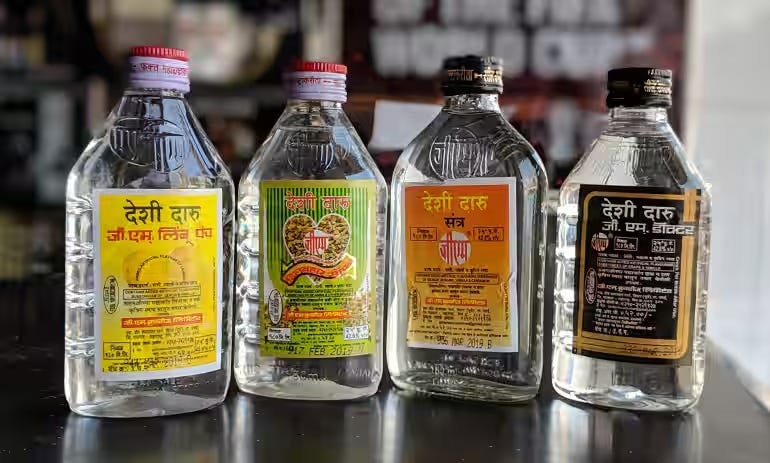
1. At a Glance – The Desi Monopoly That Prints Cash… Until It Doesn’t
If Indian stock markets had a “quietly printing money without LinkedIn bragging” award, G M Breweries would probably win it while sipping G.M. Santra in a plastic cup.
This is a company that:
- Controls 25–30% of Maharashtra’s country liquor excise collection
- Has a virtual monopoly in Mumbai, Thane, Palghar
- Runs at zero debt
- Generates 24% operating margins in a low-end alcohol segment (yes, you read that right)
And yet… it trades at a P/E of just ~14.7, while peers are partying at 40–90 P/E.
So what’s wrong?
Let’s just say:
- Their biggest product packaging is under court stay
- Their biggest segment is highly regulated
- Their biggest strength (country liquor dominance) is also their biggest risk
It’s like owning a gold mine… but the government controls the shovel.
Now ask yourself:
Would you rather invest in a fancy whisky brand… or the guy supplying desi liquor to half of Mumbai?
2. Introduction – The Most Underestimated Business in India
Let’s be honest.
Most investors dream of owning:
- Premium whisky brands
- Craft beer startups
- Fancy wine labels with French accents
Nobody wakes up thinking:
“Bro, today I will invest in country liquor.”
And that’s exactly why this company exists quietly under the radar.
Founded in 1981, G M Breweries didn’t chase glamour. It chased volume, distribution, and regulatory stronghold.
Instead of competing in:
- High marketing spends
- Celebrity endorsements
- Premium positioning
They went full Indian jugaad mode:
- Focus on mass consumption
- Lock in geographic monopolies
- Optimize cost + distribution
And today?
They are:
- The largest country liquor manufacturer in Maharashtra
- A major contributor to state excise revenue
- Sitting on massive investments + real estate
But here’s where it gets spicy.
The company:
- Avoids IMFL (high competition)
- Focuses on country liquor (low margin perception)
- Still delivers better margins than many FMCG companies
That’s like a roadside vada pav stall making more profit than a Starbucks.
But is this sustainable?
3. Business Model – WTF Do They Even Do?
Let’s simplify this like you’re explaining to a friend who thinks “IMFL” is a cricket league.
Step 1: They Make Alcohol
- Country Liquor (CL) – low-cost, high-volume
- IMFL – small presence
Step 2: They Sell It Where It Matters
Basically, high-density, high-consumption regions.
Step 3: They Print Money via Excise Ecosystem
- Alcohol = heavily taxed
- Government earns
- Company earns
Everyone wins… except your liver.
Step 4: Packaging Innovation (Yes, That Matters)
- Shifted heavily to PET bottles (~93% of sales in FY25)
- Why? Lower