G G Automotive Gears Ltd March 2026 Consolidated Financial Review: Revenue Touches ₹116 Crore While Severe Factory Fire Triggers Negative Credit Rating Watch
1. At a Glance
G G Automotive Gears Ltd presents a fascinating puzzle of top-line operational resilience shadowed by unpredictable operational disruption. This industrial ecosystem, running on heavy-machinery precision, recorded operational revenue touching ₹116.36 crore for the full fiscal year ended March 31, 2026, marking a marginal advance over the ₹114.32 crore logged in the previous fiscal year.
Beneath the steady surface of this specialized manufacturer lies a complex financial narrative. The company boasts an expanding multi-industry engineering pipeline, an active order book standing firmly at ₹105 crore, and long-term operating profit margin improvements that have climbed over the last three years to reach 18.1%. These metrics have consistently pulled investor focus toward this niche manufacturing play.
The immediate financial landscape, however, demands critical analysis. A severe fire broke out at the primary manufacturing installation in Dewas, Madhya Pradesh, on February 4, 2026. This unexpected event brought localized factory floor operations to a sudden halt, triggering an extensive insurance assessment process and forcing reliance on temporary capital lines.
The disruption directly impacted the final quarter of the fiscal year, with March 2026 quarter sales contracting sharply by 37.5% year-on-year to ₹21.10 crore, compared to ₹33.76 crore in the same period last year. Quarterly profit followed a similar downward trajectory, contracting by 19.9% to ₹1.73 crore.
FY26 Full-Year Revenue: ₹116.36 Cr (Up from ₹114.32 Cr in FY25)
March 2026 Quarterly Sales: ₹21.10 Cr (Down 37.5% YoY)
March 2026 Quarterly Profit: ₹1.73 Cr (Down 19.9% YoY)
Active Order Book Portfolio: ₹105.00 Cr
This sudden break in production velocity forced premier rating agency CRISIL to keep the company’s bank loan facilities under strict monitoring on a ‘Rating Watch with Negative Implications’. The negative watch persists despite an underlying upgrade to a BBB/Stable baseline structure achieved in late 2025.
The core analytical problem centers on execution stability: can management execute their equipment restoration timeline by the end of July 2026 without running into cost overruns? The following deep dive tears down the mechanics of the balance sheet and cash flows to reveal what is truly happening under the hood.
2. Introduction
G G Automotive Gears Ltd has spent over five decades building out its footprint in heavy engineering, positioning itself as a core infrastructure vendor since its incorporation in 1974. Operating out of its industrial production hub in Dewas, Madhya Pradesh, the enterprise focuses on the design, structural fabrication, complete assembly, and technical field servicing of heavy-duty industrial traction gears, precision pinions, and integrated gearboxes.
The company’s primary operational focus is serving as a tier-1 authorized partner for the Indian Railways network, delivering crucial locomotive components. Over years of capital deployment, the management team has slowly expanded the industrial catalog to mitigate concentration risk. They have established functional product pipelines running into structural metro rail networks, specialized cooling towers, industrial mining machinery, global oil and gas infrastructure, wind energy transmission systems, and heavy defense engineering applications.
The engineering footprint spans an integrated asset base, including a dedicated forging production unit with a rated structural capacity exceeding 6,000 metric tonnes per annum. The asset setup includes an active equipment line capable of processing more than 10,000 heavy gears and 20,000 distinct pinions or transmission shafts every year. This production capacity is spread across multiple manufacturing blocks, including the newly commissioned Unit IV facility, which added over 25,000 square feet of specialized operational floor space in late fiscal 2024.
The underlying equity matrix underwent major changes during the 2024–2026 review cycles. The company increased its authorized capital base to ₹10 crore, followed by an aggressive issuance of preferential shares and strategic convertible share warrants totaling ₹12.44 crore to strengthen liquidity.
As the tracking period closes in May 2026, the company faces an operational test. It must balance a massive pipeline of unfilled heavy industrial orders against the physical reality of a partially disabled factory floor currently undergoing emergency restoration.
3. Business Model – What Do They Even Do?
The mechanics of the business model rely entirely on high-barrier industrial metallurgical engineering, heavily dependent on institutional procurement frameworks. The company operates within a complex, tender-driven ecosystem where it builds customized, high-tolerance components capable of enduring extreme mechanical stress. If a commuter train or a massive mining truck can move, it is because components built exactly like these are operating under intense pressure without cracking.
The primary product catalog consists of locomotive traction gears and specialized heavy shafts designed to transmit thousands of horsepower from electric or diesel traction motors directly to the wheel assemblies of locomotives, regional EMUs, and cross-country DMUs. Because precision is critical, the machining lines process raw forgings ranging from 10 kg to 100 kg into finished gears with outer diameters up to 1,500 mm, adhering to strict international quality standards.
Industrial Product Mix:
├── Locomotive Traction Systems (Electric, Diesel, EMU, DMU fleets)
├── Mass Transit Components (Urban Metro Rail Systems)
├── Industrial Power Infrastructure (Cooling Towers & Wind Energy Hubs)
└── Heavy Resource Extraction (Mining & Earth-Moving Equipment blocks)
The revenue mix remains heavily weighted toward pure industrial product sales, with direct sales of manufactured goods accounting for roughly 97% of top-line revenue. The remaining 3% comes from external precision job work and custom metallurgy assignments using the company’s tool infrastructure.
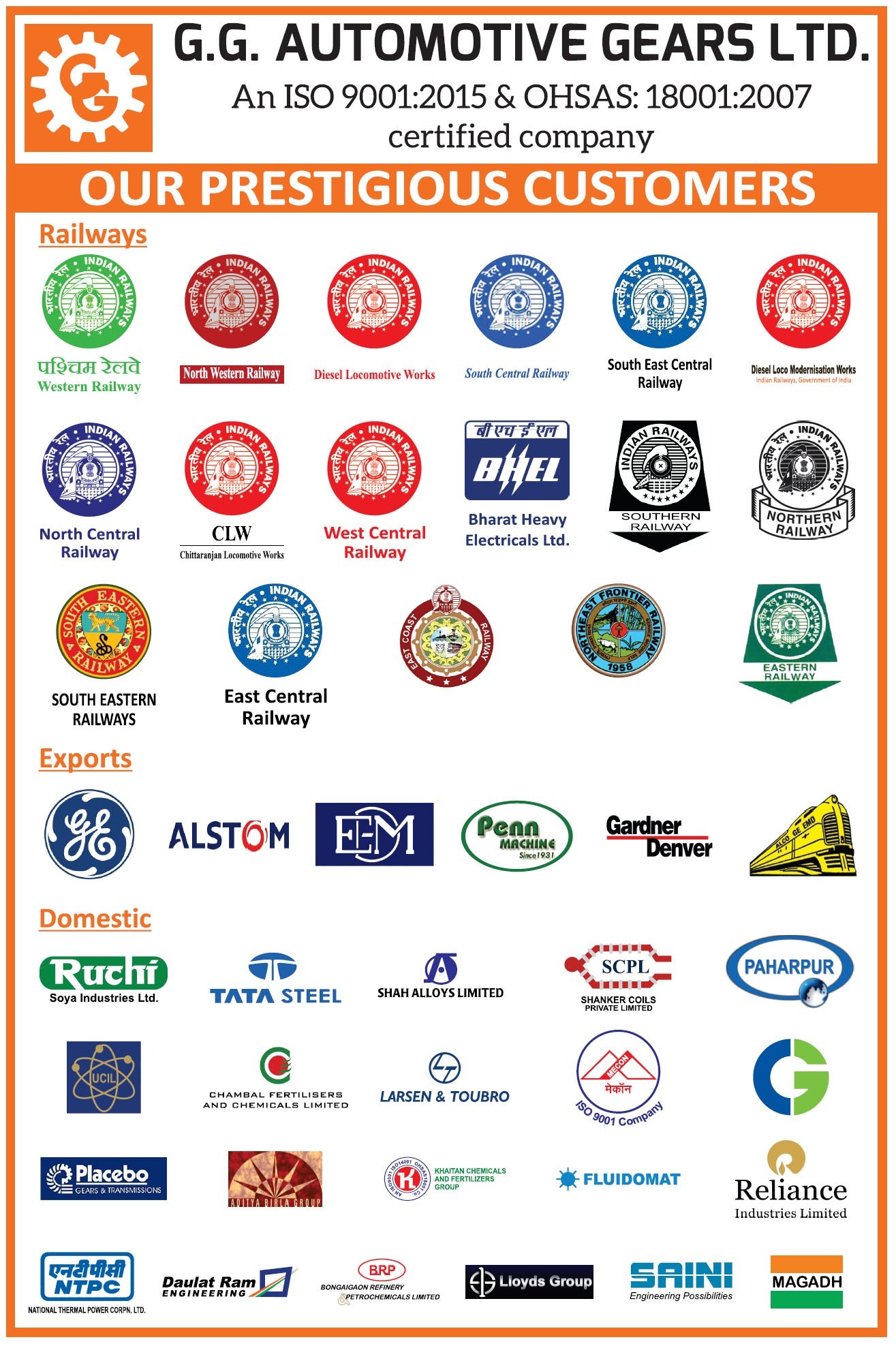
The institutional customer roster features premier engineering enterprises, including the Integral Coach Factory, Bharat Heavy Electricals Ltd (BHEL), Larsen & Toubro (L&T), Kirloskar Electric, Paharpur Cooling Towers, and Crompton Greaves.
How sustainable do you think a manufacturing model is when it relies so heavily on institutional B2B buyers and competitive government tenders?
The structural risk embedded in this business model is its complete exposure to input cost volatility. Raw material costs—specifically carbon steel, specialized non-ferrous components, and structural alloys—traditionally eat up 60% to 70% of total operational revenue. Because these multi-month government supply contracts lack flexible price-index clauses, any sudden spike in global steel markets can severely squeeze margins before delivery can be completed.
4. Financials Overview
The financial results for the quarter and full fiscal year ended March 31, 2026, reveal a visible split between historical multi-quarter momentum and immediate operational challenges.
Core Quarterly Financial Performance Comparison
All figures are presented in ₹ Crores (unless specified otherwise for precise tracking).
Metric
Latest Quarter (Mar 2026)
Previous Quarter (Dec 2025)
Same Quarter Last Year (Mar 2025)
YoY Change (%)
QoQ Change (%)
Revenue from Operations
21.10
34.01
33.76
-37.50%
-37.96%
EBITDA (Excl. Other Income)
2.41
6.82
6.04
-60.10%
-64.66%
Profit After Tax (PAT)
1.73
3.46
2.16
-19.91%
-50.00%
Reporting EPS (₹)
1.73
3.46
2.27
-23.79%
-50.00%
Annualized EPS (₹)
6.92
11.23
9.08
-23.79%
-38.38%
Evaluating management’s long-term execution reveals a pattern of hitting operational targets, which has now been disrupted by unexpected force majeure. During the mid-2025 reviews, management laid out plans for consistent top-line scaling and optimized capacity utilization.
Up until the third quarter of fiscal 2026, the company delivered on this strategy. Revenue climbed steadily from ₹28.01 crore in June 2025 to ₹33.26 crore in September, peaking at ₹34.01 crore in December 2025.
The structural impact of the February 2026 factory fire shows up clearly in the March 2026 numbers. Total quarterly revenue dropped to ₹21.10 crore, wiping out a year of steady growth. Operating profit margins (OPM) plummeted from a record high of 20.05% in December 2025 down to 11.42% in the final quarter of the year.
However, bottom-line net profit was shielded by a large deferred tax credit of ₹1.16 crore during the quarter. This kept net profit at ₹1.73 crore, preventing a deep drop in quarterly EPS.
5. Valuation Discussion
Assessing G G Automotive Gears Ltd requires a balanced approach that separates historical performance from current operational risks. This fair value evaluation uses three distinct methods based strictly on the