1. At a Glance
Welcome to Fusion Finance Ltd, where microfinance dreams meet macro mismanagement. As of November 2025, the ₹2,420 crore market cap NBFC is trading at ₹179 a share — down from ₹215 highs, proving once again that finance without fusion is confusion, but with Fusion, it’s full-blown combustion.
The company, once praised for empowering rural women entrepreneurs, is now battling an existential audit-worthy hangover: GNPA shot up from 2.89% in March 2024 to 5.46% in June 2024, collection efficiency slipped, and profitability nosedived into a deep, spreadsheet-shaped crater. PAT for FY24 stood at ₹505 crore — but by Q1 FY25, Fusion flipped to a loss of ₹36 crore, worsened by ₹348 crore provisions, and the founder literally resigned this quarter.
Book value sits at ₹118, debt balloons at ₹4,934 crore, and ROE has entered the deep freezer at –54.5%. OPM is –9.04%, and even the Excel gods have started pity formatting the negative signs. The company’s average borrowing cost stands at 10.1%, yet collection efficiency at 96.3% tells you — borrowers may be better at dodging repayments than Fusion is at dodging trouble.
But wait — the board just approved up to ₹1,000 crore of new NCDs. Because when in debt, issue more debt. Classic NBFC logic.
2. Introduction
Once a poster child of financial inclusion, Fusion Finance Ltd built its brand by lending small loans to women in rural India. Cute story, right? Until your loan book starts looking like a Jenga tower in an earthquake.
Fusion isn’t a small player — it operates across 22 states, in 453 districts, and runs over 1,297 branches, 94% of them rural. Its model is textbook microfinance: Joint Liability Group (JLG) loans to women, backed by mutual guarantees and repayments every 14 or 28 days. Interest rates range between 19.15% and 23.4% on a reducing balance. So yes, Fusion charges less than your credit card but collects faster than your gym membership auto-debit.
In FY24, Fusion disbursed ₹10,295 crore worth of loans, with an AUM of ₹11,476 crore and NIM of 11.22%. Everything looked peachy until Q1 FY25. Suddenly, the GNPA went from “manageable” to “MBA case study,” and the PAT graph started mimicking a waterfall.
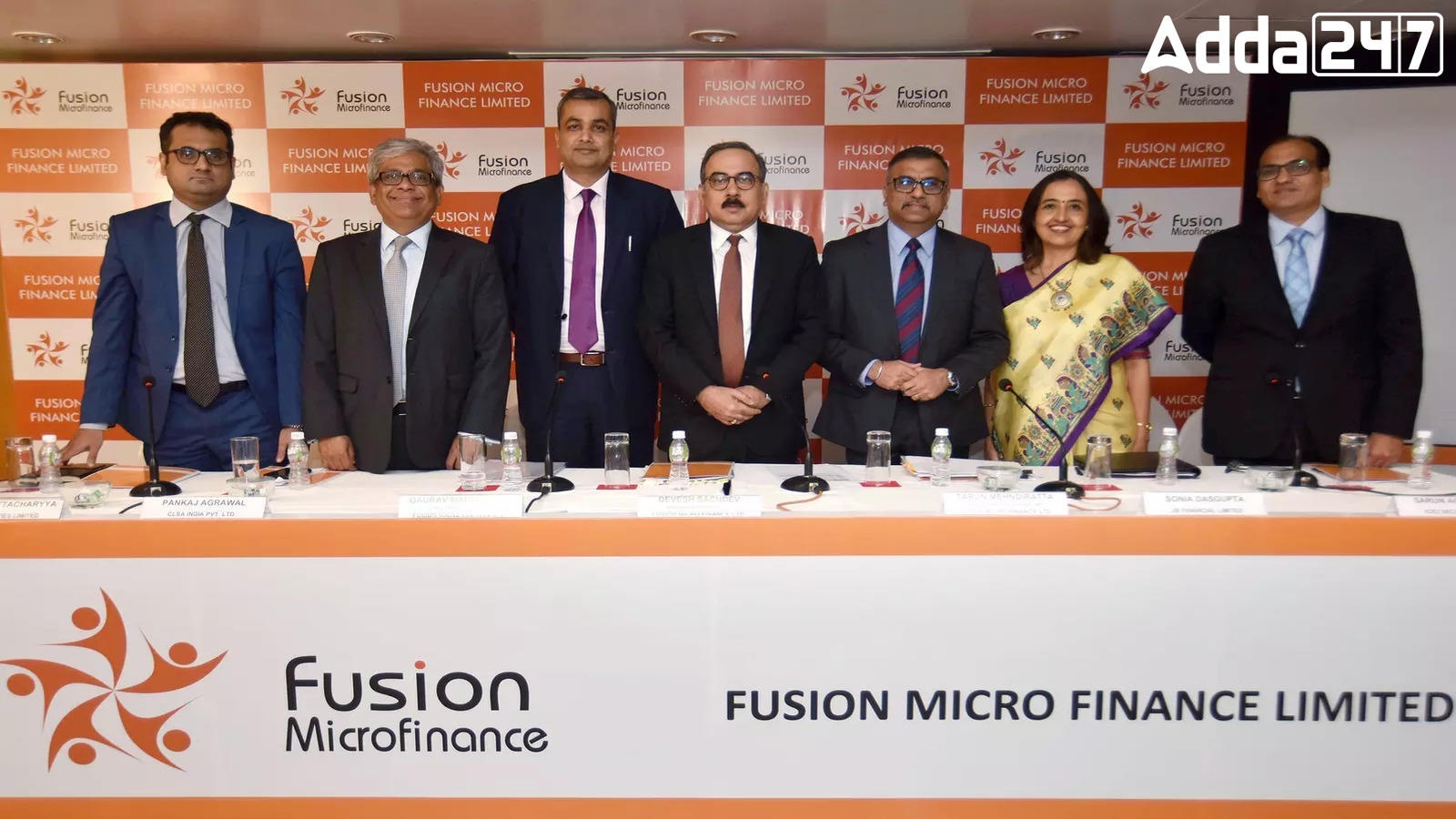
By Q2 FY26, the company’s founder and MD Devesh Sachdev — the man behind the Fusion story — resigned, leaving behind an MD-shaped hole and a board scrambling to explain “extraordinary provisions” and “temporary setbacks.” Now, Sanjay Garyali holds the hot seat. The market, however, isn’t convinced. The share price dropped 4.6% post-results, as investors collectively asked, “Bro, who’s running the show now?”
3. Business Model – WTF Do They Even Do?
Fusion Finance is a systemically important NBFC-MFI, meaning it’s one of the big fish in the small-loan pond. Their bread and butter: JLG loans to women in rural areas. Groups of 5–7 members stand guarantee for each other — a classic peer-pressure-powered model.
The loans are small (₹30,000–₹60,000 range typically), tenure is 17–25 months, and repayments are fortnightly or monthly. Interest rates hover around 20–23%. The idea? Financial inclusion. The reality? Massive operational and credit risk if the economy sneezes.
Fusion also dabbles in MSME lending, targeting the “missing middle” — businesses too big for microcredit but too small for traditional bank loans. These are loans for working capital, solar rooftops, or business expansion. Sounds progressive, but given the sharp NPA rise, it seems