01 — At a Glance
The NBFC That Discovered Overleveraging. Way Too Late.
- 52-Week High / Low₹850 / ₹344
- Q3 Revenue₹815 Cr
- Q3 PAT₹277 Cr
- Q3 EPS₹9.41
- Annualised EPS (Q3×4)₹37.64
- Book Value₹231
- Price to Book1.54x
- Dividend Yield0.54%
- Debt / Equity1.23x
- Return (1 Year)-43.3%
The Setup: Five-Star closed Q3 FY26 (Dec 2025) with ₹815 crore revenue (+12% YoY), ₹277 crore PAT (essentially flat), and a 9.39 P/E ratio. The stock is down 43% in a year because Gross NPA hit 3.18% and their borrowers look like they’re surviving on pure hope and overleveraging. Management’s Feb 2026 concall sounded like a therapy session: “Understand the problem. Fix the problem. Then move ahead.” They are currently stuck in Step 1, possibly early Step 2. The market decided Step 3 would never arrive.
02 — Introduction
When “Fast-Growing” Becomes “Voluntarily Slowing Down”
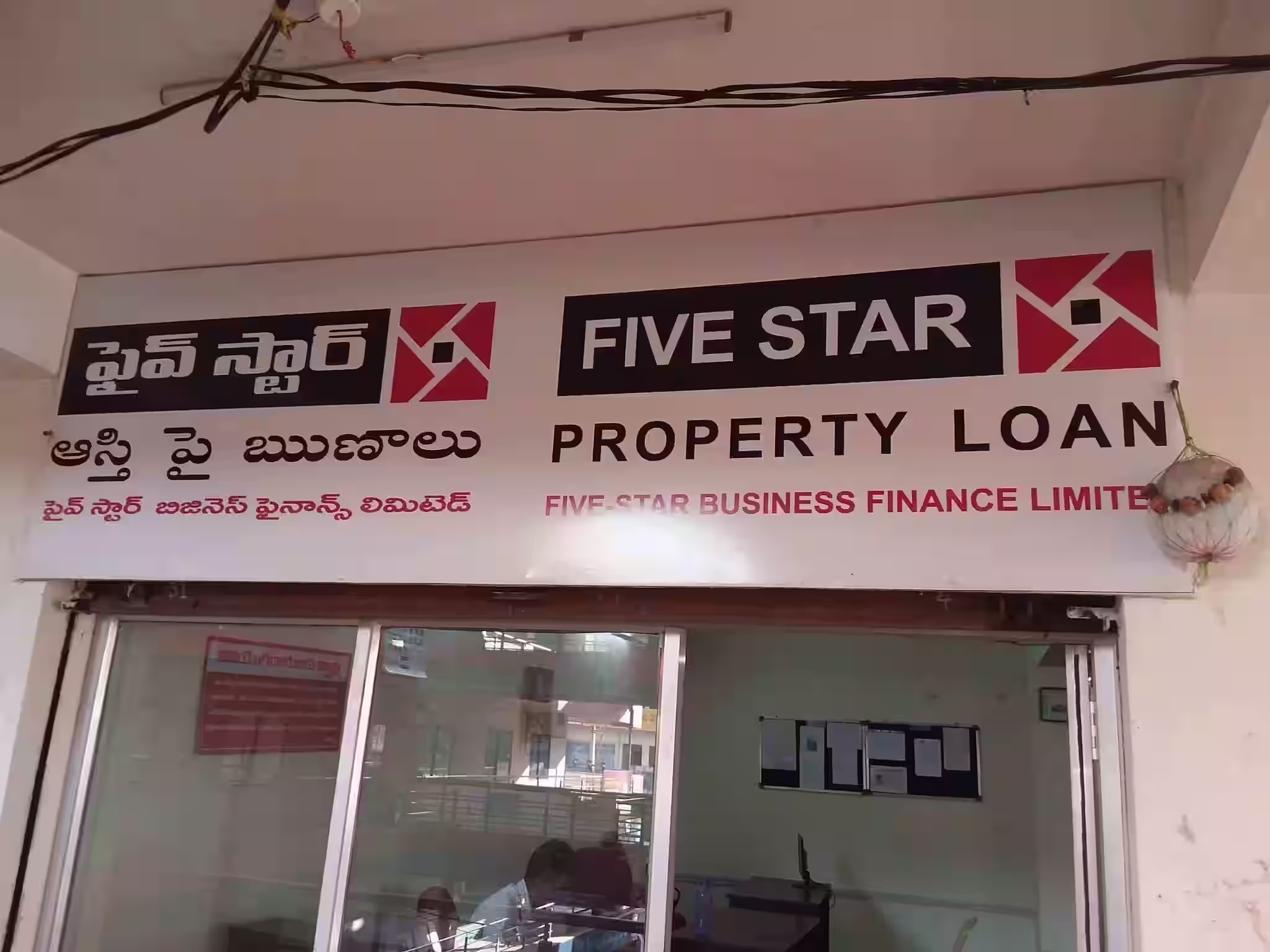
Let’s appreciate the poetry in the situation: Five-Star Business Finance is a Chennai-headquartered NBFC that went public in Nov 2022 at the exact top of the NBFC growth cycle. It was supposed to be the next Bajaj Finance. It was supposed to be the fastest-growing NBFC in India. It was supposed to absolutely demolish the competition in South India. It did, until it didn’t.
The company provides secured mortgage loans to microentrepreneurs and self-employed individuals across South India — people whose gross monthly household income ranges from ₹25,000 to ₹40,000. Your subzi seller. Your electrician. Your tailor. The problem? In late 2024 and early 2025, these people discovered that multiple lenders would say yes to them simultaneously. Queue the overleveraging crisis.
Q3 FY26 saw deliberately slower disbursements (they themselves pumped the brakes), collection efficiency that deteriorated despite increased manpower, and management literally telling investors: “We are not giving growth guidance this quarter because we’re busy fixing stuff.” The stock responded by crashing another 35% in three months. Financial markets, they say, do not appreciate therapy sessions.
But here’s the kicker: the company is still making ₹277 crore in quarterly PAT on ₹815 crore of quarterly revenue. ROE is 18.6%. The balance sheet has a CAR of 51.63% — almost double what regulators want. And the P/E is 9.39x, which is cheaper than literally every big-cap financial services company in India. So either the market is dead wrong, or the market is priced right and the company is in for a few quarters of pain. Both are possible. One is more likely.
The Concall Vibe (Feb 2026): MD Sridharan Pathy sounded like an auditor at a family business meeting: “We don’t believe in cosmetic write-offs. We believe in credit culture. We’re building collections infrastructure right now. Growth can wait.” Translation: we broke something, we’re fixing it properly, the stock can crash meanwhile. Very professional. Very dangerous.
03 — Business Model: The NBFC That Lends to People With Three Lenders
Lending to Your Mechanic. What Could Possibly Go Wrong?
Five-Star’s business model is deceptively simple. They identify self-employed individuals and small business owners — the kind of people traditional banks laugh at. They offer secured loans backed by property (usually self-occupied residential real estate). They charge 24–26% interest rates. They collect religiously. They make enormous spreads. Wash. Rinse. Repeat. Profit.
What they did not predict was that by 2024, their customers had figured out that every other NBFC was also saying yes. So your electrician walked into Five-Star, got a ₹5 lakh loan at 25%. Then he walked into Muthoot or some other NBFC and got another ₹5 lakh. Then another lender. By the time collections officers knocked on the door, the electrician had three loans totalling ₹15 lakh and was earning ₹30,000 a month. The math was… not mathy.
As of June 2025, approximately 23% of Five-Star’s borrowers had three or more loans from other lenders. That’s roughly 1 in 4 people who are technically overleveraged by design, not accident. And that’s where the crisis began. The company has ~491,782 active loans with an average ticket size of ₹3.93 lakh, spread across 835 branches in 11 states, mostly concentrated in AP (36%), TN (29%), and Telangana (19%). The portfolio is ₹12,964 crore (Q3 FY26). Almost all borrowers are in the <₹5 lakh ticket size bracket (81% of AUM).
< ₹3L Tickets29%Overleveraged Risk
₹3-5L Tickets52%Bread & Butter
₹5-10L Tickets17%Safer Segment
Portfolio Vintage36% <1YYoung, Raw
The Real Problem: Microfinance institutions (MFIs) are moving upmarket into Five-Star’s territory. MFIs are now lending to small business owners at higher amounts. The ecosystem is cannibalizing itself. Five-Star is not competing with MFIs — it’s competing with a version of MFIs that shouldn’t exist, but do.
💬 Do you think secured lending to microentrepreneurs is fundamentally broken, or is it just overleveraging during a liquidity glut? Drop your hot take.
04 — Financials Overview
Q3 FY26: The Numbers Are Boring. The Story Is Messy.
Continue reading with a premium membership.