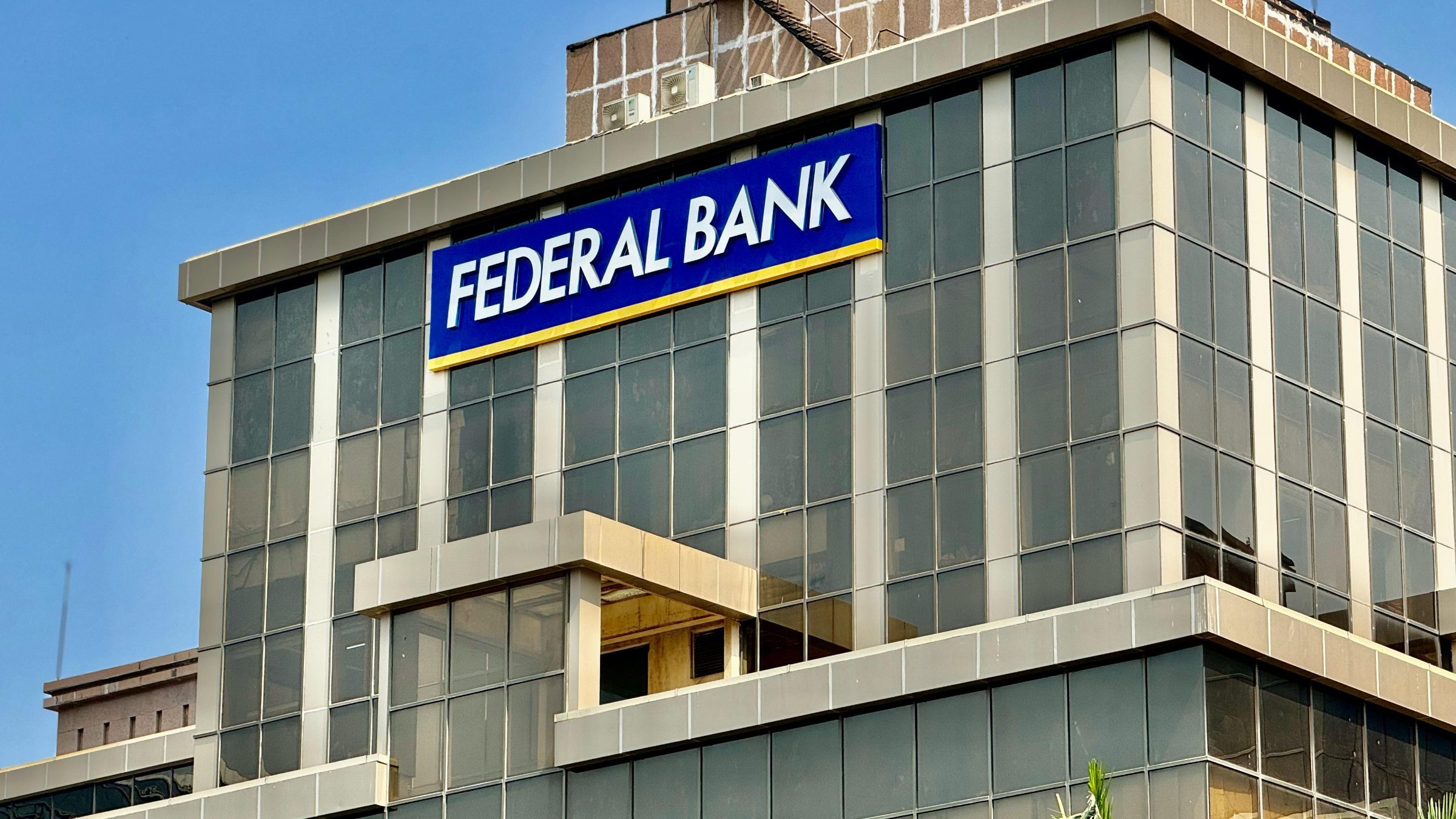
1. At a Glance – The Mallu Bank That Refuses to Be Boring
Federal Bank is currently trading around ₹270 with a market capitalisation of ₹66,555 crore, which officially places it in that awkward “too big to ignore, too small to worship” zone of Indian banking. Over the last three months, the stock has delivered a spicy ~27% return, clearly waking up investors who had mentally parked it in the “steady but sleepy” folder.
The latest Q3 FY26 results show quarterly revenue of ₹7,360 crore and PAT of ₹1,125 crore, translating into a quarterly EPS of ₹4.44. Annualise that (because yes, this is Quarterly Results, lock it here 🚨) and you get an annualised EPS of ~₹17.8. At the current price, the implied P/E lands around 15–16x, which is neither cheap like a PSU bank hangover nor premium like HDFC Bank’s Swiss watch pricing.
Asset quality looks cleaner than a Kerala backwater resort: Gross NPA at 1.84%, Net NPA at 0.44%, and a CRAR of 16.4%. CASA sits at ~30%, ROE around 13%, and ROA at 1.25%. In short, Federal Bank is behaving like that disciplined school topper who also plays football after class.
But the real question is: is this just a one-quarter glow-up, or has the bank finally figured out how to scale without tripping over its own mundu?
2. Introduction – From Travancore Roots to Dalal Street Mood Swings
Federal Bank was incorporated way back in 1931 as Travancore Federal Bank Limited, which means it has survived British rule, license raj, bank nationalisation trauma (by staying private), Harshad Mehta, dot-com bubbles, IL&FS, Yes Bank, and Twitter finance influencers. That alone deserves a slow clap.
For decades, Federal Bank carried the image of a solid Kerala-centric lender—fantastic NRI franchise, strong gold loans, conservative underwriting, but zero swagger. It was the kind of bank your parents trusted but your portfolio ignored.
Fast forward to FY25–FY26, and suddenly the bank is talking about microfinance across 23 states, CV loans with OEM tie-ups, digital transactions crossing 92%, and private equity giant Blackstone writing equity cheques. That’s not your uncle’s Federal Bank anymore.
Yet, despite all this progress, the market still prices Federal Bank closer to Axis Bank’s bad-hair days than ICICI Bank’s glow-up era. Is that fair? Or is the market just waiting for one mistake before yelling “See, we told you so”?
Before jumping to conclusions, let’s break down what this bank actually does, where it makes money, and where the skeletons could be hiding.
3. Business Model – WTF Do They Even Do?
At its core, Federal Bank is a universal private sector bank offering retail banking, wholesale lending, treasury operations, forex, para-banking services, and third-party distribution. Basically, the full thali.
The loan book stood at ₹2,42,773 crore as of FY25. Retail accounts for ~56% of advances, while wholesale contributes ~44%. This balance is important because it prevents the bank from YOLO-ing into either risky corporate lending or ultra-low-margin retail excess.
Retail segments include gold loans (₹30,505 crore), housing, vehicle finance, business banking, agriculture, CV loans, and microfinance. Gold loans remain a cultural advantage—Kerala households don’t just trust Federal Bank with money; they trust it with amma’s jewellery.
Wholesale lending is spread across Corporate Banking (₹27,199 crore) and Business Banking (₹19,064 crore), with top 20 borrowers contributing just 7.93% of the loan book. Translation: no single borrower can nuke the bank’s balance sheet overnight.
On the liabilities side, deposits stood at ₹2,83,647 crore, with granular deposits (<₹3 crore) forming ~50%. CASA is ~30%, which isn’t best-in-class but decent enough to keep funding costs under control.
Add to this subsidiaries like Fedbank Financial Services (listed NBFC), Ageas Federal Life Insurance, and Equirus Capital, and you realise Federal Bank is slowly building a mini-financial supermarket—without shouting about it on CNBC every morning.
4. Financials Overview – Numbers Don’t Lie, But They Do Smirk
Result Type