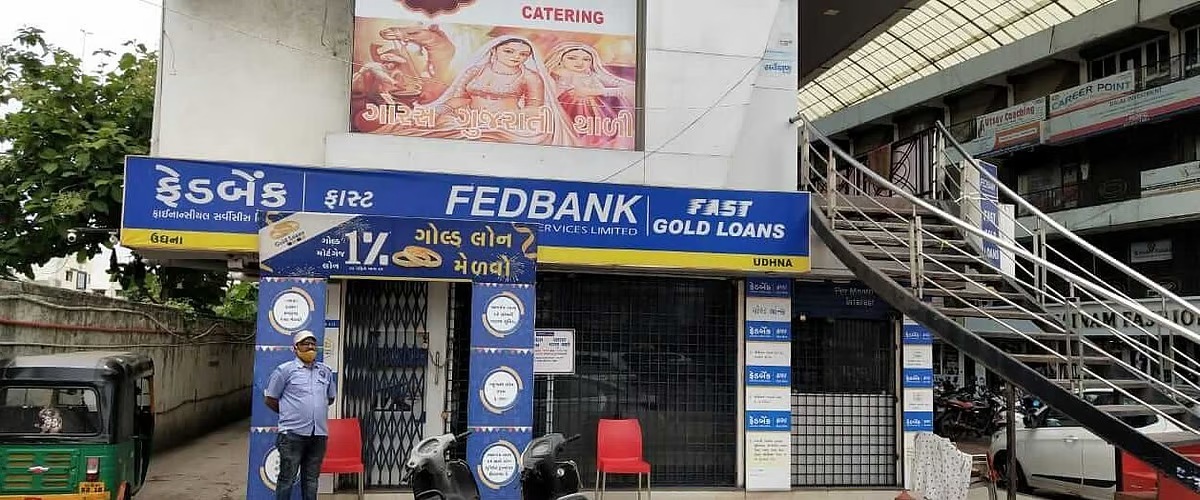
1. At a Glance – Blink and You’ll Miss the Turnaround
If you blinked in December 2025, Fedbank Financial Services Ltd quietly delivered one of the most dramatic quarterly profit jumps in the NBFC universe. The stock sits around ₹176, market cap roughly ₹6,600 Cr, up ~18% in three months and ~83% over one year, while casually dropping a 369% YoY profit growth headline like it’s just another Tuesday. Q3 FY26 PAT came in at ₹87.9 Cr, revenue at ₹555 Cr, and EPS at ₹2.35 for the quarter. Asset quality stayed disciplined with Net NPA at ~1.4%, cost of borrowing hovered around 9%, and capital adequacy remained a comfortable 21.4%.
This is not a meme stock, not a turnaround fairy tale, and not a one-product lender praying to the gold price gods. This is a boring, bank-backed retail NBFC that suddenly decided to show operating leverage. And when boring companies surprise, markets pay attention. The real question: is this just quarterly drama or the start of a longer rerating arc?
2. Introduction – From “Who Cares?” to “Wait, What?”
Fedbank Financial Services, better known as Fedfina, has spent years being that relative at family functions—always present, never discussed. Promoted by The Federal Bank Limited, the company built a steady book across gold loans, mortgages, and secured business loans, without the flashy growth narratives of fintech darlings or the intimidation factor of Bajaj Finance.
Then Q3 FY26 happened. A quarter where profits exploded, margins bounced back, and the balance sheet didn’t throw any unpleasant surprises. Investors who ignored the stock because “NBFC hai yaar” suddenly started zooming into quarterly tables like detectives revisiting an old cold case.
Yet, Fedfina is not new to profitability. It has been profitable for years, compounding profits at over 40% CAGR in the last five years. The issue was always perception: moderate ROE, high leverage (as all NBFCs have), and no dividend to soothe long-term holders. What changed now is scale. With AUM crossing ₹17,500 Cr and disbursements accelerating, fixed costs are finally getting bullied by operating income.
So the real intrigue isn’t whether the quarter was good—it clearly was. The intrigue is whether Fedfina has finally entered the “boring but compounding” phase that markets love… after they ignore it for years.
3. Business Model – WTF Do They Even Do?
Let’s simplify Fedfina without the annual report poetry. The company borrows money cheaply (thanks to Federal Bank parentage), lends it against solid collateral, and keeps ticket sizes sane so that one bad borrower doesn’t ruin the party.
Its book is neatly split into three engines. Mortgage loans form the backbone, roughly 50% of AUM, with average ticket sizes of ~₹32 lakh and conservative LTVs near 52%. Translation: if the borrower defaults, Fedfina still sleeps well. Gold loans contribute about 35% of AUM, with tiny ticket sizes (~₹1.2 lakh) and in-house valuation. This is high-yield, fast churn, and short-duration money. Business loans, the smallest piece at ~14%, are secured and aimed at MSMEs who need capital but can’t charm large banks.
The underwriting philosophy is aggressively unromantic—income-based assessment for mortgages, collateral-first for gold and business loans, and zero appetite for unsecured heroics. Around 86% of AUM is secured, which explains why asset quality hasn’t blown up despite rapid growth.
Fedfina isn’t trying to reinvent lending. It’s trying to execute boring lending across 665 branches and 2,100+ channel partners. Sometimes, the most dangerous strategy in finance is… not doing anything stupid.
4. Financials Overview – The Numbers Finally Start