1. At a Glance
Eveready Industries India Ltd — the century-old flashlight of Indian households — just reported a quarter that felt more like a dim LED bulb than a roaring torch. At a closing price of ₹372 on November 4, 2025, the ₹2,707 crore market-cap legend sits in the middle of an identity crisis: half heritage, half turnaround story. Sales for the September 2025 quarter hit ₹386.8 crore, up 6.7% YoY, but profits short-circuited — a 46% drop YoY to ₹7.91 crore (negative, if you round it). The stock trades at a P/E of 35.8x, with an ROE of 19.4%, a decent 16.9% ROCE, and a dividend yield of 0.4% — just enough to buy a single Eveready bulb per year if you’re loyal.
On paper, the company has the glow — over 50% share in India’s battery market, 70% in flashlights, and a distribution web that can reach your village before Jio 5G does. But the light flickered this quarter. PAT margins sagged to 4.1%, while operating margins remained steady near 11.3%. For a company that once symbolized reliability, Q2FY26 felt more like an “Energizer Bunny on low battery” moment.
Still, let’s be fair: Eveready’s revival under the Burman family (of Dabur fame) is progressing. The once Khaitan-controlled firm has been recharged with better governance, lower debt (₹357 crore), and a focused consumer business strategy. But when your net profit swings from ₹30.2 crore last quarter to -₹7.9 crore this quarter, investors start wondering if the torchlight’s on “blinking” mode.
2. Introduction – The Battery That Refuses to Die
If you’ve grown up in India, chances are your first experience with electricity involved an Eveready torch — often half working, fully dented, and older than your school shoes. The brand is iconic, almost mythical — it powered Indian homework sessions during power cuts before UPS systems became cool.
Yet, like that old battery-powered radio in your dad’s cupboard, Eveready has spent much of the past decade struggling to stay relevant. Once the undisputed king of dry cell batteries, it lost voltage thanks to cheap imports, margin wars, and, let’s say, “creative” promoter financing decisions (₹489 crore of inter-corporate deposits to group firms, anyone?).
Enter the Burmans — the same family that gave us Chyawanprash and Mint-o Fresh — who launched an open offer in February 2022 at ₹320/share and now own 43.2%. They came with a clear mission: to recharge a drained business and restore corporate governance. Two years later, they’ve replaced the MD, appointed new directors, and even got India Ratings to upgrade the company’s long-term rating to IND A+ (Stable) as of October 2025.
But while the new team has trimmed debt and improved operational efficiency, the Q2FY26 results reminded everyone that running an old-school FMCG-with-batteries business isn’t a plug-and-play turnaround. Lighting, flashlights, and small appliances are highly competitive, and Chinese imports have been eating into margins faster than power outages in monsoon season.
Still, Eveready remains a household name. The question is — can nostalgia pay dividends?
3. Business Model – WTF Do They Even Do?
Eveready’s business model is as Indian as chai and voltage fluctuations. It revolves around batteries, flashlights, lighting products, and small appliances, with a sprinkle of “Jollies” confectionery because… why not?
Product Portfolio:
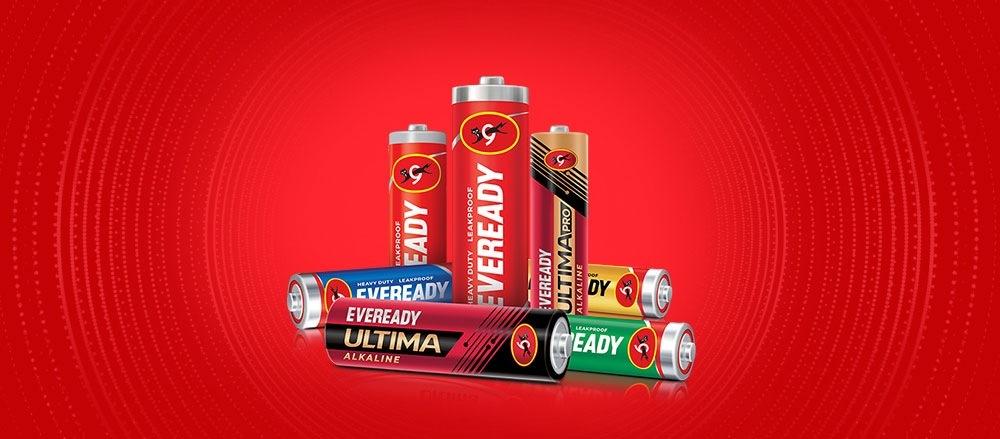
- Batteries (64% of revenue) – The heart and soul of Eveready. Dry cell batteries sold under ‘Eveready,’ ‘Powercell,’ and ‘Uniross.’ The company’s ₹2,250 million annual production capacity makes it India’s Duracell equivalent — minus the pink bunny ads.
- Flashlights (14%) – Over 12.7 million units per annum. Rural India’s best friend.
- Lighting (18%) – LED bulbs and luminaires. Competes with every brand that’s ever been advertised by a Bollywood celebrity holding a glowing bulb.
- Small Appliances (4%) – Fans, irons, mixers — basically anything that can make your life brighter or noisier.
- Confectionery (“Jollies”) – Because somewhere in the boardroom, someone thought, “Why not mix sugar with batteries?”
The model is primarily asset-light in distribution but heavy in brand legacy. With 38 distribution centers, 4,000+ points, and over 4 million retail outlets,