Euro India Fresh Foods Ltd Q2 FY26 (Sep 2025) – ₹603 Cr Market Cap, ₹32.5 Cr Quarterly Sales, ₹-1.16 Cr PAT Loss, and a P/E That Thinks It’s Nestlé
1. At a Glance
Euro India Fresh Foods Ltd is that classic Indian snack story where the packet says “Fresh Khao Healthy Raho” but the balance sheet whispers “Interest Bharo, Margin Bachao”. As of mid-December 2025, the company is sitting at a market capitalisation of roughly ₹603 crore with a stock price of ₹243, down from its euphoric highs of ₹292 but still far above its book value of ₹29. The P/E ratio is hovering around a jaw-dropping 172, which is what happens when optimism runs faster than earnings.
The latest quarterly performance (Sep 2025) didn’t exactly help the digestion. Revenue came in at ₹32.47 crore, basically flat compared to last year, while net profit slid into a loss of ₹1.16 crore. Yes, negative. ROCE is 9.9%, ROE is 8.05%, and debt-to-equity stands at 0.85, which means leverage is not catastrophic but definitely not “diet food” either.
Three-month returns are slightly negative, six-month returns are mildly positive, and one-year returns are about 11%. In short: the stock has been jogging on a treadmill—lots of effort, not much distance covered. But the real masala is in the details, so let’s open the packet properly.
2. Introduction
Euro India Fresh Foods Ltd was incorporated in 2012 and operates in the brutally competitive world of packaged snacks and beverages. This is an industry where consumers are loyal to taste, distributors are loyal to discounts, and margins are loyal to nobody.
The company manufactures and trades FMCG products like chips, namkeen, khakhra, chikki, beverages, bakery items, and even celebration packs—basically everything you see at a kirana store when you go in “just to buy milk” and come out ₹500 poorer.
On paper, Euro ticks many modern FMCG buzzwords: ISO 22000 certification, FSSAI compliance, GMO-free, 100% vegetarian, no MSG, no artificial colours. Marketing-wise, this is the clean-label dream. Financially, however, the story is more… Gujarati farsan than Swiss chocolate.
Over the years, the company has grown revenues steadily, reaching ₹146 crore in trailing twelve months. Profit growth looks fantastic in percentage terms over 3–5 years, but that’s partly because the base was so low that even a sneeze looks like explosive growth. The challenge now is scale with stability—because once you list on the exchange, the market stops clapping for “effort” and starts demanding “delivery”.
So the question is simple: is Euro India Fresh Foods building a durable FMCG franchise, or is it just another namkeen company with a very optimistic valuation?
3. Business Model – WTF Do They Even Do?
Euro India Fresh Foods is essentially a packaged snacks and beverages company with a hybrid model. Some products are manufactured in-house, some are outsourced to group entities, and some are traded. This keeps capex flexible but also introduces dependency risks.
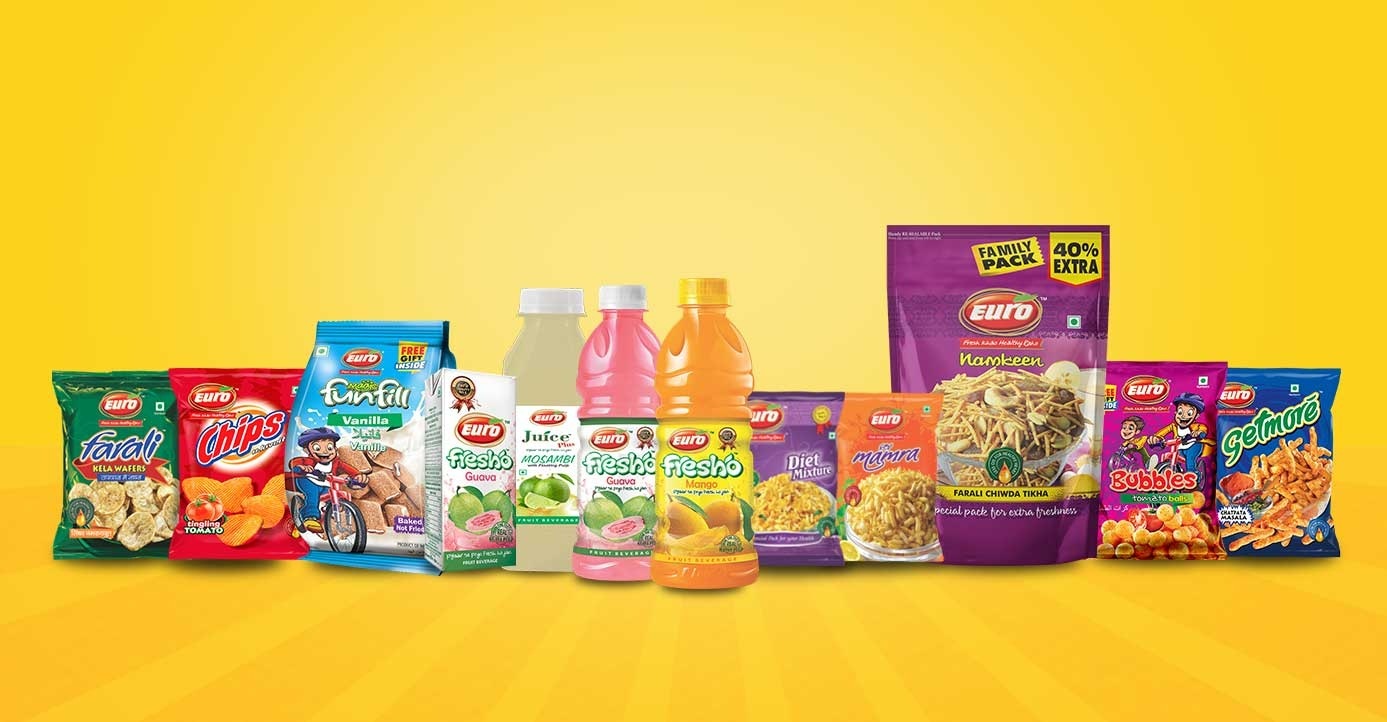
Their flagship brand “Euro – Fresh Khao Healthy Raho” covers potato chips, extruded snacks like Funfill, Ringoli, Bubbles, Puffs, Wheels, juices under Euro Fresho and Euro Lemoni, and packaged drinking water under Euro Aquaspa. It’s a full kirana shelf strategy: salty, sweet, liquid, crunchy, festive—sab milega.
Distribution is where Euro flexes a bit. The company has 5 consignee depots, 93 super stockists, over 280 distributors, and presence across 10+ states. Add to that megastores in Mumbai, Surat, and Bhavnagar, plus online delivery via its own platform. For a small-cap FMCG player, this is not nothing.
Revenue is overwhelmingly domestic (98%), with exports contributing a token 2%. Sale of goods accounts for 97% of revenue, job work income about 3%. This is a straightforward FMCG engine—no complicated financial engineering, no exotic derivatives, just snacks moving from factory to mouth.
But here’s the catch: FMCG is a scale game. Without massive volumes, marketing muscle, and pricing power, margins remain thin. Euro’s operating margins have improved over time but still oscillate wildly quarter to quarter, which tells you the business is still finding its footing.
4. Financials Overview
Result Type Lock: The latest official announcement clearly states Quarterly Results, so this analysis treats the numbers as quarterly and locks that assumption.
Quarterly Comparison Table (₹ in Crores)
Source table
Metric
Latest Quarter (Sep 2025)
Same Qtr Last Year (Sep 2024)
Previous Quarter (Jun 2025)
YoY %
QoQ %
Revenue
32.47
32.72
31.17
-0.76%
4.17%
EBITDA
0.82
2.56
2.22
-68.0%
-63.1%
PAT
-1.16
0.78
0.33
-248.7%
-451.5%
EPS (₹)
-0.47
0.31
0.13
-251.6%
-461.5%
Let’s not sugarcoat this. The quarter was ugly. Revenue stagnated, operating profit collapsed, and the company slipped