1. At a Glance
There are companies that look simple and are actually complicated.
Then there are companies like Elpro International, which look complicated and may actually be hiding a surprisingly simple economic engine underneath.
At first glance, you see a real estate company.
Then a legacy electrical equipment manufacturer.
Then suddenly an investment holding company.
Then a mall operator.
Then a business park landlord.
Then a listed-equity allocator buying everything from pharma to finance.
And recently, even education assets through Eduspace.
What exactly is this thing?
That is the right question.
Because FY26 numbers create a puzzle.
Revenue rose to ₹528 crore from ₹390 crore. PAT climbed to ₹87 crore from ₹66 crore. Sales compounded at 53% over five years. Yet return ratios remain sleepy with ROE at 4.3% and ROCE at 6.57%.
How can growth look decent but returns look mediocre?
Usually when assets are huge and earnings are still catching up.
And Elpro has assets.
Consolidated total assets stand at ₹3,618 crore, investments alone ₹2,388 crore, borrowings ₹1,209 crore. This is not a tiny real estate operator pretending to be sophisticated.
This is capital allocation theatre.
And theatre has recently become dramatic.
In one stretch:
- Sold residual PNB MetLife stake.
- Bought DLF shares.
- Bought Natco.
- Bought IIFL Finance.
- Bought Can Fin.
- Added Cohance.
- Acquired Mynd Solutions.
At some point one stops calling this treasury activity and starts asking:
Is management quietly running an internal investment fund attached to rental assets?
Interesting, no?
Even more curious:
CARE notes mall occupancy moved to ~98% and business park occupancy ~99.47%. Those are not distressed asset numbers.
Meanwhile stock trades below book value.
Below book.
For a landlord-investment hybrid.
Markets usually discount something when they do that.
Maybe complexity.
Maybe low returns.
Maybe fear that mark-to-market gains flatter economics.
Maybe all three.
But complexity often hides optionality.
And optionality is where patient investors like to snoop.
Question for readers:
If a company owns yielding real estate, an investment portfolio larger than market cap, and trades below book — is the market missing something, or seeing something first?
That is the investigation.
Let us open the file.
2. Introduction
Elpro has undergone one of the stranger corporate evolutions in Indian listed markets.
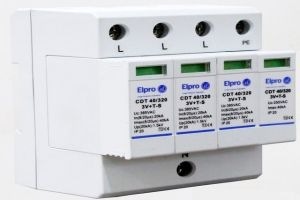
It began with surge arresters.
Yes, literal electrical protection devices.
Then real estate started swallowing the story.
Now real estate contributes the bulk of economics, investments add another layer, and the original electrical business feels almost like a reminder of old family photographs.
Revenue mix once showed 93% real estate and 6% electrical.
That tells you where the economics live.
But this is not ordinary developer economics.
Much of the model resembles yield assets:
- Rental-producing commercial properties
- Business park leasing
- Mall monetisation
- Financial investments
- Structured leverage against assets
This combination makes Elpro look less like a developer and more like a quirky listed mini-endowment.
Which explains why normal real estate analysis often fails here.
Developers are judged on launches.
REIT-like vehicles on yield.
HoldCos on NAV discounts.
Investment firms on allocation skill.
Elpro sits annoyingly in all four buckets.
Markets dislike things that don’t fit a spreadsheet template.
But the FY26 data does show management has walked some of its older commentary.
What did management signal earlier?
- Focus on growth assets
- Deleveraging intentions
- Long-term capital deployment
What happened?
Borrowings did rise materially over years, so balance sheet conservatism remains debatable.
But occupancy improved.
Credit rating upgraded.
Investment portfolio scaled.
Assets expanded.
Rental engine strengthened.
So management did not exactly overpromise and disappear.
Though there is a fair question:
Are they empire-building with shareholder capital?
Because serial acquisitions in listed stocks can either be brilliant allocation…
…or very expensive hobby management.
Sometimes the difference takes years.
And this is where Elpro gets