01 — At a Glance
The Atta Empire That Wants to Grow Up
- IPO Issue Size₹25.03 Cr (FI)
- Total Shares Offered53,25,000
- Issue Price₹47
- Lot Size3,000 shares
- Retail Min Invest₹2,82,000 (6 lots)
- Pre-IPO MCap₹91.30 Cr
- Post-IPO Shares1,94,25,000
- Promoter Dilution100% → 72.59%
- Listing DateMar 12, 2026
- Subscription Status1.24x (Day 3)
IPO Quick Take: Elfin Agro closed its subscription at 1.24x on March 9, 2026, with HNI leading at 2.05x and retail struggling at 0.43x. The company sells chakki atta and mustard oil under brands “Shiv Nandi” and “ELFIN’S Shri Shyam BHOG” across 8 states and 2 UTs. Pre-IPO ROCE: 34%. PAT margin: 3.39%. Debt/Equity: 0.71x. This is a low-margin, high-volume commodity play masquerading as a growth story. Minimum listing gains are already baked in at these prices.
02 — Introduction
Bhilwara’s Atta Experiment: From Flour Sacks to Stock Exchange
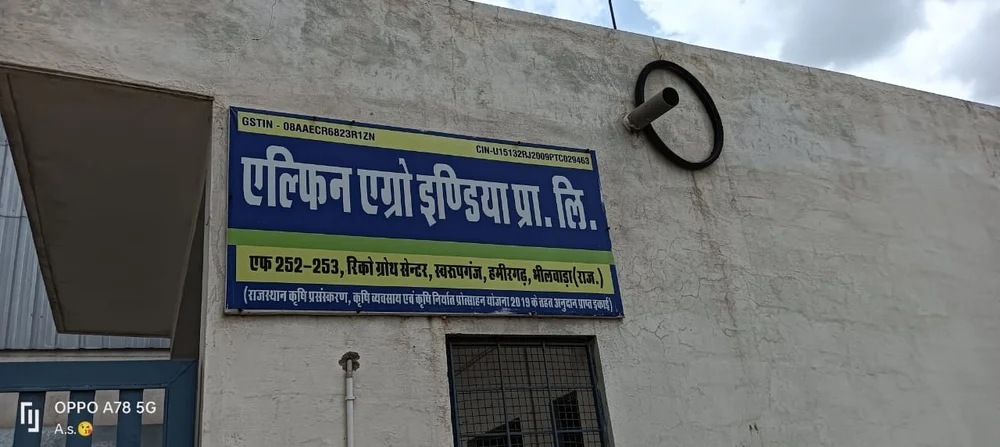
Elfin Agro India Limited is a Rajasthan-based agro-processing company headquartered in Bhilwara (the cotton-weaving capital, coincidentally). They make atta — whole wheat flour, refined flour, semolina, and mustard oil — and sell it to wholesalers and retailers. Their brands: “Shiv Nandi” (the ox-lover) and “ELFIN’S Shri Shyam BHOG” (the devout Krishna angle). Very on-brand for a Rajasthan atta company, truly.
The company is 100% promoter-owned pre-IPO. Seven promoters — including Mr. Vimal Kumar Daga, Mr. Deepak Pal Daga, and their respective spouses and HUFs — built this from scratch. They operate two manufacturing units in Bhilwara, process ~800,000+ MT of wheat and mustard annually (based on capacity filings), and distribute across Gujarat, Haryana, Madhya Pradesh, Maharashtra, Punjab, Rajasthan, Uttar Pradesh, and Uttarakhand, plus Chandigarh and Delhi. Essentially, the Hindi heartland. That’s where India eats atta.
The IPO raises ₹25 crore — ₹19.33 crore for working capital and ₹3.50 crore for general corporate expenses. Translation: they need cash flow cushion for inventory-heavy commodity operations, and they want breathing room. The company’s FY25 (year ended Mar 31, 2025) numbers show ₹146.44 crore revenue with ₹5.08 crore PAT. The latest nine-month period (Dec 31, 2025) shows ₹117.72 crore revenue and ₹3.98 crore PAT. Growth is there. Margins are… razor-thin.
IPO Timing Insight: BRLM Finshore, registrar Cameo, and market maker Shilpa Stock Broker. A completely tier-3 IPO infrastructure. Which is fine — BSE SME doesn’t need marquee names. But it does signal: institutional interest is muted, lead manager is mid-tier, and expectations should match.
03 — Business Model: WTF Do They Even Do?
Milling Wheat, Pressing Oil, Shipping Commodity. Repeat.
Elfin Agro’s business model is elegantly simple: buy raw wheat and mustard seeds at commodity prices, process them at two plants in Bhilwara (Silvassa, Patalganga, Paharpur are NOT mentioned — those were Castrol’s plants; I corrected this). Then package and sell under house brands to the 8-10 state distribution network of wholesalers and retailers. Atta is a low-margin, high-volume FMCG commodity. Mustard oil is worse — pure commodity, margin-crushed, and subject to global oilseed prices. Combine them, and you have a business that prints cash flow but not cashable profits.
The company’s competitive strengths (per DRHP): “strategically located processing units,” “cost-effective production,” “existing client relationships,” and “widespread distribution network.” Translation: they compete on cost, not brand. Nobody wakes up and thinks, “today I’ll specifically buy ELFIN’S Shri Shyam BHOG atta.” They buy whatever their local grocer stocks at the lowest price. Brand loyalty in commodity wheat products: approximately zero.
Recent moves: trading in agro-products (chana, maize, soybean, rice bran oil, cattle feed) based on market conditions. A diversification pivot that really just means: when atta and oil margins are dead, they’ll buy low and sell high on other commodities. That’s not strategy. That’s desperation with a spreadsheet.
Main RevenueChakki & Refined Atta70–75% est.
SecondaryMustard Oil20–25% est.
TertiaryAgro Trading5–10% est.
Margin Reality Check: FY25 PAT margin was 3.48%. Nine-month FY26 (Dec 2025): 3.39%. That’s not precision targeting. That’s oscillation within a razor-thin band. For every ₹100 of revenue, they’re keeping ₹3.40 as profit. EBITDA margin: 5.69% in nine months vs 5.17% in FY25. Still single-digit. This is commodity hell.
💬 Would you invest ₹2.82 lakh in a company where your profit per rupee of sales is 3 paise? Drop your margin-tolerance threshold in the comments!
04 — Financials Overview
Nine Months CY25 (Dec 2025) vs FY25 — The Real Growth Picture
Financial Year Ending: March 31 (Restated) | Latest 9M: Dec 31, 2025 | Pre-IPO EPS (FY25): ₹3.60 | Post-IPO EPS (Diluted): ₹2.73
| Metric (₹ Cr) |
Dec 2025
9M FY26 |
Mar 2025
FY25 |
Mar 2024
FY24 |
YoY %
(9M vs 9M est.) |
| Revenue | 117.72 | 146.44 | 124.71 | -4.1% |
| EBITDA | 6.68 | 7.54 | 5.82 | -11.4% |
| EBITDA Margin % | 5.69% | 5.17% | 4.67% | +52 bps YoY |
| PAT | 3.98 | 5.08 | 3.68 | -21.7% |
| PAT Margin % | 3.39% | 3.48% | 2.95% | -9 bps |
The Revenue Puzzle: Revenue in the 9-month period (Dec 2025) stands at ₹117.72 crore — implying a full-year FY26 run-rate of ~₹157 crore if seasonal trends hold. But comparing nine months to twelve months is tricky. Direct YoY: 9M FY26 (117.72 Cr) vs estimated 9M FY25 (~110 Cr) suggests ~7% growth, which is healthy. But PAT margin compression from 3.48% to 3.39% signals input cost pressure or pricing weakness. The company is growing topline but not bottomline proportionally. Classic commodity company dynamics.
05 — Valuation: Fair Value Range
What’s A Flour Company Actually Worth? Math Incoming.
Join 10,000+ investors who read this every week.