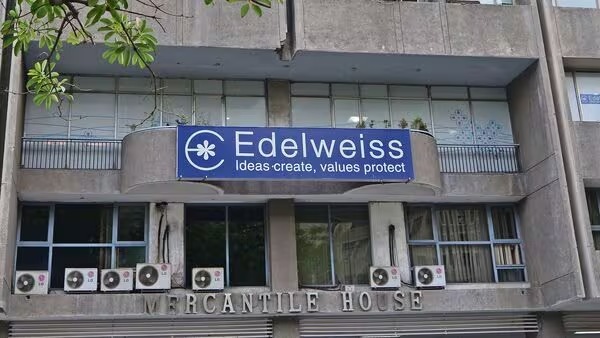
1. At a Glance – From Crisis Kid to Capital Comeback?
₹11,833 crore market cap. ₹125 share price. 7% return in 3 months. P/E of 20. ROE of 8.68%. Debt-to-equity at 4.40. Interest coverage? A slightly nervous 1.46.
Ladies and gentlemen, welcome to the great Indian financial conglomerate makeover story.
Q3 FY26 revenue exploded to ₹4,404 crore versus ₹1,898 crore in the same quarter last year. That’s 132% growth. Profit? ₹270 crore, up 134% YoY. EPS at ₹2.79 for the quarter.
After years of balance sheet dieting, asset sales, regulatory drama, and strategic “let’s-sell-this-subsidiary-too” moments, Edelweiss seems to be back in earnings mode.
But here’s the real question:
Is this a genuine turnaround… or just financial yoga?
Let’s audit the resurrection.
2. Introduction – The Financial Jungle Survivor
Founded in 1995, Edelweiss started as an investment banking firm. Over time, it became that overachieving cousin who wanted to do everything — NBFC, housing finance, insurance, asset reconstruction, mutual funds, alternatives.
And then 2020 happened.
Balance sheet pressure. Wholesale lending downsizing. Regulatory scrutiny. Asset sales. Promoter headlines.
But here we are in FY26. Q3 numbers show strong growth. Subsidiaries are being monetised smartly. Carlyle is investing ₹2,100 crore in Nido. WestBridge is buying stakes in asset management. DRHP for EAAA filed.
This is no longer survival mode.
This is strategic capital recycling mode.
But is the core engine strong enough? Or are we celebrating accounting fireworks?
Let’s dig.
3. Business Model – WTF Do They Even Do?
Edelweiss today is basically a financial buffet thali.
1️ Capital Business (39%)
NBFC + Housing Finance
NBFC AUM in Q2 FY26: ₹3,309 crore
Housing finance AUM: ₹4,598 crore
They’ve reduced wholesale loan exposure by 75% since Q2 FY22. Wholesale book now ₹2,400 crore — down ₹7,100 crore in 3 years.
Translation:
From risky big-ticket lending to safer, retail-heavy lending.
Housing arm (Nido) focuses on low-income, new-to-credit borrowers. SBI partnership continues.
Now here’s the masala:
45% stake in Nido sold to Carlyle & Aditya Puri affiliates for ~₹2,100 crore. That’s serious validation.
Question:
If Carlyle is entering, what are they seeing that retail investors might be missing?
2️ Insurance Business (38%)
- General Insurance (Zuno)
- Life Insurance
General Insurance Q2 FY26 Gross Written Premium: ₹261 crore
Life Insurance Gross Premium: ₹503 crore
Life AUM: ₹9,782 crore
Solvency ratios are healthy:
176%–189%.
This is long-term compounding territory — if execution remains sharp.
3️ Asset Reconstruction (9%)
Fee-paying AUM dropped from ₹15,884 crore to ₹9,936 crore YoY.
Recoveries down from ₹1,526 crore to ₹1,225 crore.
ARC business is cyclical. When credit stress rises, opportunity rises.
But currently? Slight slowdown.
4️ Alternatives (8%)
AUM: ₹65,460 crore (up from ₹57,250 crore)
Filed DRHP for IPO in Jan 2026.
Plans to divest 10–20% stake to raise ₹1,500 crore.
Smart move. Monetise asset-light fee business.
5️ Mutual Fund (5%)
Equity AUM: ₹77,100 crore
Total AUM: ₹1,54,600 crore
15% stake sold to WestBridge for ₹450 crore.
Valuation implied 57x FY25 P/E on that business.
Not bad for a supposedly “struggling” group.
4.