Search for Stocks /

Ecoplast FY26: Revenue Nearly Doubles to ₹221 Cr, Yet Profit Slips 15% as a 45-Year-Old Film Maker Swallows Its Cousin

Spotted a factual error — a wrong number, date, or fact? Tell us and we will check the source.

General information and entertainment, not investment advice. The author is not a SEBI-registered adviser or research analyst. No recommendation, no promised returns. Markets carry risk including loss of capital. Figures may not be current. Consult a registered adviser before acting.

1. At a Glance

Ecoplast makes plastic film — the thin protective sheet that keeps steel panels, tiles, and glass from getting scratched on their way to a construction site. This year the story isn’t the film; it’s the arithmetic. Consolidated revenue rose to ₹221 Cr in FY26 from ₹208 Cr the prior year, and both those years already carry a swallowed company inside them — Kunal Plastics, restated in as if it had always been there. Against that, net profit fell to ₹12.0 Cr from ₹14.2 Cr, a 15% drop.

So the topline expanded while the bottom line shrank. Operating margin sat at 8.35%, down from roughly 10% a year earlier — polymer resin, a crude derivative, moves faster than a film maker’s price list. The balance sheet, meanwhile, looks almost pristine: borrowings of ₹1.98 Cr against a net worth near ₹120 Cr, and a debt-to-equity ratio of 0.02.

CRISIL noticed the tidiness and upgraded the rating to BBB/Stable in June 2026. The market pays about 18x earnings here. Two numbers, then, pulling in opposite directions — a swelling company and a thinning margin. Which one is the real Ecoplast?

2. Introduction

Incorporated in 1981 and run out of Valsad, Gujarat, Ecoplast has been extruding multilayer film for over four decades. It is promoted by Mr Jaymin B. Desai, who signs the results as Managing Director. For most of its listed life it was a small, steady, unglamorous manufacturer: revenue hovered around ₹100 Cr for years, profit bounced between a rounding error and a few crore, and FY22 actually posted a loss of ₹1.8 Cr when polymer prices misbehaved.

FY26 is the year the shape changed. The Board approved the amalgamation of Kunal Plastics Private Limited into Ecoplast, sanctioned by the NCLT Ahmedabad Bench on May 14, 2026 and effective May 28, 2026. Because accounting rules require a merger like this to be shown as if it had happened from the start of the preceding year, the FY25 and FY26 figures were restated to include Kunal. That is why revenue appears to leap from ₹113 Cr (FY24, pre-merger) to ₹208 Cr and ₹221 Cr — a chunk of that jump is a bookkeeping reunion, not a sales miracle.

Alongside the merger came a board refresh: Jayesh Shah joined as Independent Director and Jay Ketan Shroff as Whole-time Director, both from January 2026.

3. Business Model: WTF Do They Even Do?

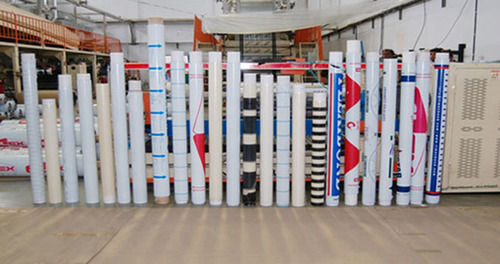
Ecoplast supplies multilayer co-extruded polyethylene and co-polymer films to the flexible packaging trade, plus a speciality most people never think about — surface protection film. That’s the peel-off layer guarding steel, aluminium composite panels, carpets, tiles and glass from dust and scratches before they reach the customer. Someone has to make the sticker that protects the thing, and Ecoplast has decided that someone is Ecoplast.

Ecoplast Ltd. in Valsad, Gujarat, India - Company Profile

The product shelf carries four brand families: EcoGen lamination films, EcoProtect surface protection films, EcoBond adhesive films, and EcoPrime speciality and metalized films. The Valsad plant runs at roughly 9,000 MTPA of multilayer film. End markets range from food and beverages to cosmetics, pet food, cable wrap, cement packing, automobiles, and pharmaceuticals — a spread wide enough that no single sneeze takes the whole business down. Exports reach Canada, the USA, the UK, Dubai, Ethiopia, Mauritius, Sri Lanka and Malaysia.

It’s a genuinely useful, deeply boring business. The film’s entire purpose is to be thrown away once it has done its job. The margin, as the year showed, lives and dies on the price of resin — the one input Ecoplast doesn’t control and can only pass through with a lag.

Does a business built on peel-and-discard film need to be exciting to be durable?

4. Financials Overview

Figures are consolidated, in ₹ crore. The latest reported period is the March 2026 quarter.
MetricLatest Q (Mar 26)YoYQoQ
Revenue57.37+5.4%+2.8%
Operating Profit6.62+12.8%+74.2%
PAT4.54+13.2%+106.4%
EPS (₹)13.14+13.2%+106.0%

The March quarter was the strong one: operating profit of ₹6.62 Cr on ₹57.4 Cr of sales, an 11.5% margin, well above the full-year 8.35%. The December quarter had been the drag, with margin dipping to 6.81% — which is why the QoQ jumps look dramatic. Across the full year, though, the annual march tells the quieter truth: revenue up, profit down.

5. Market Expectations & Historical Multiples

This section describes how the market is currently pricing the company and how that compares with its own history and peer group. It is descriptive, not predictive.

MetricCurrentHistorical AveragePeer Median
P/E18.4x21.1x
EV/EBITDA9.57x
P/B1.34x
ROE10.6%12.8% (5-yr)
ROCE14.4%13.4%

The market currently pays 18.4x earnings here, against an industry P/E of about 21x and a peer median of 21.1x. The P/B of 1.34x sits close to book. ROE at 10.6% runs below the company’s own 5-year average of 12.8%, while ROCE of 14.4% edges just above the peer median of 13.4%.

What the multiple appears to price in is a company mid-transition: a freshly enlarged revenue base from the Kunal merger, a rating upgrade in hand, and a near-debt-free sheet — set against a margin that thinned this year and a return profile that softened. The market is paying a below-peer multiple on a business whose scale has grown faster than its profit.

One factual observation on expectations: the pricing reflects a firm whose revenue has expanded through consolidation while its FY26 return metrics slipped below their own recent averages.

6. What’s Cooking

The dump holds a genuinely busy year, and none of it needs embellishment.

CRISIL upgraded the long-term rating to BBB/Stable and the short-term to A3+ in June 2026, lifting both off the “Rating Watch with Developing Implications” they’d been parked on. The upgrade followed the Kunal Plastics amalgamation, which took the consolidated scale over ₹221 Cr and the net worth to roughly ₹119 Cr, per the rating rationale. On June 15, 2026 the company allotted 13,00,000 fresh shares to Kunal’s shareholders at a swap of 52 Ecoplast shares for every 1 Kunal share, taking paid-up capital to ₹4.75 Cr.

Separately, in December 2025 the Board approved a ₹12.75 Cr capacity addition — 1,800 MT of extrusion targeted by June 2026 and 1,680 MT of coating by December 2026. And for FY26, the Board decided against a dividend.

7. Balance Sheet

ItemFY24FY25FY26
Net Worth41.96107.32119.65
Borrowings1.111.511.98
Other Liabilities11.5621.9921.58
Total Liabilities54.63130.82143.21
Total Assets54.63130.82143.21

Assets equal liabilities in every column, as they legally must.

  • Net worth nearly tripled from FY24 to FY26 — part equity infusion in FY25, part the merger folding Kunal’s reserves in.
  • Borrowings of ₹1.98 Cr against ₹143 Cr of total assets means debt here is less a burden than a formality.
  • Cash and bank of ₹9.48 Cr plus ₹3 Cr of investments comfortably clears the entire loan book.

Against ₹1.98 Cr of borrowings and ₹12.5 Cr of cash-plus-investments, the company sits in a net cash position. A balance sheet this clean rarely makes headlines, which is exactly its point.

8. Cash Flow: Sab Number Game Hai

YearOperatingInvestingFinancing
FY2412.71-3.44-1.89
FY2512.90-28.0218.16
FY26-2.09-6.12-0.12

FY25 tells its own story: ₹28 Cr flowed out to investing while ₹18 Cr flowed in from financing — the equity infusion funding the expansion. FY26 is the odd one: operating cash turned negative at ₹2.1 Cr despite a profitable year, as working capital and tax outflows absorbed the earnings. Profit on the P&L and cash in the bank are cousins, not twins, and this year they went their separate ways.

9. Ratios: Sexy or Stressy?

RatioValue
ROE10.6%
ROCE14.4%
P/E18.4x
PAT Margin5.4%
D/E0.02
  • ROE of 10.6% — the equity is working, but part-time, and below its own 5-year pace.
  • ROCE of 14.4% shows the capital earns a respectable return on operations even as margins thinned.
  • PAT margin of 5.4% is the pinch point: on ₹221 Cr of sales, only ₹12 Cr survives to the bottom line.
  • D/E of 0.02 is the ratio doing almost nothing, which for a debt sheet is the highest compliment.

10. P&L Breakdown: Show Me the Money

YearRevenueOp. ProfitOther IncomePATEPS (₹)
FY24113.07131.979.1730.57
FY25207.78213.9114.1741.02
FY26221.08183.8512.0134.77

The Other Income column is worth a pause: ₹3.85 Cr of it in FY26 against ₹18 Cr of operating profit. That’s over a fifth of profit-before-tax arriving from non-operating sources — interest and treasury income, not film sales. Strip it out and the operating business carried the weight, but it carried less than last year: operating profit fell from ₹21 Cr to ₹18 Cr even as revenue rose.

On EPS, note the share count. The FY26 EPS of ₹34.77 shown here is calculated on the pre-merger share base of about 34.5 lakh shares. The company’s own results, restated for the 47.5 lakh shares to be issued post-merger, report a combined EPS of ₹25.27 — the same profit divided across a larger count. The EPS decline versus FY25 tracks the real PAT decline; the merger dilution is a separate, mechanical layer on top.

11. Peer Comparison

CompanySales QtrPAT QtrP/E
Supreme Inds.3,527.66433.5744.6x
Astral2,088.50213.0066.4x
Finolex Inds.1,313.88261.2518.2x
Time Technoplast1,676.67134.3119.3x
Ecoplast57.374.5418.4x

The size gap is the headline: Ecoplast’s quarterly sales are a rounding error next to Supreme’s ₹3,528 Cr. On the multiple, Ecoplast trades near the low end of the set — 18.4x, roughly a third of Astral’s 66x. The market assigns the premium multiples to the pipe-and-fitting giants with 20%-plus ROCE; Ecoplast, a niche film maker at 14.4% ROCE, is priced accordingly.

12. Miscellaneous: Shareholding & Promoters

Holder% (Jun 2026)
Promoters74.45%
Public25.55%

Promoter holding jumped from 64.84% to 74.45% in the June 2026 quarter — the direct result of the Kunal Plastics merger allotting fresh shares to promoter-linked holders. The Desai and Patel families dominate the register, with Amita Jaymin Desai at 21.55% the single largest holder. Pledged shares stand at zero. The promoter group has run this film business for four decades and now controls three-quarters of a larger company than it did a year ago.

13. Corporate Governance: Angels or Devils?

The statutory audit by Y.B. Desai & Associates carried an unmodified opinion on both standalone and consolidated FY26 results. Kishore Bhatia & Associates were reappointed as cost auditors and Akkad Mehta & Co. LLP as internal auditors for FY27. There are no pledges and no auditor qualifications on record.

The one item worth flagging as a fact, not a verdict: the company has posted profits every year since FY23 yet declared no dividend for FY26 — the Board citing ongoing projects and its assessment of the financial position. Screener’s own machine notes the same: repeated profits, no payout. For minority holders drawing income, that’s a fact to sit with. Otherwise, the record reads clean.

14. Industry Roast & Macro Context

The plastic-film business runs on a cruel dependency: polymer resin is a crude-oil derivative, so every swing in oil quietly rewrites the margin. Producers can pass rising input costs to customers, but always with a lag — meaning the good years are the ones where resin behaves and the bad years are the ones where it doesn’t. CRISIL noted Ecoplast’s operating margin ranged from 1.3% to 11.9% across four fiscals for exactly this reason.

It’s a fragmented, commoditised industry where the giants — Supreme, Astral — earn their multiples on scale and brand, and the small specialists survive on niches like surface-protection film that the big players don’t bother chasing. The moat, such as it is, is being too small and too specialised to be worth crushing.

15. EduInvesting Verdict

StrengthsWeaknesses
Near debt-free; net cash, D/E 0.02PAT fell 15% despite higher revenue
Rating upgraded to BBB/StableOperating margin thinned to 8.35%
OpportunitiesThreats
₹12.75 Cr capacity expansion underwayResin price volatility hits margins
Enlarged scale post-mergerNo dividend despite repeated profits

FY26 was the year Ecoplast got bigger and thinner in the same breath — a company that consolidated its way to ₹221 Cr in revenue while its profit and margin both stepped back. The balance sheet has almost nothing to hide; the income statement has a margin question still to answer. A film maker that protects everything but its own operating margin, now twice the size it was — and still working out whether scale will finally translate into staying power.

Leave a Reply