Dynemic Products FY2026: Debt Evaporates, Margins Thicken, Multiple Plays Hide-and-Seek
Spotted a factual error — a wrong number, date, or fact? Tell us and we will check the source.
General information and entertainment, not investment advice. The author is not a SEBI-registered adviser or research analyst. No recommendation, no promised returns. Markets carry risk including loss of capital. Figures may not be current. Consult a registered adviser before acting.
Prices referenced are not live; they reflect the CMP as of 17 June 2026 (₹230).
1 — At a Glance
The company printed a solid FY2026: revenue grew to ₹379 crore, net profit landed at ₹20 crore, and the operating margin stabilised around 13–14%. But the real headline is balance-sheet theatre. In four years, Dynemic has erased ₹127 crore in debt—a 89% reduction. That’s money that no longer pays interest; it now either bulks up equity or funds growth. The P/E sits at 14.3x, which looks mild until the income-tax search in November 2025 casts a shadow. The company recovered from a loss in FY2023, rebuilt the ship, and now has to convince the market the turnaround isn’t a footnote. Core margins are holding. The question isn’t survival—it’s whether the tax risk has been priced in, and whether the multiple can expand once that noise clears.
2 — Introduction
Dynemic Products was incorporated in 1990 and is a manufacturer and exporter of food colours, dyes, and dye intermediates. The company sits in the specialty chemicals bucket and has three manufacturing plants in Gujarat—Ankleshwar (two units) and Dahej (one unit). The outfit holds certifications for ISO 9001, ISO 14001, FSSC 22000, and GMP.
FY2023 was a bloodbath. Revenue crept up to ₹296 crore, but the P&L tanked—net loss of ₹2.94 crore, a profitability collapse. Margins had compressed because the business carried too much debt (peak debt ₹153 crore in FY2022) and interest charges strangled profit. In November 2025, income-tax department searches at company offices and plants were completed; operations continued unaffected. The company also missed a filing deadline in September 2025 and paid a ₹23,600 fine.
FY2024 was the turning point. Revenue stabilised at ₹284 crore, but more importantly, net profit bounced back to ₹3.62 crore—still anaemic, but alive. The debt reduction story kicked into gear. By end of FY2025, borrowings had shrunk to ₹96 crore. And in FY2026, the company hit another milestone: debt fell further to ₹73 crore, and net profit climbed to ₹19.94 crore—a sixfold jump from FY2024.
3 — Business Model: WTF Do They Even Do?
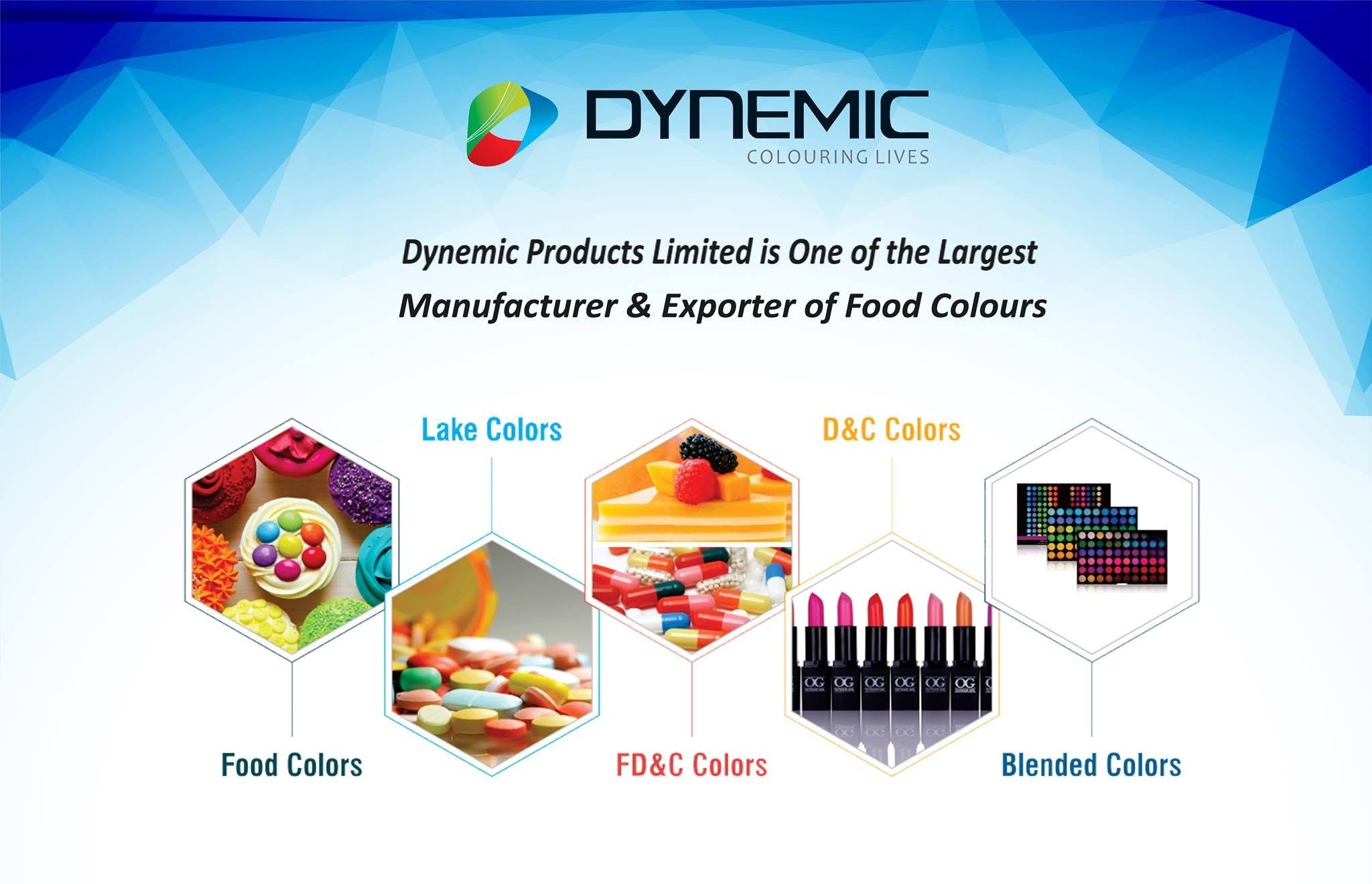
Food colours are the heavyweight. The company sells primary food colours (water-soluble, used in food, beverages, animal feed), lake colours (oil-dispersible), blended colours, FD&C colours (USFDA-approved), salt-free dyes (ink, ballpoint), pyrazolone-based dye intermediates, D&C colours (tablet coatings, syrups, capsules, cosmetics), and natural food colours (caramel, annatto, red beet juice powder, paprika, chlorophyll).
The portfolio spans confectionery, beverages, processed food, bakery, dairy, pet foods, pharmaceuticals, cosmetics, and personal care. The installed capacity sits at 22,644 MTPA across the three plants. In FY2023, the revenue mix was roughly: synthetic food colours 76%, dyes and intermediates 18%, and other operating revenue 6%. This tilt toward food colours—a higher-margin category than commodity dye intermediates—is a quiet strength.
Trading goods emerged as a new revenue stream, contributing ₹356 lakh in Q3 FY2026 (the quarter ended 31 December 2025). The company exports to 74 countries. Scale remains boutique compared to global giants, but the focus on regulated colour categories (food, pharma) where barriers to entry are real makes it a different animal from commodity chemical shops.
4 — Financials Overview
Figures are consolidated, in ₹ crore.
Metric
Latest Q (Q4 FY26)
YoY (Q4 FY25)
QoQ (Q3 FY26)
Revenue
104.22
78.95
90.67
EBITDA
14.50
10.41
12.66
PAT
6.08
4.06
4.61
EPS
4.89
3.38
3.71
The full-year FY2026 revenue was ₹378.65 crore. EBITDA for the year reached ₹52.4 crore (implied from operating profit and depreciation), translating to a 13.8% margin. Net profit landed at ₹19.94 crore, a 5.3% net margin.
Q4 FY2026 was the strongest quarter of the year: revenue hit ₹104.22 crore, up 32% YoY from Q4 FY2025’s ₹78.95 crore. Profit before tax climbed to ₹8.38 crore from ₹3.18 crore. The operating margin expanded to 13.91% in Q4, the highest of the year.
One note on EPS: the company allotted 400,000 equity shares in March 2025 after warrant conversions. The latest share count appears to be ~124.3 crore shares (as implied by the dividend announcement of ₹186.43 crore on a ₹1.50 per share final dividend). Full-year FY2026 consolidated EPS (after-tax) is 16.04 for standalone figures; consolidated shows 16.04 as well, given the subsidiary Cerecon Bio Sciences and associate Dynemic Holdings are minor contributors.
5 — Market Expectations & Historical Multiples
This section describes how the market is currently pricing the company and how that compares with its own history and peer group. It is descriptive, not predictive.
Metric
Current (FY26)
Historical Avg (5-yr)
Peer Median
P/E
14.3
18.4
29.1
EV/EBITDA
6.77
9.2
8.1
ROE (%)
8.49
5.8
12.1
ROCE (%)
11.3
11.2
14.6
The market currently pays 14.3x earnings here versus a historical five-year average of 18.4x and a peer median of 29.1x. This multiple lies below both the company’s own historical band and the specialty chemicals peer set. A case could be made that the company is being de-rated on tax risk, governance noise, and the modest earnings recovery trajectory from the FY2023 loss.
Return on equity sits at 8.49% currently; the three-year average is 6.02%, suggesting a slow recovery in capital efficiency. ROCE is 11.3%, broadly in line with its five-year average. The company’s capital-intensive play (manufacturing plants, equipment) means every ₹1 of capital deployed yields ₹0.11 of returns—not stellar, but consistent with smaller specialty players that grow steadily rather than explosively.
The peer median P/E of 29.1x belongs to names like Pidilite (65x), Navin Fluorochemicals (56x), and Atul (28x)—all larger, faster-growing, or more profitable than Dynemic. Dynemic’s discount to the sector reflects its smaller scale and slower earnings growth trajectory, not a valuation mispricing in isolation. The market appears to be pricing in that recovery is real but gradual, and tax/regulatory risk is non-trivial.
6 — What’s Cooking
Six material events on the stove, none pre-cooked for market celebration.
Debt reduction accelerates. In the four years to FY2026, the company repaid ₹127 crore in term loans. The outstanding balance sits at ₹73 crore, with only ₹61 lakh due in Q4 (already settled). This is a structural shift: interest expense in FY2026 was ₹9.27 crore, versus ₹16.11 crore in FY2023. Freed-up cash can now