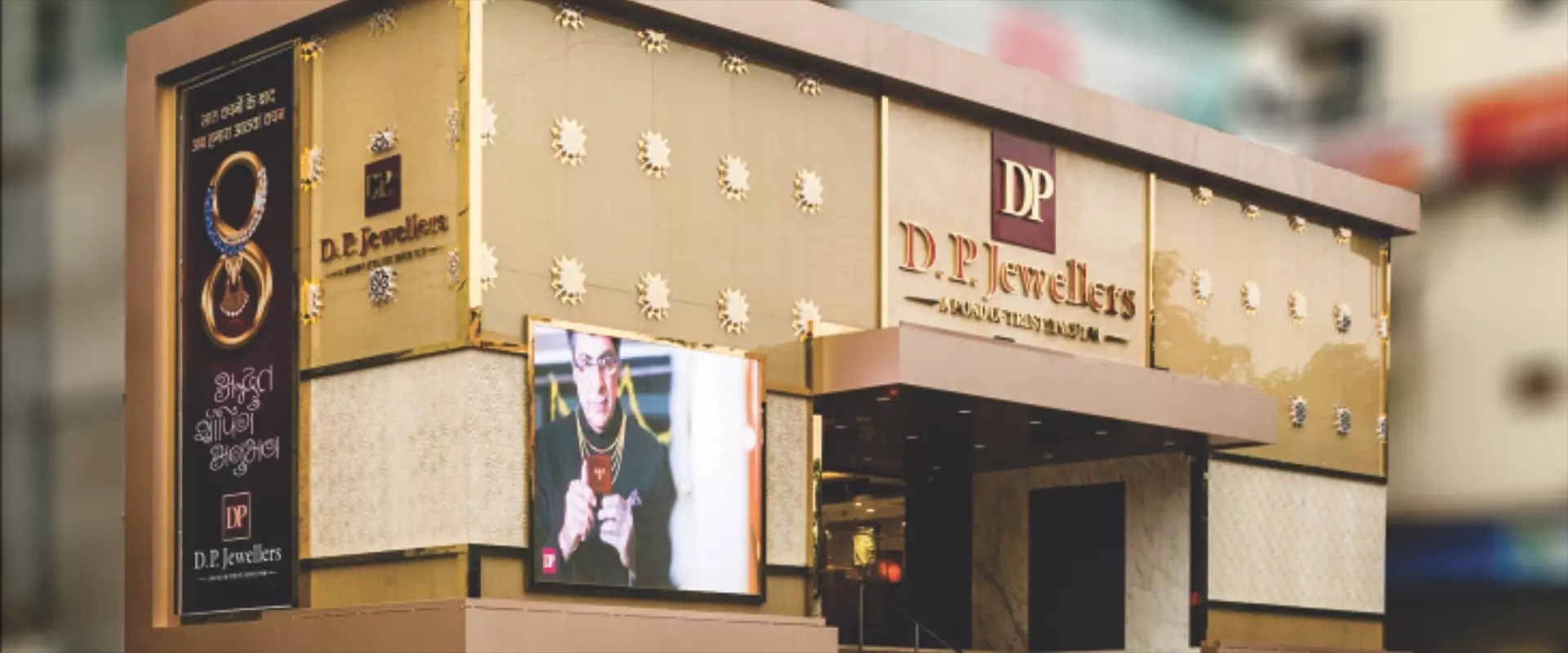
1. At a Glance – The Gold That Actually Glitters
₹3,184 crore market cap. ₹1,395 stock price. ROE 35%. ROCE 33.6%. Quarterly PAT growth of 105% while sales politely declined by 3.7%. Ladies and gentlemen, welcome to D.P. Abhushan Ltd, where margins lift weights even when topline skips leg day.
This is not a fancy Mumbai-Delhi luxury brand pretending to be aspirational. This is a Ratlam-born jewellery retailer quietly compounding wealth, opening stores like paan shops (but far more profitable), and delivering numbers that make auditors smile without caffeine. Eight stores across Madhya Pradesh and Rajasthan, ~40,500 sq. ft. of glittering retail space, and a promoter holding of 74.9% with zero pledge. That’s already better governance than half the market.
Three-month return? Flat. Six-month return? Down ~17%. One-year return? Down ~15%. Meanwhile, profits are up 81% YoY and five-year profit CAGR sits at 46.5%. Classic case of price sulking while earnings party.
Question for you already: Is the market ignoring Tier-2 jewellery compounding, or is it worried about gold cycles and expansion greed? Let’s dig.
2. Introduction – From Ratlam With Gold
D.P. Abhushan is the kind of company Dalal Street usually notices after it has doubled. Founded as a regional jewellery retailer, it built trust brick by brick in Ratlam, then expanded into Indore, Bhopal, Udaipur, and beyond. No Bollywood ambassador. No IPL team sponsorship. Just good old-fashioned Indian jewellery retail: trust, design, inventory churn, and weddings.
The company finally listed on BSE in April 2024, giving public markets a peek into a business that had already done the hard work. Since then, the numbers suggest one thing clearly: this is not a one-store wonder.
Revenue mix is boring in the best way possible:
- Gold jewellery: 92%
- Diamond jewellery: 6%
- Silver: 2%
Which means predictable margins, working-capital intensity, and inventory risk — but also insane demand visibility in Tier-2 and Tier-3 India, where