4
1. At a Glance – The ₹310 Undergarment Story
Here’s a company that literally deals in what you wear inside, but its numbers are out in the open.
Market Cap: ₹1,755 Cr
Current Price: ₹310
Stock P/E: 17.1
Book Value: ₹159
Price to Book: 1.94
ROCE: 12.6%
ROE: 10.6%
3-Month Return: -16.1%
1-Year Return: -23.5%
Latest quarter (Q3 FY26) tells a calm-but-not-exciting story:
- Revenue: ₹388 Cr
- PAT: ₹19.2 Cr
- EPS: ₹3.39
- QoQ Profit Change: -47.8%
- YoY Profit Change: -8.1%
Translation? Topline grew a sleepy 2% YoY, margins were protected, but profits slipped.
Meanwhile, the company says: “Growth can wait. Profitability first.”
So the question is — is Dollar playing chess while others are playing Ludo? Or is this just a slow stitch in a fast-fashion world?
Let’s unfold the fabric layer by layer.
2. Introduction – From Bhawani Textiles to Bollywood Boss
Started in 1972 by Shri Din Dayal Gupta, this was once a small hosiery business.
Today, it’s a branded innerwear machine with:
- 300 million pieces annual capacity
- 15% Indian hosiery market share
- 1.45 lakh retail outlets
- 1,500+ dealers
- 17 EBOs
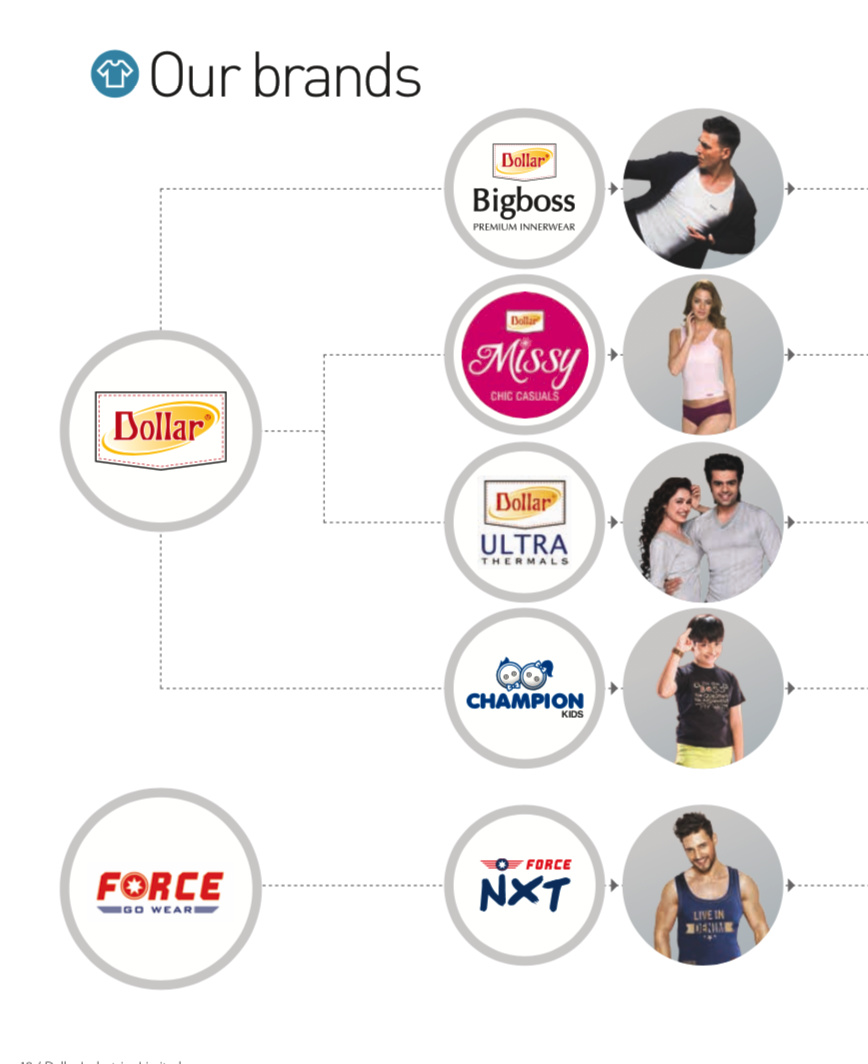
And yes — they’ve roped in everyone from Salman Khan to Akshay Kumar to Yami Gautam. If brand ambassadors were profits, this stock would be ₹1,000.
But here’s the twist.
Despite premium ambitions, the revenue mix still heavily leans toward:
- Dollar Always (Economy): 41–44%
- Dollar Man: ~37–40%
- Force NXT (Premium JV): ~4–5%
So while the company talks premium, the wallet says economy.
Is this a value trap wearing premium packaging? Or a slow transition story?
Let’s decode.
3. Business Model – WTF Do They Even Do?
Simple explanation:
They make vests, trunks, thermals, bras, rainwear, athleisure.
But here’s the real edge — they are vertically integrated.
From cotton to yarn to knitting to dyeing to stitching — in-house.
Manufacturing muscle:
- 700 tonnes monthly yarn output
- 300 tonnes knitting capacity
- 400 tonnes dyeing capacity
- 0.3 million pieces cutting per day
Why does this matter?
Because in textile land, integration = margin control.
Now add Project Lakshya.
Instead