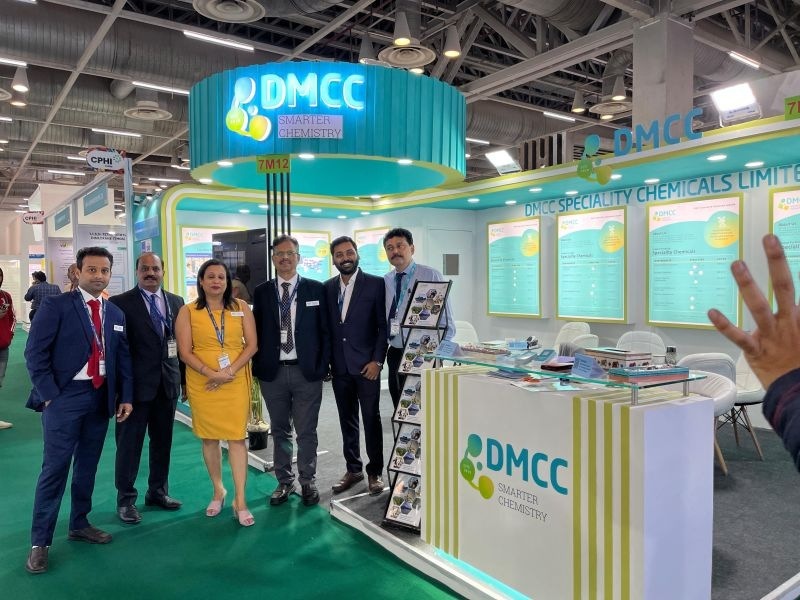
The financial performance of veteran chemical players often hinges on delicate logistical balances. DMCC Speciality Chemicals Ltd has posted its performance for the full year and final quarter ending March 31, 2026, showcasing a top-line growth that has captured immediate attention across the domestic specialty chemical tracking ecosystem. Net sales from operations for Q4 FY26 surged to ₹177.64 crore, marking an expansion of 41.9% over the ₹125.22 crore reported in the corresponding quarter of the previous financial year. For the full fiscal year FY26, total consolidated revenue consolidated at ₹581.58 crore, up from ₹431.30 crore in FY25.
While these expanding top-line figures present a picture of strong market penetration and successful pass-through of volatile raw material prices, a deeper analysis of the core profitability metrics reveals undercurrents that warrant careful evaluation. Operating profit margins, which stood at a robust 15.03% in December 2024, dropped to 10.08% in the latest quarter ending March 2026. This margin compression highlights a clear structural tension: the bulk commodity business is running at near-total capacity saturation of 95% to 100%, driven by price growth rather than incremental volume expansions, while the higher-margin specialty chemical segment continues to operate under historical capacity constraints, currently utilization sits at or below the 50% threshold.
Simultaneously, the cash architecture of the balance sheet underwent a visible shift during the twelve months of the fiscal year. The company’s net cash inflow from operating activities turned into a negative outflow of ₹17.78 crore for the year ended March 31, 2026, compared to a positive operating cash generation of ₹38.04 crore in the preceding fiscal period. This sudden strain on liquidity was primarily driven by a massive build-up of working capital resources, with inventories rising sharply from ₹42.59 crore in FY25 to ₹91.89 crore in FY26.
This inventory absorption is not merely a cyclical fluctuation; it reflects an operational shift forced by supply chain disruptions in the boron business, where procurement rules transitioned from domestic stock availability to a restrictive advance-payment model requiring a 90-to-100-day shipping lead time out of Turkey. Investors analyzing the entity must weigh the headline growth against these structural working capital pressures, structural export declines across traditional European footprints, and an impending supply shock from major domestic smelters entering the market.
2. Introduction
DMCC Speciality Chemicals Ltd, historically known as The Dharamsi Morarji Chemical Company Limited, holds a long-standing position in the Indian chemical sector. Established over a century ago in 1919, the company initially carved its niche as the pioneer producer of sulfuric acid and phosphate fertilizers under the recognizable ‘Ship’ brand. After modernizing its long-term corporate direction, the company entirely exited the fertilizer manufacturing sphere in 2007 to reposition itself as a fully integrated specialty chemical manufacturer focusing on sulphur, boron, and ethanol chemistries.
The company operates its manufacturing activities through two distinct industrial hubs. The primary manufacturing facility at Roha, Maharashtra, spans 88,355 square meters and focuses extensively on sulphur chemistry with an aggregate production capacity of 300 metric tonnes per day across 10 dedicated and 3 multi-purpose plants. The second facility, located at Dahej, Gujarat, was absorbed into the corporate structure following the amalgamation of Borax Morarji Limited. This site covers 1,03,321 square meters and serves as the operational hub for boron and sulphur processing, housing 8 dedicated and 2 multi-purpose production units. Notably, 50% of the acquired land parcel at Dahej remains entirely unutilized, offering an organic footprint for future scale expansion without requiring immediate land acquisition capex.
3. Business Model – WTF Do They Even Do?
To explain DMCC’s business model to an investor who values simple facts over corporate presentations: the company essentially operates a dual-engine production system that turns basic, hazardous substances into building blocks for global industries. The business is structurally divided into two clear buckets: Bulk Chemicals and Specialty Chemicals.Segmental Breakdown: Bulk vs. Specialty Chemicals
Low-margin, price-driven commodity model dependent on raw material cost pass-through
High-margin, asset-heavy chemistry dependent on customized client qualification cycles
Strategic Focus
Running at peak engine capacity; future growth managed via internal debottlenecking
Significant operational leverage available if market re-orientation to LATAM & Asia replaces lost European demand
The Bulk Chemicals vertical accounts for 56% of total operational revenues as of FY26. Here, the company manufactures industrial heavyweights like Sulfuric Acid, Sulfuric Anhydride, Oleum, Chloro Sulphonic Acid, and Diethyl Ether. Half of what comes out of these plants is consumed in-house to feed their internal processes, while the remaining 50% is shipped externally to companies manufacturing fertilizers, detergents, and industrial dyes. This segment is an asset-heavy, volume-driven operation running at nearly 100% capacity utilization. It provides steady, non-discretionary revenue but leaves the company exposed to the global pricing cycles of raw sulphur, which is a direct industrial by-product of global oil refining.
The Specialty Chemicals vertical makes up the remaining 44% of the revenue mix. This side of the house builds niche molecules like Benzene Sulfonic Acid, Benzene Sulfonyl Chloride, Phenol Sulfonic Acid, and specialized compounds used in pharmaceuticals, cosmetics, agrochemicals, and high-end pigments. While this segment offers higher margins, it is currently facing a demand puzzle. Nearly 65% to 70% of these specialty compounds are aimed at export markets. With traditional European buyers stepping back due to structural energy crises at home, DMCC is left holding an expensive array of specialized plants running at less than half their total mechanical capacity.
How long can an industrial model rely on commodity price hikes to mask underutilized specialty assets?
4. Financials Overview
The financial updates for the quarter and full year ended March 31, 2026, show