1. At a Glance
Divine Hira Jewellers is currently the talk of the town in the SME exchange, and for a very specific reason: it is a high-volume, razor-thin-margin machine that is growing at a breakneck speed. While the top line is exploding, the core of the business operates on a strategy that leaves very little room for error. The company recently posted its audited results for the financial year ended March 31, 2026, and the numbers are nothing short of a rollercoaster.
Revenue has skyrocketed to ₹884 crore in FY26, a staggering jump from ₹359 crore in the previous year. This reflects a massive 146% growth in sales. Investors are swarming around this stock, evidenced by the 645% return over the last year. However, beneath this glittering surface of revenue growth lies a reality that should make any serious analyst pause: the Operating Profit Margin (OPM) is a mere 1.24%.
In the world of bullion and wholesale jewelry, margins are notoriously tight, but Divine Hira is taking this to the extreme. The company operates in the cut-throat environment of Zaveri Bazar, Mumbai, where it functions essentially as a high-speed middleman. While the sales growth is sensational, the absolute net profit stands at just ₹7.13 crore. This means for every ₹100 the company brings in, it keeps barely 80 paise as bottom-line profit.
The management has played a masterstroke to keep the retail sentiment high by announcing a 2:1 bonus issue and an increase in authorized share capital to ₹39.5 crore. This move typically improves liquidity but does nothing to change the underlying economics of a low-margin business. Furthermore, the company’s reliance on a few massive clients—specifically Moksh Ornaments and Kalyan Jewellers, who together account for over 76% of revenue—creates a massive concentration risk. If one big fish stops buying, the entire deck of cards could wobble.
Is this a scalable powerhouse or a volume-chasing entity vulnerable to even a slight fluctuation in gold prices? The market seems to love the growth, but the auditor-minded investor will be looking closely at the cash flows, which tell a much grittier story than the P&L.
2. Introduction
Divine Hira Jewellers Limited, incorporated only in July 2022, has moved with lightning speed to establish itself in the B2B wholesale jewelry market. Operating out of the historical hub of Zaveri Bazar, Mumbai, the company has positioned itself as a key supplier of 22 Karat gold jewelry, silver articles, and bullion.
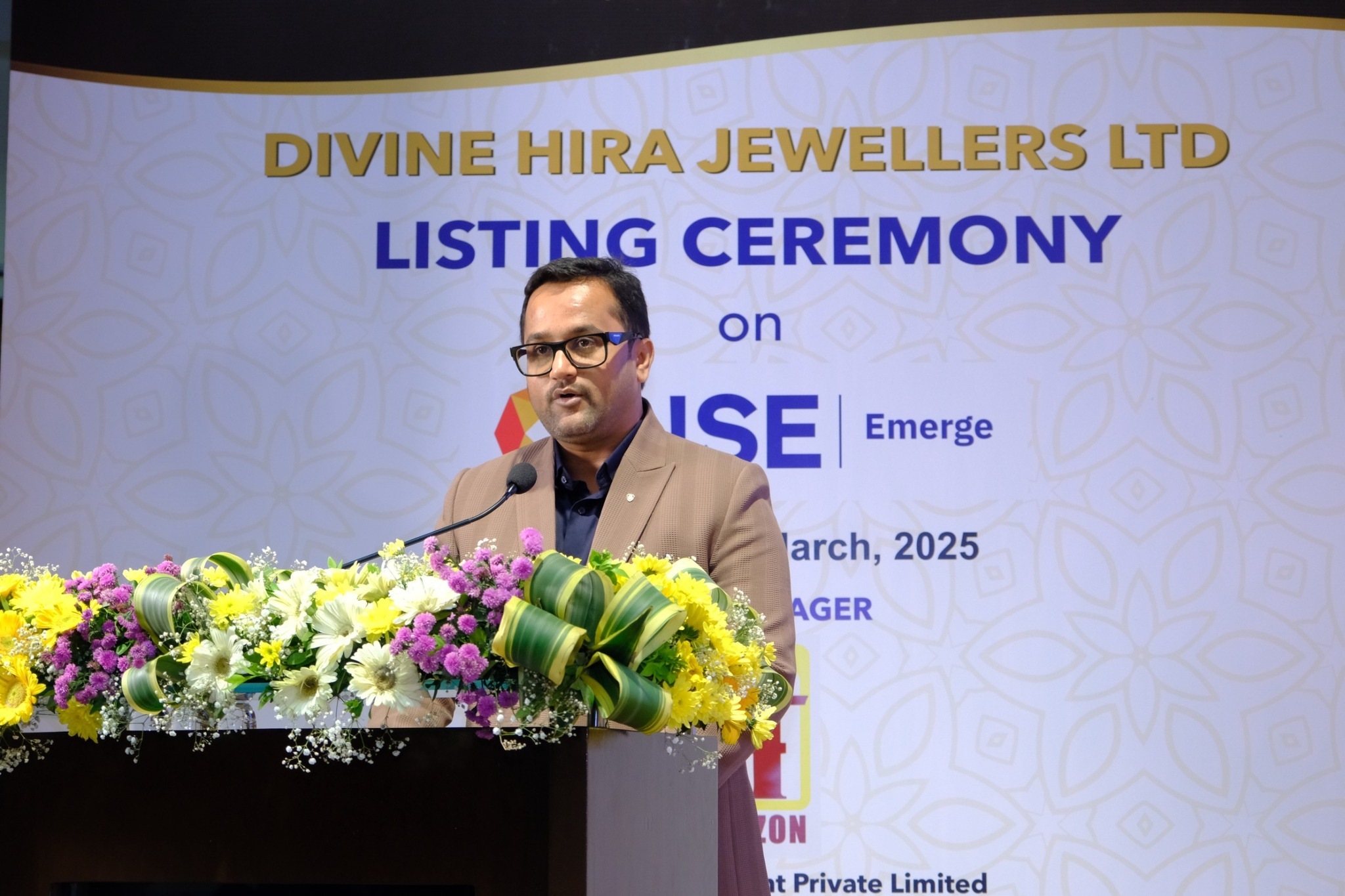
The company’s journey from a private entity to a listed player on the NSE SME platform in March 2025 has been accompanied by a relentless pursuit of turnover. In the jewelry industry, there are two ways to play: the “Brand/Retail” game with high margins and high marketing costs, or the “Volume/Wholesale” game with paper-thin margins and high inventory turnover. Divine Hira has clearly chosen the latter.
The latest audited results for FY26 show a company that is successfully capturing market share. A revenue of ₹884 crore within just a few years of incorporation is an achievement that cannot be ignored. Yet, this growth has come at the cost of intense capital requirement and a heavy dependence on external job workers for manufacturing.
The recent board meeting on May 8, 2026, was a pivot point. Not only did they approve the financial results, but they also greenlit the incorporation of a new subsidiary, Taaris Jewels Limited, to dive into the silver jewelry space (B2B and B2C). This suggests management is aware of the gold margin trap and is looking to diversify into higher-margin segments or direct consumer play.
For an investor, the intrigue lies in whether the company can maintain its growth trajectory without diluting its already thin margins further. The stock is currently trading at a P/E of 62.2, which is significantly higher than the industry median, suggesting that the market is pricing in aggressive future growth or perhaps over-reacting to the “Bonus” excitement.
3. Business Model – WTF Do They Even Do?
If you think Divine Hira is a fancy boutique where people buy engagement rings, think again. They are the “wholesaler’s wholesaler.” They operate on a B2B (Business-to-Business) model. They take bulk orders from large showrooms and retailers, handle the design and quality control, and then get the actual making done through third-party artisans.
The “Asset-Light” (Or Is It?) Strategy
The company doesn’t own massive factories. They rely on outsourced manufacturing. They have a network of job workers who do the heavy lifting of handcrafted and machine-made jewelry. This keeps their fixed costs low but makes them entirely