Dish TV India Mar 2026: The ₹4,226 Crore Negative Net Worth Wonder
Date of Publishing -
Spotted a factual error — a wrong number, date, or fact? Tell us and we will check the source.
1 — At a Glance
The headline is ₹3.16. That is the price of one share of Dish TV India Ltd on the open market today, valuing the entire enterprise at a humble ₹581.85 crore. To put that in perspective, you could buy the entire company for the price of a couple of high-end sea-facing apartments in South Mumbai. But before you call your broker, you might want to look at what you’re actually buying.
This is a business that generated ₹1,162.61 crore in sales for FY26 but managed to post a net loss of ₹807.36 crore. It is currently sitting on a staggering ₹4,226.72 crore in negative reserves. A balance sheet doesn’t lie, but it often screams before the income statement finally bleeds. The core story here isn’t about growth; it’s about survival in an industry undergoing a violent tectonic shift. Between mounting license fee disputes running into thousands of crores and a topline that is shrinking at an alarming 25% clip, Dish TV is a fascinating case study in what happens when the cord gets cut. There is no sugarcoating the financial gravity here. Let’s dissect the wreckage.
2 — Introduction
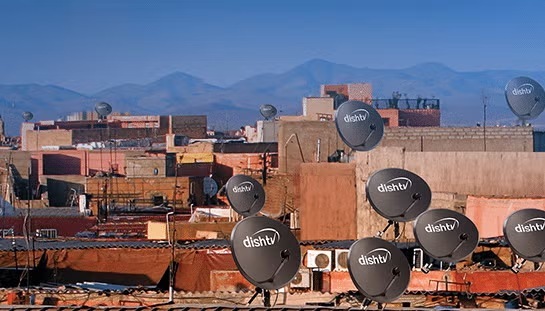
Incorporated in 1988, Dish TV was once the poster child of the Indian television revolution. They brought the satellite dish to the Indian rooftop, disrupting the chaotic local cable operator ecosystem. Today, they are a Direct-to-Home (DTH) provider trying to navigate a world that has overwhelmingly moved to on-demand streaming. They operate under the brands DishTV, d2h, and Zing Super, but the recent strategic moves suggest a quiet acknowledgement of the writing on the wall: the company expects to transition away from set-top boxes entirely within the next year.
3 — Business Model: WTF Do They Even Do?
Currently, Dish TV beams standard and HD channels into homes via an actual physical satellite dish. They sell connected devices like the “Dish SMRT Hub” that attempt to turn your regular TV into a smart TV, and they have an OTT aggregation app called Watcho.
But here is where the strategy gets wonderfully desperate. They offer the “Zing Super Box,” a 2-in-1 device that gives consumers over 200 channels for absolutely free for the first two years. Giving away your core product for free because the consumer has stopped wanting to pay for it is a bold pricing strategy. Now, management is planning to pivot away from set-top boxes entirely. When a DTH company decides it no longer wants to be in the set-top box business, you know the existential crisis has fully arrived in the boardroom.
4 — Financials Overview
Figures are consolidated, in ₹ crore.
Metric
Q4 FY26 (Mar 2026)
YoY (Q4 FY25)
QoQ (Q3 FY26)
Revenue
243.07
343.66
299.05
Operating Profit
-70.04
97.32
-41.54
PAT
-303.95
-402.19
-276.23
EPS (₹)
-1.65
-2.18
-1.50
The topline has been dieting so aggressively it seems to have forgotten how to eat. A drop from ₹343.66 Cr to ₹243.07 Cr in a single year isn’t a seasonal dip; it’s a customer exodus. Earnings quality is irrelevant when earnings themselves are a distant memory. Operating profit turned violently negative this quarter, meaning the core business is now burning cash just to keep the lights on and the satellites beaming.
5 — Valuation Discussion: Fair Value Range Only
Valuing Dish TV using traditional metrics requires a