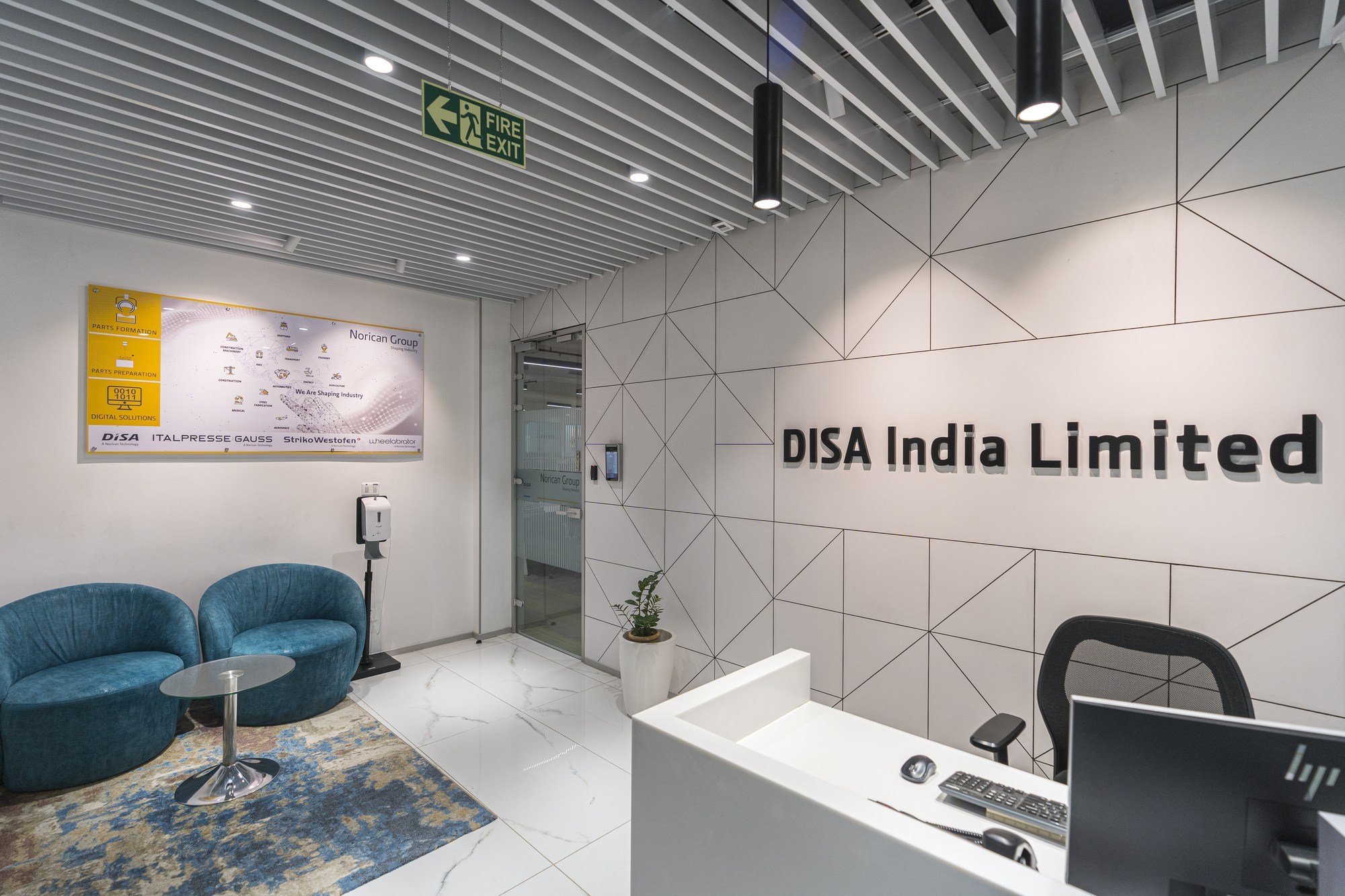
Disa India Ltd Q2 FY26: The ₹3,074 Million Order Book That’s Making Foundry Dust Look Like Gold Dust
1. At a Glance
When your core business is shaking sand to make molds and still minting margins like a SaaS company, you know you’re doing something right—or something very Danish. Disa India Ltd, the foundry machinery arm of the Norican Group, just posted another quarter that quietly said, “We’re boring, but profitable.” The stock, now hovering around ₹12,589, has been sulking with a -27% return over the last year, but the underlying financials are anything but weak. With a market cap of ₹1,831 crore, zero debt, and a 29.2% ROCE, Disa has managed to maintain a 14–15% operating profit margin while others in capital goods are crying over raw material costs.
Q2 FY26 (September 2025) brought in ₹1,040 million in revenue and ₹122 million in PAT. While profit was slightly down by 1.3% QoQ, the company’s massive ₹3,074 million order backlog says business isn’t slowing anytime soon. Dividend yield stands at a soothing 1.59%, perfect for patient investors who enjoy slow-cooked returns with foundry flavor.
Is the slowdown just the sand settling—or is this a setup for the next molten breakout?
2. Introduction
Disa India isn’t your everyday capital goods drama. No debt, no pledges, no dilution—just a clean, humming machine business supplying sand molding systems and shot blasting gear to the heavyweights of Indian industry. The company is like that disciplined engineering student who doesn’t top exams but ends up running the lab.
The stock, however, has been going through a mild identity crisis—down 12.5% in 3 months, 10.6% in 6 months, and a painful -27.1% in a year. While peers like Honeywell Automation and Kaynes Technology are flexing high P/Es north of 60, Disa’s modest 34.7x multiple feels grounded—literally.
Its FY25 topline hit ₹4,110 million, growing 23% YoY, and PAT stood at ₹528 million. With a book value of ₹1,882 per share and return on equity at 21.7%, Disa looks like a well-run, capital-efficient factory that spends more on machines than marketing.
And the best part? It’s virtually debt-free. The company’s total borrowings as of September 2025 are ₹0.00 crore—yes, not “low,” but actually none. For an industrial manufacturing player, that’s the corporate equivalent of walking barefoot on molten metal without flinching.
3. Business Model – WTF Do They Even Do?
Disa India’s business model is as sturdy as its cast iron products. The company manufactures foundry equipment—essentially machines that make molds for casting metal components. Its portfolio spans:
Molding Machines – The heartbeat of any foundry operation.
Sand Plant Systems – Mixers, conveyors, and reclaimers that keep production running smoother than a Bollywood song transition.
Shot Blast and Surface Preparation Equipment – Industrial cleaning at a scale where “detergent” means steel grit.
Filters and Environmental Systems – Because even foundries have to breathe clean air now.
Its customer base lies deep within the iron and aluminum foundry industries—think automotive, heavy machinery, and infrastructure component makers. About 98% of revenue comes from foundry machinery, and just 2% from filters and services.
Geographically, 81% of revenue is domestic, while the remaining 19% trickles in from exports, mainly to the Middle East, Africa, and Australia.
And then there’s the aftermarket network—six distributors managing nine warehouses across the country, ensuring that when a molding machine sneezes in Pune, a replacement part is already on a truck from Jamshedpur.
4. Financials Overview
Let’s crunch the quarterly masala:
Metric
Q2 FY26 (Sep 2025)
Q2 FY25 (Sep 2024)
Q1 FY26 (Jun 2025)
YoY %
QoQ %
Revenue (₹ Cr)
104
85
102
22.4%
2.0%
EBITDA (₹ Cr)
15
12
15
25.0%
0.0%
PAT (₹ Cr)
12.2
12.0
13.0
1.6%
-6.2%
EPS (₹)
84.1
85.2
90.4
-1.3%
-7.0%
Figures are standalone.
Despite the mild QoQ slip in profits, YoY growth in revenue remains strong at 22%. The OPM at 14% signals that even in an inflationary environment, Disa is managing its sand, steel, and sanity just fine.
Sarcastic Take: Imagine being so efficient that your operating profit per rupee of sand is higher than your competitor’s ROI. That’s Disa.