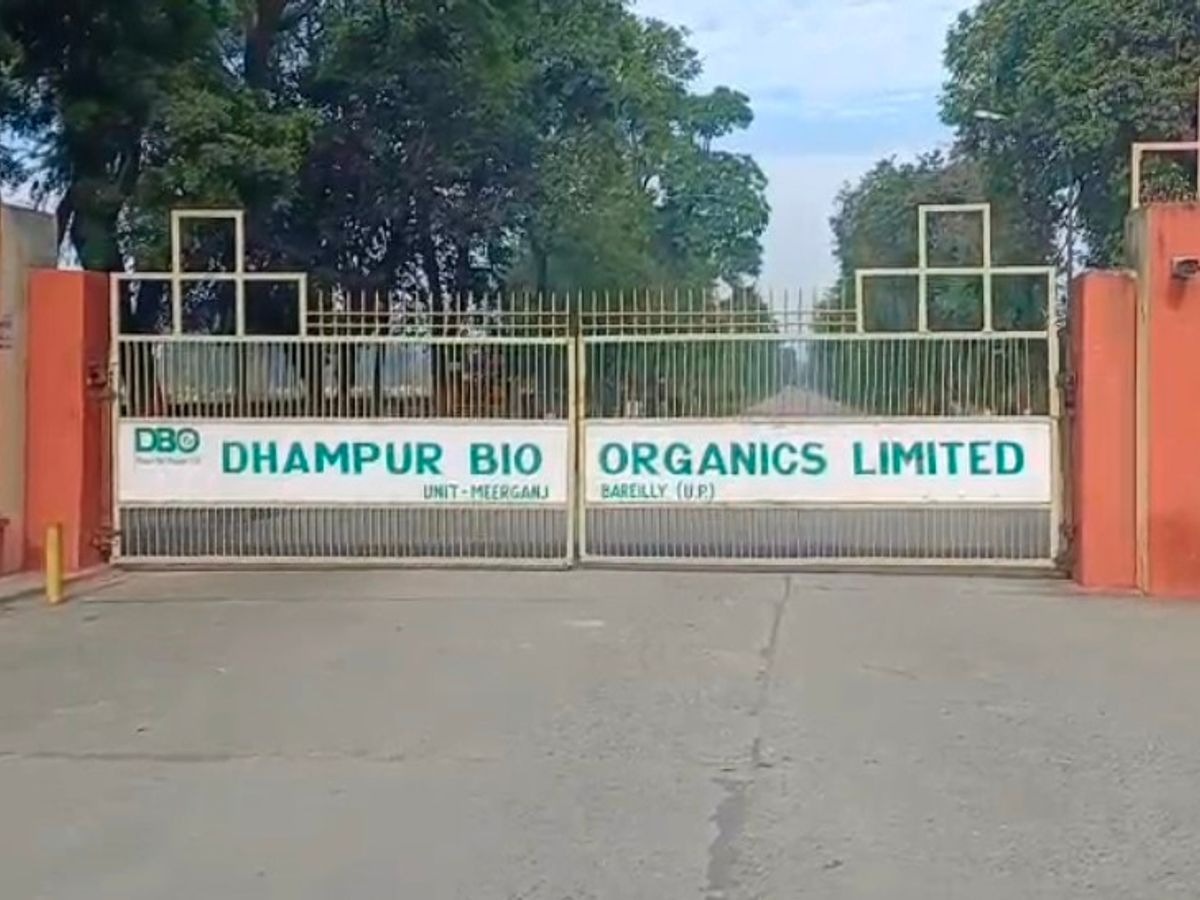
Dhampur Bio Organics Ltd Q2 FY26 (Half Year Ended Sept 2025): Sugar Highs, Ethanol Lows, and a Factory Fire to Top It Off!
1. At a Glance
What happens when a 100-year-old sugar dynasty spins off its “organic” alter ego and sends it into a volatile ethanol-scented battlefield? You get Dhampur Bio Organics Ltd (DBOL) — a ₹505 crore market cap rollercoaster from the Goel family’s sweet empire. The stock, once at ₹134, is now at ₹76 — down over 41% in a year, proving again that sugar cycles don’t care about your feelings.
The latest H1 FY26 results (Sept 2025)? A brutal wake-up call. Revenue stood tall at ₹1,629 crore, but profits? Burnt — quite literally. DBOL reported a loss of ₹34.9 crore, worsened by operational hiccups and even a fire at its Mansurpur unit in November 2025. Despite all this, the company still managed a 1.64% dividend yield, which is like handing out free jalebis after the shop caught fire.
Stock P/E: 295 (yes, not a typo). Book Value: ₹145. ROE: 1.56%. ROCE: 3.97%. Debt-to-Equity: 0.58. Sales Growth: 20%. Profit Growth: -83.8%.
So, while the company talks about sustainability and bio-energy, investors are just trying to sustain their patience.
2. Introduction
Once upon a cane field, the mighty Dhampur Sugar Mills decided to create a separate entity — Dhampur Bio Organics Ltd — in 2022. The idea was simple: to make ethanol while sounding environment-friendly enough to attract ESG-loving investors. Fast forward to FY25–26, and the company now sits squarely between renewable power dreams and profit nightmares.
DBOL isn’t a small fry. It’s an integrated sugar-to-ethanol producer with three massive plants in Uttar Pradesh: Asmoli, Mansurpur, and Meerganj, crushing a combined 26,000 TCD of sugarcane daily. The setup includes biofuel distilleries, CO₂ recovery units, power co-generation, and even a country liquor brand — because why waste molasses when you can distil it into both ethanol and desi daaru?
But here’s where it gets spicy — despite operating all these units, FY25 net profit collapsed from ₹46 crore to just ₹15 crore. And by FY26’s first half, red ink returned with a vengeance. Even the Income Tax Department joined the action with a search operation in November 2025, followed by a plant fire. In corporate India, that’s what we call the “Trifecta of Stress.”
Still, the company soldiers on, boasting that 58% of revenue comes from sugar, 31% from country liquor, and 11% from biofuels. Basically, DBOL makes everything from your morning chai sugar to your Saturday night shot.
3. Business Model – WTF Do They Even Do?
DBOL is a fully integrated sugar and bioenergy company with a multi-product model that milks every drop from sugarcane — from juice to molasses to ethanol to power.
Let’s break this molasses maze down:
Sugar Division: Raw, refined, and pharma-grade sugar — basically, the same molecule dressed for different occasions. The Asmoli plant alone refines 1,100 TPD, producing “value-added” branded sugar for pharma and FMCG clients.
Biofuels & Spirits: From B-heavy molasses to grain-based ethanol, DBOL runs a dual-feed distillery (recently converted 100 KLPD to dual-feed in June 2025). It’s like a chef who can make biryani out of rice or wheat — flexibility at its finest.
Country Liquor (IMIL): With over 4.2 million cases/year, DBOL’s desi liquor business keeps Uttar Pradesh hydrated and the company’s margins mildly alive.
Power Co-generation: Using bagasse (cane residue) to generate ~95 MW across plants. They even export ~71 million units of electricity to the grid, proving sugar mills know how to light things up — sometimes unintentionally, as seen in the November fire.
In short: they grow cane, crush it, ferment it, burn it, and sell every by-product with a straight face. That’s vertical integration, Indian-style.