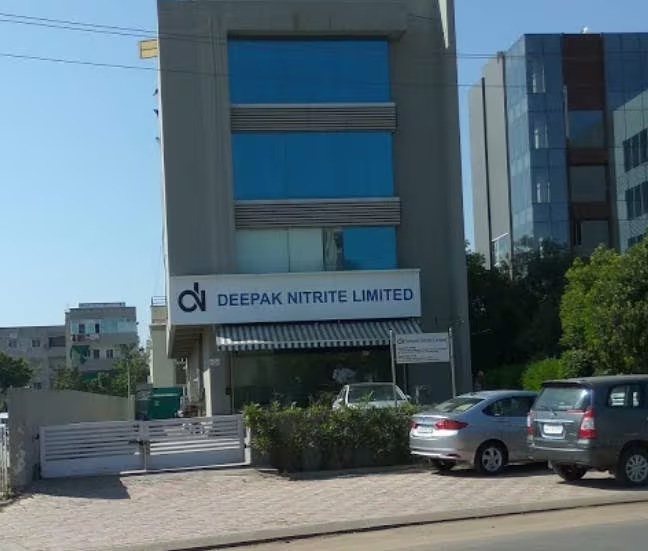
Deepak Nitrite Mar 2026: The ₹11,000 Crore Relocation Gamble As Spreads Rebound
Section 1 — At a Glance
Deepak Nitrite’s full-year performance highlights a profound cyclical compression, even as a stellar sequential rebound in the final quarter offers a glimpse of operational resilience. Total revenue for the fiscal year ended March 31, 2026, contracted by 4.77% to ₹7,887.07 crore, down from ₹8,281.93 crore in the previous fiscal year. The bottom-line pain was more acute, with Net Profit shrinking by 21.04% to ₹550.53 crore from ₹697.24 crore, driven by a structural downshift in operating profit margins to 12.44%.
However, the headline numbers mask a violent intra-year pivot. The final quarter alone brought in ₹2,120.33 crore in revenue and a massive sequential PAT surge of 120% to ₹219.74 crore, propelled by sharp spread recoveries in the core Phenolics business and aggressive, proactive inventory stocking of critical feedstocks before geopolitical logistics bottlenecks choked the Strait of Hormuz.
While the retail market ponders the long-term erosion of returns—with Return on Equity softening to 9.97%—institutional players are closely monitoring a spectacular ₹11,000 crore capital expenditure pipeline. This includes importing and rebuilding an entire dismantled German polycarbonate plant to achieve absolute backward integration across the nitration-amines spectrum.
Cyclical asset-heavy businesses require capital to be aggressively deployed at the bottom of the cycle, transforming near-term margin pain into a long-term cost moat. The primary anxiety anchoring the stock is the looming execution risk of this gargantuan infrastructure pipeline, coupled with technical instability in its newly commissioned domestic nitric acid facilities.
Section 2 — Introduction
Deepak Nitrite occupies a critical, unglamorous position at the genesis of India’s chemical manufacturing ecosystem. Operating seven high-spec facilities across five strategic manufacturing hubs, the group has evolved from a basic bulk supplier into a deeply integrated intermediate powerhouse. This publication focuses on the company today because it finds itself at a historical crossroads: its legacy profit engines are facing acute global supply chain disruptions, while the board is simultaneously executing the most audacious capital expenditure program in its history.
The transition of leadership, with Shri Maulik Mehta stepping into the role of Deputy Managing Director alongside the appointment of Anant Pande as Executive Director and Chief Marketing Officer, marks a generational shift in execution strategy. This analysis pierces through the noisy, overlapping financial disclosures across subsidiary entities to evaluate whether management’s aggressive supply-chain repositioning can successfully insulate the company from intense Chinese export dumps and volatile crude-linked feedstock spreads.
Section 3 — Business Model: WTF Do They Even Do?
Deepak Nitrite is essentially an industrial refinery that converts volatile, crude-linked petrochemical feedstocks into indispensable, high-utility intermediates that other industries cannot function without. The business is neatly divided into a high-volume commodity armor and a specialized specialty chemical sword:
Phenolics Segment (68.5% of Revenue): Led by its subsidiary Deepak Phenolics, this unit dominates over 50% of the domestic market for Phenol and Acetone. It feeds everything from automotive plastics and construction adhesives to pharmaceutical formulations.
Advanced Intermediates Segment (31.5% of Revenue): This segment produces high-value Nitrites, Toluidines, and Optical Brightening Agents. It serves as a vital supplier to agrochemical giants and global dye manufacturers.
The strategic brilliance of their business model lies in co-location and vertical asset fungibility. They buy bulk raw materials like benzene and toluene, and run them through highly dangerous chemical processes like nitration and hydrogenation. If international margins drop, they quickly shift their capacity to serve strong domestic demand, acting as a reliable local alternative to unpredictable chemical imports.
Section 4 — Financials Overview
Figures are consolidated, in ₹ crore.
Quarterly Trend Performance
Metric
Latest Quarter (Mar 2026)
YoY (%)
QoQ (%)
Revenue
₹2,120.33
-0.28%
7.36%
EBITDA
₹375.99
24.86%
78.28%
PAT
₹219.74
-13.44%
120.20%
EPS (₹)
₹16.11
-13.44%
120.08%
Did Management Walk the Talk?
Looking at the older concalls from late 2025 alongside the latest March 2026 disclosures reveals a fascinating mix of brilliant operational planning and unexpected engineering setbacks. Management previously promised that their newly commissioned nitric acid facility in Nandesari would provide immediate cost relief by substituting high-priced market purchases.
However, during the final quarter, the plant faced severe technical instability and design breakdowns, running at an average utilization of just 45%. This forced the company to buy expensive raw materials from the open market, which directly hurt their margins.
On the flip side, management showed incredible foresight by making an unusual tactical decision in late January and February. Seeing the growing shipping crises and military tensions in the Middle East, they aggressively bought critical petrochemical feedstocks at every market dip. As a result, they entered the new fiscal year with substantial, lower-priced inventories of benzene and toluene. This move shielded their margins and set them up for a strong