Deepak Builders & Engineers India Ltd — FY2026: ₹554 Crore Revenue, Margins Compressed, and a Working Capital Cycle That Grew Longer Than a Railway Project
Spotted a factual error — a wrong number, date, or fact? Tell us and we will check the source.
General information and entertainment, not investment advice. The author is not a SEBI-registered adviser or research analyst. No recommendation, no promised returns. Markets carry risk including loss of capital. Figures may not be current. Consult a registered adviser before acting.
1 — At a Glance
Figures are standalone, in ₹ crore.
Deepak Builders & Engineers India Ltd (DBEIL) closed FY2026 with revenue of ₹554 crore — a 4.3% decline from ₹579 crore in FY2025. PAT fell to ₹39.65 crore from ₹56.75 crore, a drop of 30%. Operating margin compressed to 14.6% from 19.1% a year earlier. The company carries ₹178 crore in borrowings against a net worth of ₹447 crore, and a working capital cycle that stretched from 243 days in FY2025 to 315 days in FY2026.
Three signals draw attention simultaneously. First, CRISIL reaffirmed its BBB+/Stable rating in March 2026 but explicitly cited declining operating profitability and rising gross current assets as key weaknesses — with inventory days ballooning to the 325–350 range per their estimate. Second, the market currently prices the company at 9.82x earnings, against an industry P/E of 17.9x. Third, the order pipeline is materially larger than the revenue base: the company emerged as L1 bidder for a ₹559.50 crore AYUSH University project in May 2026, and previously declared L1 on a ₹474.25 crore IOCL Panipat township.
There is also a governance file worth noting — DGGI searches, GST summonses, and a SEBI administrative warning arrived during the year. None have resulted in adverse orders as filed, but the record now has items that weren’t there two years ago.
The central tension: a company whose order pipeline is growing faster than its ability to bill revenue cleanly, carrying a cost structure that compressed margins from 22% to 15% in two years. Whether the working capital normalises as railway projects complete, or whether it represents a structural shift, is the open question for this business cycle.
2 — Introduction
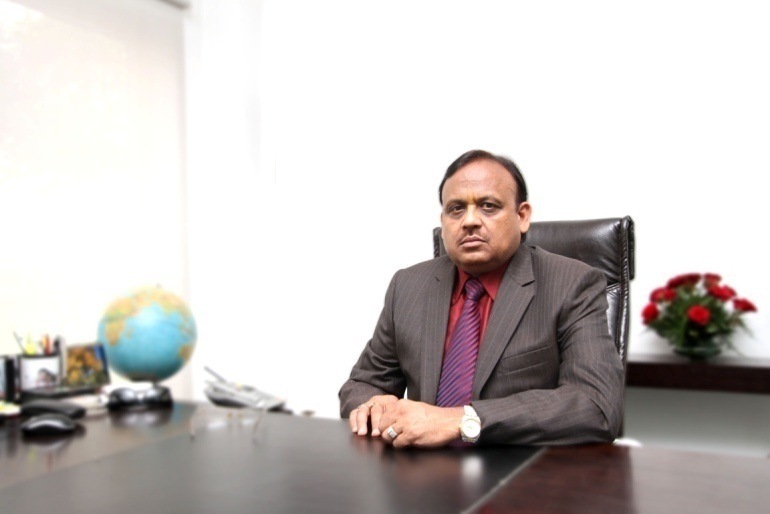
DBEIL was established as a proprietorship firm in 1984 by Deepak Kumar Singal, converted to a partnership in 1990, reconstituted as a private limited company in 2017, and listed on the BSE in October 2024 after raising ₹260 crore through an IPO. The company operates from its corporate office in Ludhiana, Punjab, and from a registered office in New Delhi.
The IPO proceeds were deployed without deviation: ₹30 crore for borrowing repayment, ₹111.96 crore for working capital, and ₹54.27 crore for general corporate purposes, per the deviation statement filed with the board meeting of 30 May 2026. The board also noted a residual ₹0.068 crore retained in the monitoring account at HDFC Bank.
FY2026 was operationally disruptive. CRISIL attributed revenue shortfalls in the first nine months to site unavailability on railway station projects — work requiring simultaneous operations on adjacent active tracks — which limited available man-hours and delayed milestone billing. Extended monsoons in Q2 compounded the issue. These factors elevated inventory on site by 60–90 days above the company’s typical requirement, per CRISIL’s March 2026 rationale.
A 1:10 stock split was approved by shareholders through postal ballot on 2 June 2026, with the amended MOA registered on 18 June 2026 and new ISIN activated by CDSL and NSDL on 17–20 June 2026. The face value moved from ₹10 to ₹1 per share. The split itself is a structural change to the equity ledger, not a financial event, and is noted here for completeness.
The CRISIL rating was enhanced in scope during the period — total rated bank facilities rose from ₹470 crore to ₹637 crore — while the underlying BBB+/Stable/A2 ratings were reaffirmed.
3 — Business Model: WTF Do They Even Do?
DBEIL is a government contractor. Full stop. Or nearly full stop — the model is built almost entirely on competitive government tenders, with private players representing a minority of the client mix.
The company operates three revenue streams. Construction Projects is the largest: turnkey EPC contracts for administrative and institutional buildings, hospitals and medical colleges, industrial buildings, historical memorial complexes, residential complexes, and stadium and sports complexes. The word “turnkey” matters here — DBEIL assumes full responsibility for design, procurement, and construction under fixed-price contracts, which means cost overruns sit on the company’s side of the ledger.
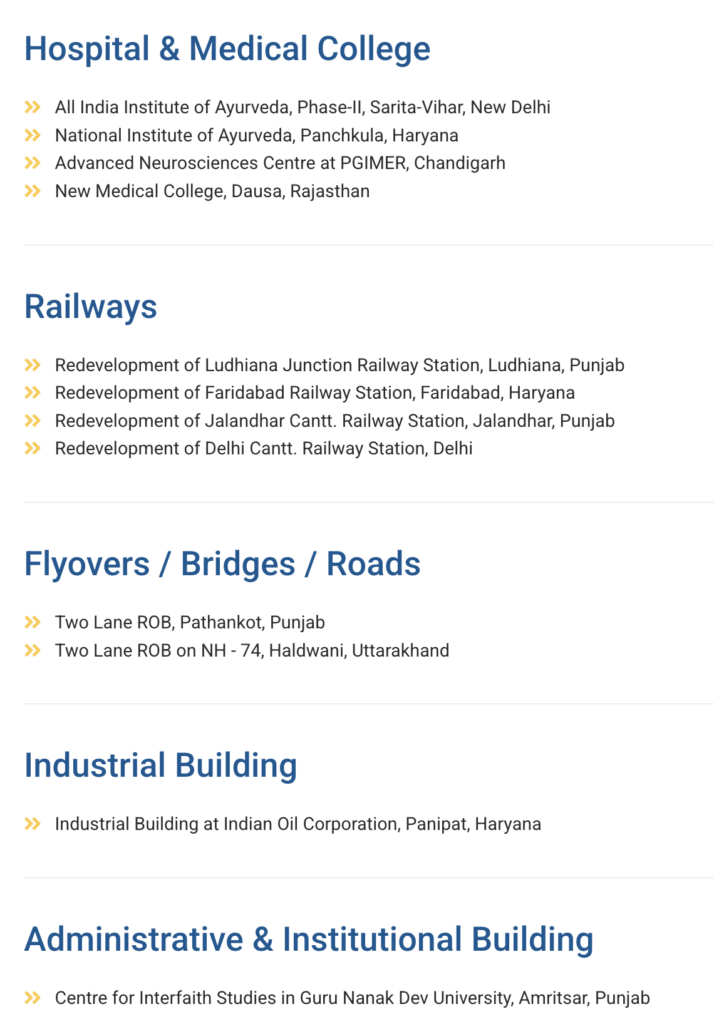
Infrastructure Projects covers flyovers, railway over bridges, rail under bridges, approach roads, and railway station upgradation. This segment became the operational problem child in FY2026: railway projects requiring simultaneous track-side work within active stations proved difficult to execute at pace, per CRISIL’s rating rationale. The Ludhiana Junction railway station upgradation, a ₹472 crore contract, is among the ongoing projects.
The third stream — Sale of Products — involves selling leftover steel and cement after construction needs are met. This is the business equivalent of a restaurant selling yesterday’s bread: real revenue, marginal in scale.
Geographically, the company is a Northern India specialist. Punjab and Haryana contributed 80% of FY2024 revenue, per the DRHP. Operations extend to Rajasthan, Uttarakhand, Delhi, and Chandigarh. This concentration means that government spending cycles in two states have an outsized effect on DBEIL’s revenue cadence.
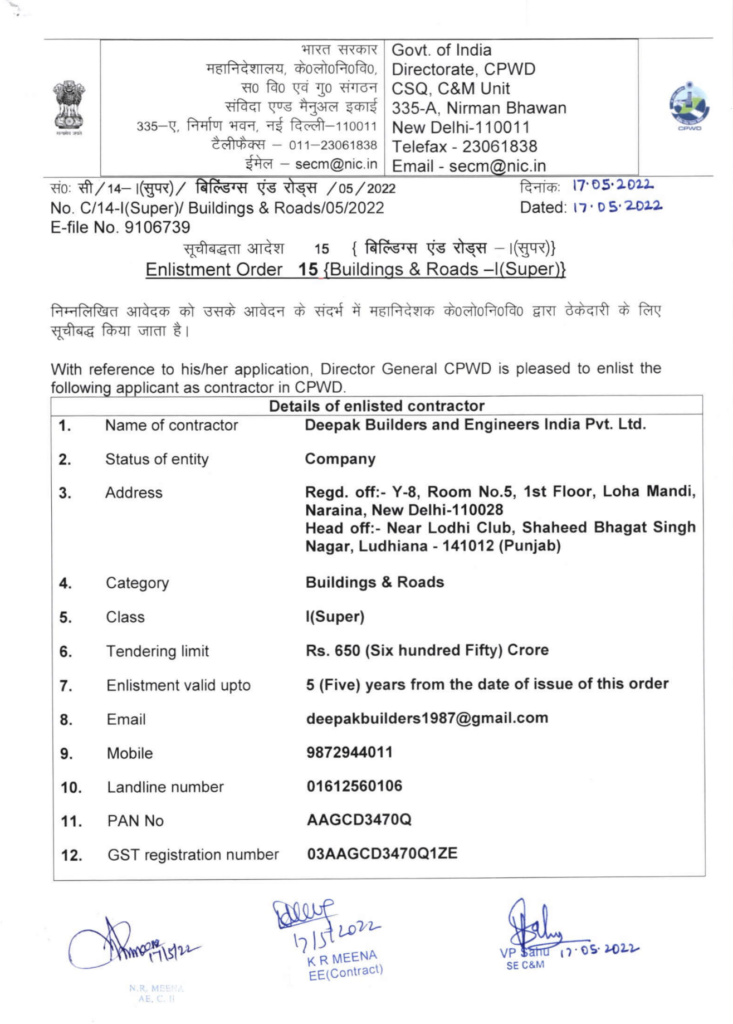
The company holds a Class I (Super) Contractor certification from the Central Public Works Department, which expands its eligibility for large-value central government tenders. Its client roster includes HSCC India Ltd, NPCC, Wapcos, Engineers India Ltd, and Indian Railways. The IOCL Panipat residential township project (L1 at ₹474.25 crore) represents a notable addition to the industrial buildings segment.
In-house integration — design, procurement, and an owned equipment fleet of 398 items as of March 2025 — reduces dependence on subcontractors, though it also means fixed overhead absorption becomes sensitive to revenue timing. When site access is limited and milestones cannot be billed, the overheads deployed to those projects produce no matching revenue recognition.
Does a construction model with 315 working capital days and a 14.6% operating margin describe an efficient business or a capital-intensive one caught in a billing cycle? The arithmetic is on the table.
4 — Financials Overview
Figures are standalone, in ₹ crore.
Quarterly Results — Latest Quarter (Mar 2026)
Metric
Mar 2026 (Q4)
YoY (vs Mar 2025)
QoQ (vs Dec 2025)
Revenue
236
+5.3%
+42.0%
Operating Profit
27
+17.4%
+80.5%
PAT
14.51
+29.6%
+180.8%
EPS (post-split)
₹0.31
—
—
Q4 was the strongest quarter of FY2026 by revenue and PAT, recovering from a near-complete collapse in Q2 FY2026 (Sep 2025 quarter: Revenue ₹45 crore, PAT ₹5 crore). The operating margin in Q4 was 11%, against 28% in Q2 — a reminder that margin can swing violently when revenue recognition follows milestone billing rather than accrual on continuous activity.
Full Year FY2026 vs FY2025
Metric
FY2026
FY2025
Change
Revenue
554
579
-4.3%
EBITDA
87
111
-21.6%
PAT
39.65
56.75
-30.1%
EPS (post-split, FY)
₹0.85
₹1.22
-30.3%
EBITDA computed as PBT + Interest + Depreciation: FY2026: 53.78 + 25.68 + 7.16 = 86.62; FY2025: 81.03 + 28.25 + 6.80 = 116.08 — rounding to nearest crore used in table.