1. At a Glance
₹2,331 Cr market cap. Stock chilling at ~₹290 after being humbled from ₹465 highs. Three-month return: negative. Six-month return: also negative. And yet—PAT pops +17.6% YoY in Q3, interim dividend announced, ethanol capacity screaming 950 KLPD, debt politely walking down the stairs. This is one of those stocks where price looks bored but the balance sheet is quietly doing yoga.
At 6.88× P/E, 0.73× P/B, EV/EBITDA ~4.2×, and earnings yield ~17.7%, valuation is doing the “am I a joke to you?” meme—especially in a sugar cycle where peers are trading at far richer multiples. Promoters sit tight at ~74.9%, zero pledge. Dividend yield ~2% with interim ₹4.50/share just declared. ROE ~12%, ROCE ~9.5%—not influencer-level hot, but respectable for a cyclical agri-industrial play that has diversified into ethanol, power, and by-products.
If you like businesses that turn cane into sugar, molasses into ethanol, waste into power, and cycles into cash—stick around. The fun is in the plumbing.
2. Introduction
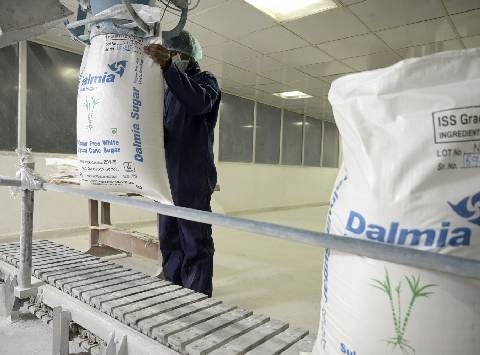
Dalmia Bharat Sugar & Industries (DBSIL) is what happens when a traditional sugar mill grows up, goes to policy school, befriends ethanol blending, and learns how to hedge its own mood swings. Born in 1994 with a 2,500 TCD mill in UP, DBSIL has scaled into one of India’s youngest large sugar players—spread across UP and Maharashtra, with 5 sugar plants, 5 co-gen units (126 MW), and 4 distilleries that now look like the main character.
Sugar alone is a heart-attack business. Prices are regulated, exports are permission-based, cane prices are political, and weather has opinions. DBSIL’s response? Forward integration. Ethanol for OMCs. Power from bagasse. Distillery capex that converts cyclicality into annuity-ish cashflows. The result: sugar is still the largest revenue contributor, but ethanol and power increasingly pay the bills when sugar sulks.
The stock price hasn’t rewarded patience lately. But operationally, FY25 and Q3 FY26 show resilience: Q3 sales ₹698 Cr, PAT ₹70 Cr, margin