Search for stocks /

Dabur India:₹3,559 Cr Revenue. 45.7x P/E.Hair Oils on Steroids. Urban Demand Crawling Back.

Dabur India Q3 FY26 | EduInvesting
Q3 FY26 Results · Fiscal Year Reporting (April–March)

Dabur India:
₹3,559 Cr Revenue. 45.7x P/E.
Hair Oils on Steroids. Urban Demand Crawling Back.

Coconut inflation made every hair oil transaction a luxury item. GST cuts are finally landing. Urban demand is limping forward. And management just told you exactly which categories are about to explode. You’re welcome.

Market Cap₹84,889 Cr
CMP₹479
P/E Ratio45.7x
Div Yield1.67%
ROCE20.2%

The Ayurvedic Empire That’s Fighting Inflation With Brand Equity

  • 52-Week High / Low₹577 / ₹420
  • Q3 FY26 Revenue₹3,559 Cr
  • Q3 FY26 PAT₹553 Cr
  • Q3 FY26 EPS₹3.16
  • Annualised EPS (Q3×4)₹12.64
  • Book Value₹61.8
  • Price to Book7.75x
  • Dividend Yield1.67%
  • Debt / Equity0.12x
  • YTD Return (6M)-12.1%
The Setup: Dabur just posted ₹3,559 crore in Q3 FY26 revenue (+6.1% YoY), with PAT clocking ₹553 crore (+9.44% YoY). The company is trading at 45.7x P/E — technically the premium for an FMCG company that owns 61% of the Chyawanprash market and 19% of hair oils. But here’s the spice: hair oil growth is almost entirely price-driven. Coconut oil, the raw material base, inflated 40% annually. Volume growth? Mid-single digits. Margins are there, but only because brand equity let Dabur pass on cost shocks. GST rates cut to 5% for 86% of the portfolio from September 2025. Urban demand is recovering, but at a crawl. This is the Goldilocks moment — before consumers catch up, before prices normalize.

Dabur: The Ancient Remedy That’s Become A Modern Inflation Hedge

Dabur was born in 1884 in Kolkata. One hundred and forty-two years later, it’s still selling the same products: hair oil, toothpaste, digestives, and honey. Zero reinvention. Maximum compounding.

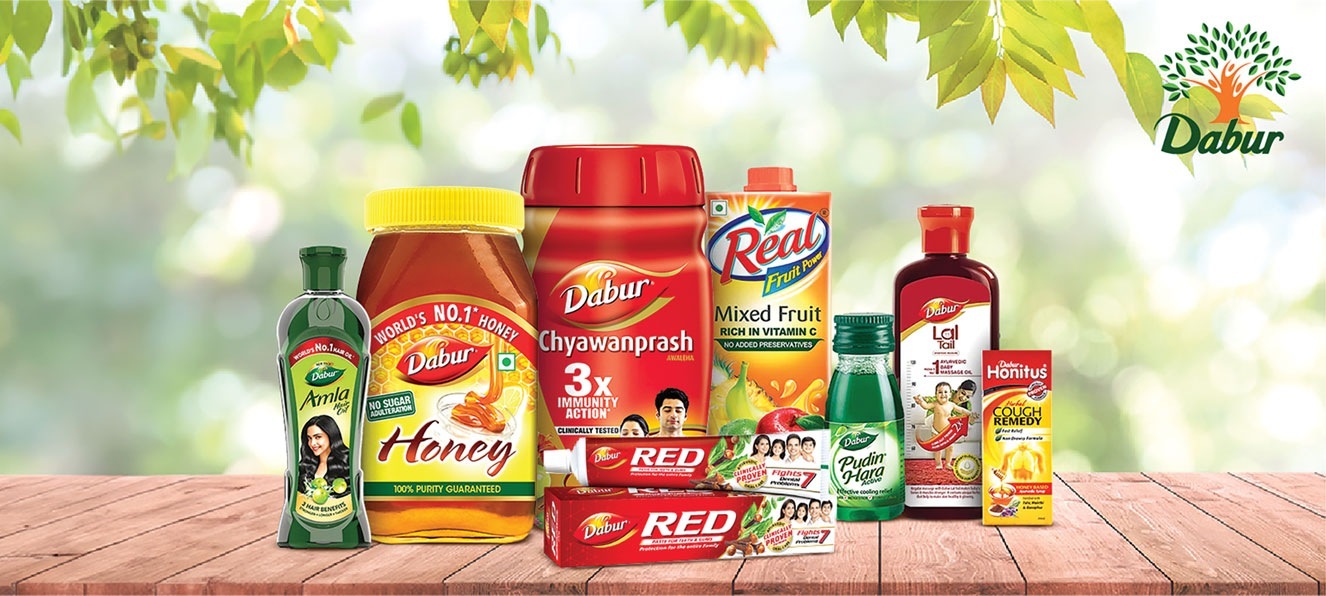
The company owns four of India’s most trusted consumer brands — Amla, Red, Vatika, and Real. It commands 61% of the Chyawanprash market (a health supplement), 19% of hair oils, and 56% of digestives. That’s not competition. That’s a moat the size of the Brahmaputra.

In Q3 FY26, Dabur reported consolidated revenue of ₹3,559 crore, up 6.1% YoY, with operating profit climbing 7.7%. The stock? Down 12.1% in six months. Why? Because the market priced in all the good news two years ago, inflation scared people witless, and now nobody remembers that Dabur can raise prices and nobody complains because your grandmother swears by Amla oil.

The interesting bit: GST cuts from September 2025 moved 86% of Dabur’s portfolio to the 5% slab from 12–18%. Urban demand is limping forward but accelerating. International business is growing 7.5% at constant currency. And management just signalled exactly what to expect for the next 12 months — if you listen carefully. We did. Here it is.

Concall Insight (Feb 2026): “Rural continues to outperform urban, but the gap is narrowing — rural ahead by ~300 bps, down to half from what it used to be last year.” Translation: urban is coming back. When it does, margin leverage will be vicious.

Ayurveda Meets FMCG Pricing Power. Pray for the Competitors.

Dabur operates across three verticals: Home & Personal Care (HPC: ~48% of revenue), Healthcare (~31%), and Foods & Beverages (~20%). That 48% HPC segment includes hair oils, toothpaste, shampoo, skin care, and home care products. It’s the margin factory. Healthcare spans health supplements, digestives, OTC medicines, and honey — the inflation-proof, pricing-power segment. Foods is juices, nectars, and culinary products — the premiumization opportunity.

The distribution network is the real asset. Dabur touches 7.7 million retail locations across India. Your local kirana store has Dabur Amla. Your urban mall has Real juice. Your gym influencer is pushing honey. That’s 1.5 million stockkeeping units (SKUs) running through a supply chain that moves 400+ products. The economics: high incremental margins because the distribution is already paid for.

International business contributes 26% of revenue, spread across MENA (26%), Sub-Saharan Africa (24%), Europe (12%), Americas (16%), and Asia-Pacific (22%). Namaste Labs (US hair relaxers) is dealing with litigation — but management clarified it accounts for less than 1% of group revenue and costs have reduced 25% over three years. Non-story at this point.

Chyawanprash61%Market Share
Hair Oils19%Market Share
Digestives56%Market Share
Fruit Juices61%Market Share
Acquisition Watch: October 2024, Dabur announced merger with Sesa Care to expand ayurvedic hair oil. Enterprise value ~₹320 crore, ~51% CRPS stake being acquired for ₹12 crore. Remaining through equity swap. Deal subject to NCLT approval, expected by end FY26. This is margin accretive — you’re buying brands in a category where Dabur already dominates.
💬 Hair oils were volume growth 3–4%. Price hikes 40%+. Which one are you betting on normalizing first? Comment your take.

Q3 FY26: Revenue Up 6.1%. Margins Defended. Profits Growing Faster Than Topline.

Result type: Quarterly Results  |  Q3 FY26 EPS: ₹3.16  |  Annualised EPS (Q3×4): ₹12.64  |  Full-year FY25 EPS: ₹10.40

Metric (₹ Cr) Q3 FY26
Dec 2025
Q3 FY25
Dec 2024
Q2 FY26
Sep 2025
YoY % QoQ %
Revenue3,5593,3553,191+6.1%+11.5%
Operating Profit734682588+7.7%+24.8%
OPM %21%20%18%+100 bps+300 bps
PAT554516445+9.44%+24.4%
EPS (₹)3.162.952.55+7.1%+23.9%
The Hidden Story: PAT growth (+9.44% YoY) is outpacing revenue growth (+6.1% YoY). OPM expanded 100 bps YoY and 300 bps QoQ. Why? Two reasons: (1) GST transition in October created transient headwinds, but the system normalized by November–December. (2) Management booked a one-time labour law provision in Q3 — adjust it out and underlying PAT growth is +7.2%, still outpacing topline. Margin leverage is real. When urban demand returns to normal, expect operating profit to grow 12–15% even if revenue grows 6–8%. This is textbook FMCG operating leverage.

Is 45.7x P/E Justified? The Math Says “Wait For Volatility”

Join 10,000+ investors who read this every week.
Become a member
error: Content is protected !!