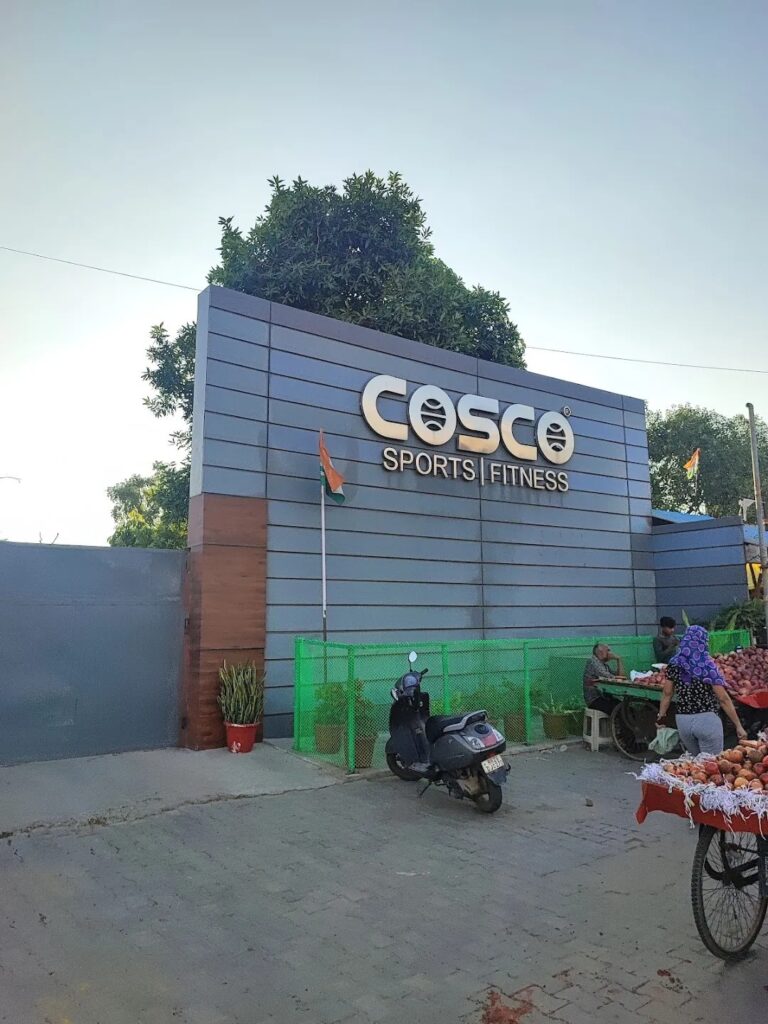
Cosco (India) Ltd — the name that once bounced proudly across school basketballs — is now dribbling through a rough corporate patch. Incorporated in 1980, this ₹90.2 crore market-cap company makes sports balls, gym equipment, and fitness accessories, and sells the idea of health while its own financials are gasping for breath.
The company’s Q2 FY26 standalone results weren’t exactly medal-winning: Sales came in at ₹37.27 crore (down 2.3% QoQ), and PAT slipped into a red card-worthy loss of ₹1.43 crore (versus ₹0.55 crore profit in the previous quarter). The operating margin collapsed to a brutal -0.4%, making investors wonder if the brand that supplies treadmills now needs one to run away from losses.
At a stock price of ₹217, Cosco trades at 1.82x book value with zero dividend yield. ROE is a meagre 1.54%, ROCE 5.71%, and debt-to-equity an uneasy 1.32x. Despite a cult retail presence and 800+ dealers across India, the numbers suggest the company’s biggest lift lately has been its borrowings.
Will Cosco bounce back like its own rubber balls or deflate further under cost pressure? Let’s unpack the sweaty details.
2. Introduction
Cosco (India) Ltd is that nostalgic 90s brand that once made every kid believe they owned “the” cricket bat Sachin used — even if it cost ₹499 from the local shop. From football fields to gym floors, Cosco built its name as India’s homegrown sports and fitness brand before the country even discovered gym selfies.
But nostalgia doesn’t pay bills. The last few years have turned this sporty champ into a financial underdog. While India’s fitness industry bulges with global brands, Cosco has been stuck doing budget push-ups in a high-cost economy.
Sales in FY25 stood at ₹173 crore, down from ₹177 crore in FY24 — not disastrous, but hardly the energy of a brand that also distributes Adidas, Reebok, and Fitlux fitness products. Profits, however, fell harder than a rookie doing squats: from ₹3 crore in FY24 to a ₹2 crore loss in FY25.
The market hasn’t been kind either. The stock has crashed nearly 39% over the past year, and investors are starting to wonder if the company’s “fit” branding should extend to its balance sheet.
Still, you can’t count Cosco out. This company has survived multiple decades, sports cycles, and CFO resignations. It may be tired, but it’s not down. Not yet.
3. Business Model – WTF Do They Even Do?
Cosco (India) Ltd operates like that old-school gym bro who never misses leg day but forgets cardio. It’s big, traditional, and slightly rigid.
The business has two key verticals: (a) Manufacturing and sale of sports goods (balls, bats, carrom boards, TT tables, etc.) (b) Trading of fitness equipment (treadmills, cross-trainers, weights, cardio machines).
It boasts a 3,00,000+ sq. ft. factory in Gurugram that can churn out sports gear by the truckload. Around 35% of revenue comes from its own manufactured goods, while a chunky 65% comes from trading imported products.
Its domestic focus is almost obsessive — 98% of sales are from India and just 2% from exports. This might have been fine when the rupee was strong, but as inflation and logistics costs hit, this dependence on Indian discretionary spending has hurt margins.
And yes, Cosco also distributes global fitness brands like Stiga, Adidas, Reebok, and Impulse. But instead of becoming India’s “Decathlon of Delhi,” it seems stuck in a treadmill loop — running hard, but going nowhere fast.
4. Financials Overview
Let’s look at the Q2 FY26 scoreboard:
Metric
Latest Qtr (Sep’25)
YoY Qtr (Sep’24)
Prev Qtr (Jun’25)
YoY %
QoQ %
Revenue
₹37.27 Cr
₹38.16 Cr
₹50.04 Cr
-2.3%
-25.5%
EBITDA
₹-0.15 Cr
₹2.20 Cr
₹2.64 Cr
-106.8%
-105.7%
PAT
₹-1.43 Cr
₹0.20 Cr
₹0.55 Cr
-815%
-360%
EPS (₹)
-3.44
0.48
1.32
-816%
-360%
Commentary: Cosco’s numbers resemble a gym-goer’s New Year resolution — promising in theory, gone by March. Despite stable sales YoY, the profit margins imploded. OPM dropped from 5.77% last year to -0.4% this quarter.
High interest costs (₹1.11 Cr) and negligible other income sealed the red ink. Annualised EPS now stands at -₹13.76, giving the company a negative P/E — basically, a financial flatline.
5. Valuation Discussion – Fair Value Range Only
Let’s crunch some numbers (educationally, of course).
P/E Method: If we assume a normalized EPS of ₹2 (based on FY24 profit of ₹3 Cr and equity of ₹4 Cr → EPS ₹7.7, but FY25 loss drags it), and industry P/E for consumer durables at ~25x: → Fair Value Range = ₹50 – ₹100 (wide because of volatility).
EV/EBITDA Method: FY25 EBITDA ≈ ₹8 Cr, EV = ₹154 Cr → EV/EBITDA = 19.25x (expensive for a loss-making firm). Fair range = 10x–15x EBITDA → ₹80–₹120 Cr EV, or roughly ₹110–₹165/share.
DCF Snapshot (Simplified): Assuming future FCF growth of 5% and discount rate of 12%, intrinsic range = ₹90–₹130/share.
✅ Educational Fair Value Range: ₹90 – ₹165 per share (This fair value range is for educational purposes only and is not investment advice.)