Search for stocks /

Colgate-Palmolive:105% ROCE. 81% ROE.Why This Stock Costs ₹2,205 and You’re Not Mad About It

Colgate-Palmolive Q3 FY26 | EduInvesting
Q3 FY26 Results · Quarterly Reporting (Jan–Dec)

Colgate-Palmolive:
105% ROCE. 81% ROE.
Why This Stock Costs ₹2,205 and You’re Not Mad About It

Slow growth, high profitability, absolute dominance in India’s oral care. The company returned ₹1,671 crore to shareholders in FY25 — more than its entire PAT. Markets rewarded this genius with a 10% annual loss. Let’s unpack the contradiction.

Market Cap₹59,962 Cr
CMP₹2,205
P/E Ratio45.0x
Div Yield2.31%
ROCE105%

The Toothpaste Monopoly That Somehow Stays Boring

  • 52-Week High / Low₹2,747 / ₹2,029
  • FY25 Revenue (Full Year)₹6,040 Cr
  • FY25 PAT (Full Year)₹1,437 Cr
  • Full-Year EPS (FY25)₹52.83
  • TTM EPS₹48.79
  • Book Value₹58.2
  • Price to Book37.9x
  • Dividend Yield2.31%
  • Debt / Equity0.04x
  • Return (1 Year)-10.9%
Auditor’s Opening Note: Colgate-Palmolive closed FY25 with ₹6,040 crore revenue (−3% YoY on TTM basis), ₹1,437 crore PAT, and paid out ₹1,671 crore in dividends (151% payout ratio). The stock delivered −10.9% returns over 12 months. Meanwhile, ROCE sits at an absurd 105%, ROE at 81.2%, and P/E trades at 45x. This is what happens when you build a monopoly so good it becomes invisible. Everyone brushes with Colgate. Nobody thinks about Colgate as a portfolio. Until they check the returns, then they regret everything.

Meet the Company That’s Been Dentist-Recommended Since Your Grandparents Were in Braces

Colgate-Palmolive India: the toothpaste, tooth powder, toothbrush, and mouthwash company. No software, no blockchain, no “Web3 ready.” Just stuff you put in your mouth, spit out, and don’t think about again. Genius business model.

The numbers are ridiculous. ₹51% market share in toothpaste. ₹48% in tooth powder. The company hasn’t lost a quarter in living memory. Operating margins are locked at 30–33% year after year. The cash conversion cycle is negative (they collect from distributors before paying suppliers). They spend 13% of revenues on advertising and still dominate. This is competitive moat incarnate.

But here’s where the story gets interesting: growth has stalled. Full-year revenue in FY25 hit ₹6,040 crore — that’s −3% year-on-year on a TTM basis. Profit is flat. The stock has delivered −10.9% returns over 12 months. Yet the company keeps returning cash to shareholders at ratios that make even tech startups look miserly. They’re using equity capital like it costs nothing. And the market is somehow fine with it, even if the price action says otherwise.

So what’s happening at Colgate? Growth crisis? Pricing power maxed out? Or just a mature business extracting every possible rupee from a saturated market? Let’s find out — with data, spreadsheets, and the kind of honest-to-god analysis that a dentist would appreciate more than your twice-yearly checkup.

Recent News (Feb 2026): Colgate launched “Visible White Purple” campaign with Kriti Sanon. Rahul Dravid appointed as Colgate Total brand ambassador. The company is not giving up on growth — it’s just… hunting for it in very specific niches.

How They Became the Dental Monopoly That Escaped Antitrust

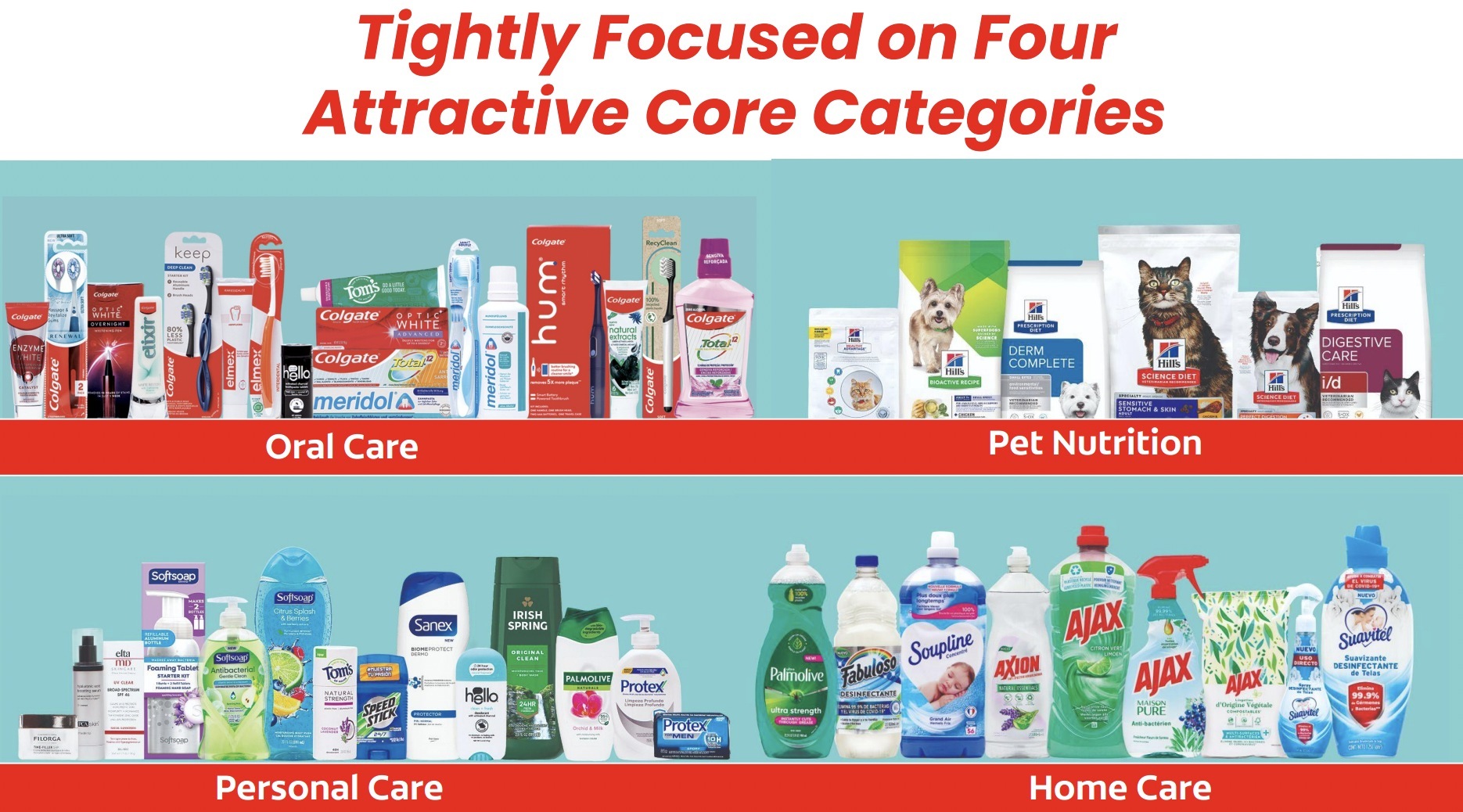
Colgate makes toothpaste, tooth powder, toothbrushes, mouthwash, and now personal care products (Palmolive face cleansing launched in FY23). The company distributes through 1.6+ million retail touchpoints across India. Direct outlet reach is 1.7 million (as of Mar 2025). Four manufacturing plants: Himachal Pradesh, Goa, Gujarat, and Andhra Pradesh.

The supply chain is obsessively simple: procure raw materials, blend formulations in-house, pack at scale, distribute through 350+ direct retailers and thousands of sub-retailers, place on 1.6M+ shelves nationally. The brand is trusted by ~95% of Indian households. Dentists recommend it globally. The company is the #1 recommended oral care brand by dentists in India and worldwide.

Revenue breakup: ~96% from domestic market, ~4% from exports. Geography is purely India-focused. Product mix: toothpaste (the bulk), tooth powder (declining but still relevant in Tier 2/3), toothbrushes, personal care adjacencies. Price realization has been under pressure from rural channels and value segments — more volume at lower margins.

They spend ₹222 crore annually on royalties to parent Colgate-Palmolive Company (USA, which holds 40% stake). The royalty is 3.5–4% of revenue. Parent generates a bunch of R&D globally; Colgate India’s Mumbai R&D centre (900+ scientists, 10k+ patents studied, ~900 patents per year) is one of the largest globally. The company has invested heavily in white-label toothpaste variants: Colgate Strong Teeth (with arginine), Colgate Visible White (with MPS technology), premium ranges for affluent consumers.

Toothpaste51%Market Share
Tooth Powder48%Market Share
Toothbrush30%Market Share
Overall Oral Care~45%Market Share
Royalty Note: ₹222 crore per annum (FY25) is paid to the US parent for IP and knowhow. That’s ₹37 per share. Not nothing. Parent holds 40% + 10.94% (Asia Pte) = 50.6% directly, though shareholding reports show 51%. The company is majority-held by Colgate-Palmolive Company.
💬 Quick question: Do you think Colgate’s growth stall is structural (saturated market) or cyclical (pricing power reset)? Drop your take in the comments!

Q3 FY26: The Numbers That Don’t Lie (But Might Confuse You)

Result type: Quarterly Results  |  Q3 FY26 EPS: ₹11.91  |  Annualised EPS (Q3×4): ₹47.64  |  Full-year FY25 EPS: ₹52.83  |  TTM EPS: ₹48.79

Metric (₹ Cr) Q3 FY26
Dec 2025
Q3 FY25
Dec 2024
Q2 FY26
Sep 2025
YoY % QoQ %
Revenue1,4861,4621,520+1.64%-2.24%
Operating Profit442454465-2.6%-4.9%
OPM %30%31%31%-100 bps-100 bps
PAT324323328+0.3%-1.2%
EPS (₹)11.9111.8712.04+0.3%-1.1%
Translation: Revenue growth of 1.64% YoY is practically flatline. Operating profit down 2.6%. Operating margin squeezed 100 bps YoY. PAT barely positive at +0.3%. This is not a thriving quarter. This is a mature company grinding through pricing pressure and volume softness. The market is very quiet about this, which means either everyone expects it to recover, or everyone has already given up on growth and is just collecting dividends.

What Does a Monopoly Cost When It Stops Growing?

Join 10,000+ investors who read this every week.
Become a member
error: Content is protected !!