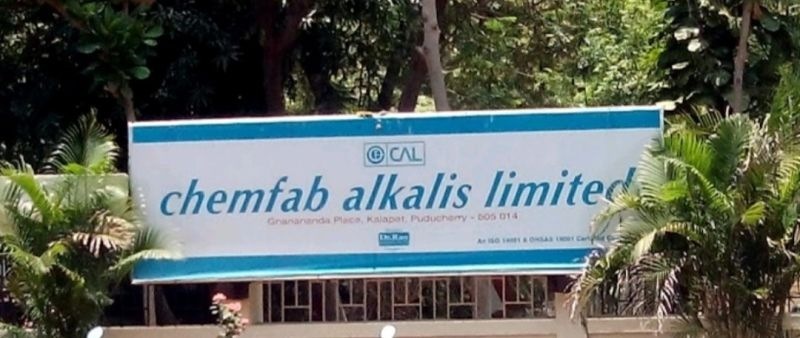
1. At a Glance – A Chemical Company That Accidentally Became a Pipe Dream
There are companies that quietly compound wealth… and then there are companies like Chemfab Alkalis that seem to be doing a live experiment on investor patience.
Imagine this: A company that once printed ₹65 crore profit in FY23 is now reporting losses of ₹4.45 crore in Q3 FY26, with margins collapsing faster than a cheap umbrella in Mumbai monsoon.
Revenue? Down. Margins? Down. Credit rating? Downgraded. Debt? Rising. Confidence? Still “expected to improve from next quarter” (of course).
This is a business that decided:
“Let’s double capacity”
“Let’s add new segments”
“Let’s borrow money”
And then… demand disappeared
Classic.
The irony? On paper, this is a beautiful story:
Chlor-alkali chemicals (boring but steady)
OPVC pipes (high growth, infra theme)
Government tailwinds (Jal Jeevan Mission)
But reality?
Government projects slowed
Commodity prices crashed
Capex ballooned
Cash flows turned negative
And now we have:
EBITDA down 38% YoY in 9MFY26
Net leverage shooting up to 3.6x from 0.2x in just 2 years
Liquidity stretched like your salary in the last week of the month
Let me ask you something:
Is this a temporary bad phase… or a structural business model problem?
Because this article is going to unpack exactly that.
2. Introduction – From “Green Chemical Pioneer” to “Financial Stress Case Study”
Chemfab Alkalis is not some shady operator.
In fact, historically:
First in India to use membrane technology (eco-friendly)
Strong chemical engineering pedigree
Solid promoter holding (~72%)
Sounds respectable, right?
But then came the strategic brilliance moment:
“Let’s diversify into OPVC pipes”
Which, to be fair, is not a bad idea. Pipes are tied to:
Government infra spending
Jal Jeevan Mission
Water distribution
But here’s the catch — and this is where things start smelling like overconfidence:
👉 Their pipe business is heavily dependent on government projects 👉 And those projects… slowed down
As per rating report:
JJM (Jal Jeevan Mission) delays hit sales badly
Capacity utilization fell to 43% in 9MFY26
So basically: They built a Ferrari factory… but customers are buying bicycles.
Meanwhile, their core chemical business:
Hit by global oversupply of caustic soda
Lower realizations
Old plant issues (until recently replaced)
So both businesses decided: “Let’s underperform together.”
Teamwork.
Now think about this:
If both segments fail at the same time, what protects the company?
Answer: Nothing.
3. Business Model – WTF Do They Even Do?
Let’s simplify this chaos.
1. Chemical Business (The OG business)
They manufacture:
Caustic soda
Chlorine
Hydrogen
Hydrochloric acid
Used in:
Textiles
Pharma
Paper
Chemicals
Basically, if you’ve ever used soap, paper, or detergent — you’ve indirectly funded them.
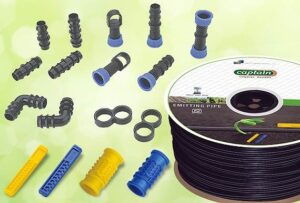
2. OPVC Pipes (The “Growth Story”)
These are advanced plastic pipes used in:
Water supply
Irrigation
Government infra projects
Key advantage:
Lightweight
Durable
Cost-effective
Sounds sexy.
But here’s the problem: 👉 Demand depends on government execution 👉 Government execution depends on… well… government speed
You see where this is going?
3. Hidden Third Business: Capital Allocation Mistakes
Not officially listed… but clearly present.
₹3,400 million capex over FY23–FY26
Debt-funded expansion
Cash flows not keeping up
Result: Growth without returns
Let me ask you:
Is this a chemical company… or a capital destruction experiment?