01 — At a Glance
The Regulated Utility That Actually Makes Money
- 52-Week High / Low₹185 / ₹136
- 9M FY26 Revenue₹14,735 Cr
- 9M FY26 PAT₹1,159 Cr
- Q3 EPS₹2.15
- Annualised EPS (Q3×4)₹8.60
- Book Value₹95.9
- Price to Book1.61x
- Dividend Yield3.88%
- Debt / Equity1.48x
- Interest Coverage2.40x
Q3 FY26 Snapshot: CESC delivered ₹4,099 crore in consolidated revenue (+12% QoQ), with PAT of ₹304 crore. Nine-month cumulative PAT of ₹1,159 crore is 11.1% higher than last year. The stock returned -7.9% in three months. Renewable projects worth ₹14,800 crore capex planned by FY29. Meanwhile, the market prices this like a slow-motion tortoise. Classic regulated utility arbitrage — nobody wants to own it, but everybody should.
02 — Introduction
When “Boring” Beats “Growth” (And The Market Still Misses It)
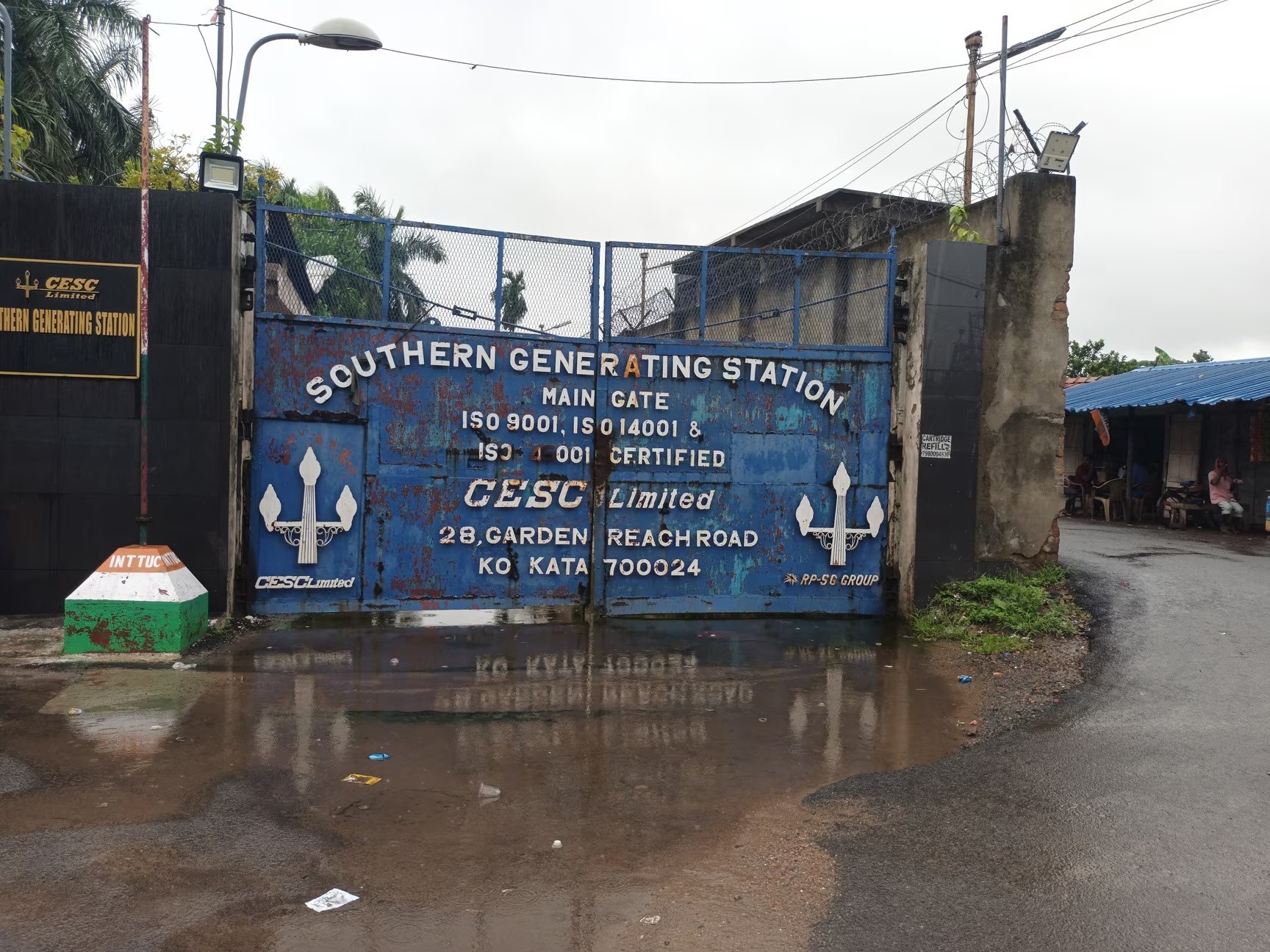
CESC Limited is a 1978-incorporated, RP-Sanjiv Goenka Group flagship that generates and distributes electricity. That’s it. No AI, no blockchain, no metaverse—just electrons moving from point A to point B in Kolkata, Noida, Rajasthan, Maharashtra, and now Chandigarh. The most unglamorous business in India right now. Also, statistically, one of the most reliable.
The regulated utility sector is a professional graveyard in Indian equities—everyone agrees it’s essential, nobody wants to own it. Regulated returns of 14-16% on equity deployed. Predictable cash flows. Modest growth rates. Multi-decade asset lives. Imagine a government job but for your portfolio: stable, boring, and somehow you’re beating 80% of the stockpickers who chase moonshots.
CESC’s Q3 FY26 results delivered headline growth numbers: +12% QoQ consolidated revenue, +11.1% 9M PAT growth YoY. Meanwhile, the stock is down 7.9% in three months because apparently, “growing power demand and renewable capacity additions” aren’t exciting enough for Dalal Street anymore. Fine. That’s the opportunity.
The company operates thermal generation capacity of 2,143 MW and distribution licenses covering 1.4M+ consumers. Capex pipeline of ₹14,800 crore for 3.2GW renewable capacity by FY29. A concall strategy that reads like a five-year plan from 1950s USSR—no fluff, all execution. And a P/E of 13.9x vs peers at 23.3x. The mispricing is not a secret. It’s just unpopular.
Concall Reality Check (Feb 2026): Management confirmed renewable projects at tariffs of ₹2.69–₹4.35/kWh. The company signed LOAs for 300MW SECI solar at ₹2.86/kWh and 180MW REMCL RTC at ₹4.35/kWh. These are institutional-grade power contracts, not pump-and-dumps. Welcome to the slow game.
03 — Business Model: WTF Do They Even Do?
They Distribute Electrons. And Generate Some. It’s Actually Genius.
CESC operates as a vertically integrated utility—a term that makes equity analysts yawn but makes CFOs sleep peacefully. Here’s the model: Generate thermal power at owned plants → Distribute through licensed areas → Generate more from renewables → Repeat. Simple, scalable, regulated.
Distribution Segment (64% of revenue): CESC holds the sole distribution license for Kolkata (567 sq km, 11.9M units sold in FY25) and Noida (335 sq km, 3.6M units in FY25). They also operate franchisee distribution in Rajasthan and Maharashtra—essentially lower-stake, delegated operations. Total customer base: 4.8M+ across six locations. The Kolkata license is the crown jewel: captive consumer base, 6.5% T&D loss (vs normative 10–12%), and 80% of power sourced from CESC-owned generation.
Generation Segment (36% of revenue): Five thermal plants totalling 2,143 MW across West Bengal, Maharashtra, and Tamil Nadu. 78% of generation is tied to Kolkata and Noida distribution licenses—meaning the company controls end-to-end economics for 1.5M+ consumers. Average PLF of 82% in FY24 vs historical 67%—meaning the plants actually run well. Haldia Energy (600MW), Dhariwal (600MW), and CESC Budge Budge (750MW) are the big three. All run under 20-25 year power purchase agreements with locked-in tariffs. Regulated returns. No surprises.
Renewables (New & Shiny): Purvah Green Power Private Limited (PGPPL) is CESC’s 10GW bet. Phase 1 target: 3.2GW by FY29. Current status: 2.0GW with PPAs/LOAs signed. Projects in pipeline across solar (3,531 acres acquired out of 8,000+), wind (484 acres acquired), and battery storage. First solar project (300MW) at Phalodi, Rajasthan is 90% complete—expected COD Q4 FY26 at a tariff of ₹2.69/kWh. That’s not speculative; that’s already financed and under construction.
Kolkata T&D Loss6.5%vs norm 10%
Gen PLF82%FY25 Avg
Captive Supply80%Kolkata
Renewables Target10GWby FY32
Regulatory Support Note: In June 2024, West Bengal Electricity Regulatory Commission (WBERC) approved Fuel and Power Price Adjustment Surcharge (FPPAS) billing for CESC’s Kolkata operations. In 1HFY26 alone, CESC recovered ₹4.1 billion through FPPAS, reducing regulatory asset (RA) buildup. This is not a one-time bump—it’s structural support for a regulated utility facing fuel cost inflation. Management now expects EBITDA (excluding RA) to improve to ₹22–23 billion annually in FY26-27.
💬 Drop a question: Do you believe renewable tariffs of ₹2.69–₹4.35/kWh can deliver 12%+ IRRs? Or is CESC overpaying for capacity?
04 — Financials Overview
Q3 FY26: The Numbers That Nobody Finds Exciting
Result type: Quarterly Results | Q3 FY26 EPS: ₹2.15 | Annualised EPS (Q3×4): ₹8.60 | 9M FY26 EPS: ₹8.19
| Metric (₹ Cr) |
Q3 FY26
Dec 2025 |
Q3 FY25
Dec 2024 |
Q2 FY26
Sep 2025 |
YoY % |
QoQ % |
| Revenue | 4,099 | 3,657 | 5,267 | +12.1% | -22.2% |
| Operating Profit | 1,036 | 1,006 | 1,217 | +3.0% | -14.9% |
| OPM % | 25% | 27% | 23% | -200 bps | +200 bps |
| PAT | 304 | 282 | 448 | +7.8% | -32.1% |
| EPS (₹) | 2.15 | 2.00 | 3.23 | +7.5% | -33.4% |
Quarterly Seasonality Alert: Q3 shows softer revenue than Q2 (₹5,267 Cr), which is normal—Q2 (Sep) captures monsoon demand, Q3 (Dec) is post-festival slump. The 12% YoY growth is what matters. At 9M level, ₹14,735 Cr revenue is up 10.4% YoY, and ₹1,159 Cr PAT is up 11.1% YoY. The annualised EPS based on Q3 (₹2.15 × 4 = ₹8.60) is below the 9M cumulative run rate (₹1,159 Cr ÷ 13.4M shares ≈ ₹8.19 for 9M). This suggests Q4 might be stronger—historically Q4 (Mar) is the best quarter for utilities (peak industrial demand + year-end billing). On a P/E basis: CMP ₹155 ÷ annualised EPS ₹8.60 = P/E 18x (screener shows 13.9x because it uses full-year EPS, not quarterly annualisation).
05 — Valuation Discussion – Fair Value Range Only
What’s This Electron Distributor Actually Worth?
Join 10,000+ investors who read this every week.