CCL Products (India) Ltd Q2 FY26 (Sep 2025) – ₹1,127 Cr Revenue, ₹7.55 EPS, 52.6% YoY Growth: When Coffee Prices Go Crazy but Margins Still Smile
1. At a Glance – Strong Coffee, Stronger Nerves
₹12,819 crore market cap. Stock at ₹960. Three-month return ~14.7%. Six-month return ~11%. Trailing EPS ₹25.33. P/E flirting around 38x while the industry median sulks at ~16x. And yet, here we are, staring at a September 2025 quarter where revenue jumped to ₹1,127 crore and PAT clocked ₹101 crore, up a spicy 36.4% YoY.
CCL Products is that rare FMCG-export hybrid that sells boring instant coffee but somehow delivers exciting quarterly numbers. Coffee prices globally have exploded from ~$1,000/tonne in the past decade to nearly ~$5,000/tonne, freight routes resemble geopolitics exam questions, and working capital has ballooned like an over-foamed cappuccino. Still, CCL managed to grow sales by 52.6% YoY in the latest quarter while maintaining an 18% operating margin.
This is not a meme stock. This is not a turnaround sob story. This is a globally integrated instant coffee manufacturer that quietly supplies private labels in 90+ countries while slowly flexing its own “Continental” brand muscles in India. The numbers say growth. The balance sheet says leverage. The valuation says “confidence bordering on caffeine overdose.” Curious? You should be.
2. Introduction – From Filter Coffee to Global Freezers
CCL Products did not start as a glamorous coffee empire. Back in 1961, it was literally a finance company with a very un-barista name: The Sahayak Finance and Investment Corporation Limited. Somewhere between South Indian filter coffee nostalgia and global FMCG ambition, the company pivoted hard.
By 1994, it became Continental Coffee Limited and entered instant coffee manufacturing. In 2002, it finally adopted the current name, CCL Products (India) Ltd, and from there, the strategy was clear: dominate private-label instant coffee globally, stay invisible to end consumers, and let global brands do the marketing drama.
Fast-forward to today. CCL operates across India, Vietnam, and Switzerland. It produces spray-dried coffee, freeze-dried coffee, agglomerated coffee, roast & ground, liquid coffee concentrates, and even decaf. Its blend library has doubled from ~500–600 blends earlier to nearly 1,000 by FY25. That’s not a menu; that’s a coffee genome database.
The company’s story is less Bollywood, more Netflix documentary. No loud acquisitions every quarter, no random unrelated diversification. Just capacity expansions, geography hopping, and relentless focus on being the cheapest and most reliable supplier to global coffee brands. The only twist? Management now wants a bigger slice of the domestic B2C pie. And that’s where things get interesting.
3. Business Model – WTF Do They Even Do?
Let’s simplify this for a smart but lazy investor.
CCL buys green coffee beans. It roasts them, extracts them, dries them (spray-dry or freeze-dry), agglomerates them, packs them, and ships them to global customers who slap their own brand on it. That’s the core export B2B business. This alone serves customers in over 90 countries.
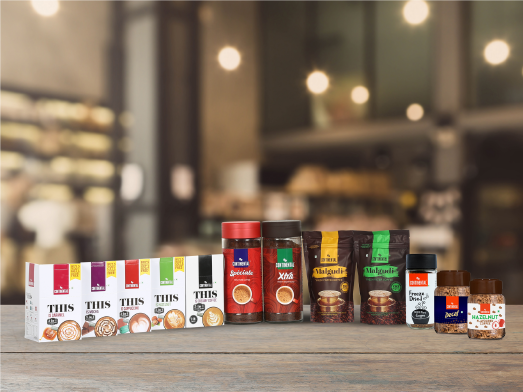
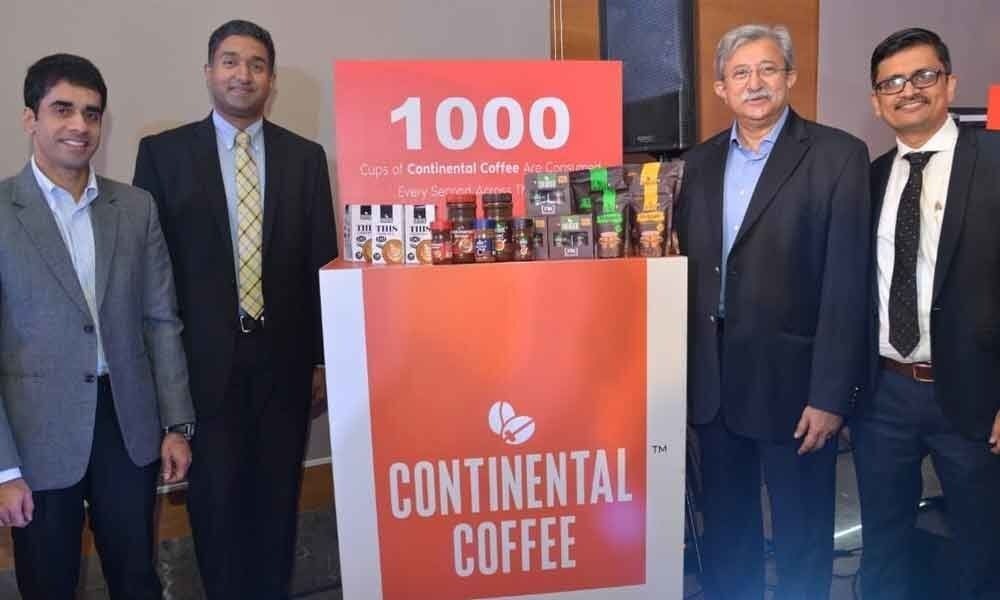
Then there’s the domestic side. Under the “Continental” brand umbrella, CCL sells instant coffee powders, premixes (3-in-1), freeze-dried premium variants, roast & ground coffee, and even vending machine solutions. Airlines like Indigo and Air Asia drink it. Hotels like Radisson, Ibis, Club Mahindra, and Sarovar serve it. Offices sip it without knowing who made it.
Manufacturing is the real moat. CCL has four factories: two in Andhra Pradesh (including India’s first freeze-dried instant coffee plant), one agglomeration and packing unit in Switzerland, and one large instant coffee plant in Vietnam’s Dak Lak province. Total installed capacity is ~35,000 metric tonnes, split between spray-dried and freeze-dried coffee.
Capacity utilisation? India runs near 100%. Vietnam runs around 65–70%. Newly commissioned FY25 capacities are still warming up at 10–15% utilisation. Translation: revenue growth runway exists without immediate massive capex.
So the business model is boring, capital-intensive, operationally complex, and globally diversified. Which is exactly why it works.
4. Financials Overview – Numbers Don’t Lie, They Just Roast
Result Type Lock: The latest reported results are Quarterly Results. EPS annualisation will follow the quarterly rule.
Quarterly Comparison Table (₹ Crore, EPS in ₹)
Metric
Latest Qtr (Sep 2025)
YoY Qtr (Sep 2024)
Prev Qtr (Jun 2025)
YoY %
QoQ %
Revenue
1,127
738
1,056
52.6%
6.7%
EBITDA
197
137
159
43.8%
23.9%
PAT
101
74
72
36.4%
40.3%
EPS (₹)
7.55
5.54
5.43
36.3%
39.0%
Annualised EPS (Quarterly × 4) = ₹30.2
Revenue growth is clearly price-led and volume-supported. EBITDA margins held near 18% despite coffee bean inflation. Interest costs are rising, but profit growth still outpaces sales growth.
Question for you: how many commodity processors show this kind of margin resilience?
DCF (Simplified): Assuming long-term EBITDA & profit CAGR of 15–20% (management guidance), heavy working capital, and stable margins, intrinsic value clusters broadly around current market levels with limited margin of safety if growth slows.
Disclaimer: This fair value range is for educational purposes only and is not investment advice.
6. What’s Cooking – News, Triggers, Drama
FY25 was all about expansion completion in Vietnam. The Ngon Coffee subsidiary finished its capacity addition, and newer capacities are still under-utilised. Translation: depreciation is front-loaded, revenues will catch up later.