1. At a Glance
Britannia Industries Ltd — India’s legendary biscuit baron — just dropped its Q2FY26 numbers, and once again, it’s giving competition a serious glucose shock. The company reported consolidated revenue of ₹4,841 crore with a net profit of ₹655 crore, a sweet 23% YoY rise. That’s a 20% Operating Profit Margin — the kind that makes even Parle hide its Krackjack behind a curtain.
At ₹5,892 a share, Britannia sits pretty with a market cap of ₹1.42 lakh crore and a P/E of 61.3. That’s right — investors are paying sixty times earnings to own a piece of Good Day magic. ROE? A jaw-dropping 52.9%, proving that this biscuit is still loaded with cream, not air.
Over the last 3 months, the stock is up 7.6%, because apparently, calories and compounding are both irresistible. The Wadia Group’s crown jewel continues to hold 50.55% promoter ownership, zero pledges, and an empire of 28 lakh outlets that reach even the last chai stall on NH44.
And just when the oven couldn’t get hotter — the board appointed Rakshit Hargave as the new CEO, effective December 15, 2025. Meanwhile, former RBI Governor Dr. Urjit Patel resigned to join the IMF. From biscuits to Bretton Woods — truly, Britannia has range.
2. Introduction
If India had a national biscuit, it would probably be Britannia’s Good Day — the official snack of awkward family visits and endless train rides. For over a century, Britannia Industries has fed generations with glucose, butter, sugar, and nostalgia — while quietly turning those crumbs into profits big enough to buy an actual bakery on Mars.
Founded in 1892 (yes, when Britishers still ran the railways and biscuit tins), Britannia has seen seven different owners, including a mysterious London investor before landing with the Wadias — the family that turned dough into dynasties.
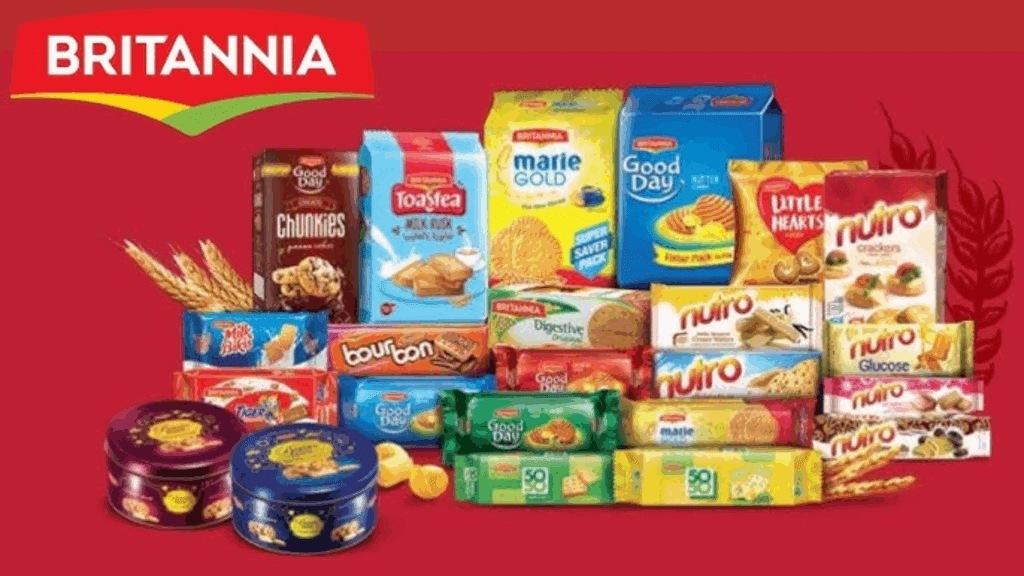
Today, Britannia rules with an 80% revenue share from biscuits — think Tiger, Marie Gold, Milk Bikis, NutriChoice, and Good Day, each brand with its own cult following. The company’s ₹18,488 crore annual sales empire stretches from Mumbai to Muscat, with biscuit dominance in India and a top-two position in UAE.
Despite competitors like Nestlé and Bikaji throwing their best snack punches, Britannia’s blend of premiumization, cost control, and nostalgia marketing keeps it at the top shelf — both in stores and in investor portfolios. And now, with its Ranjangaon dairy plant going full throttle, it’s not just about biscuits anymore; it’s about owning the chai-time ritual.
But here’s the real kicker: with an ROE north of 50%, this company converts nostalgia into net profit better than most FMCG majors convert milk into curd. Let’s decode the recipe that makes Britannia’s dough rise so consistently.
3. Business Model – WTF Do They Even Do?
Imagine a company that makes everyone from toddlers to CEOs snack at 4 PM — that’s Britannia.
Their core business is biscuits (about 80% of revenues). These range from glucose hits like Tiger, to premium cookies like Good Day, to the “I’m healthy, but not really” NutriChoice line.
Then comes bread — with 13 factories and 4 franchisees baking over 1 million loaves a day, delivering to 100+ cities. It’s a ₹450 crore business in itself. If you’ve ever made a midnight toast, odds are Britannia supplied it.
The dairy division, though just 5% of revenue, is Britannia’s most exciting toddler. Products like cheese, milk beverages, and yoghurt are riding a 300% growth wave, with plans for 5 new facilities. The Ranjangaon plant in Maharashtra is now fully commercial, sourcing milk directly from