1. At a Glance
Welcome to the curious case of Borosil Scientific Ltd (BSL) — the company that has been in the business of heating things in test tubes since before your parents met in chemistry class. Spun off from Borosil Ltd in FY24, this is the geeky child of the Borosil Group, armed with 4,000+ SKUs, 4 manufacturing plants, and a 4000+ strong SKU army that sells to over 90 countries.
As of November 6, 2025, the stock closed at ₹132, giving it a market cap of ₹1,180 crore — roughly the price of one overpriced Gurgaon commercial tower or 12 PhDs’ lifetime stipends.
The latest quarter wasn’t the best lab experiment: Revenue came in at ₹106.9 crore (up 3.8% YoY), but PAT plunged 67% YoY to ₹2.84 crore. That’s like heating your beaker expecting gold and ending up with warm water.
With a P/E of 65.1x, ROE of 6.9%, and ROCE of 10.3%, Borosil Scientific looks like that overachieving student who’s great in theory but trips over the Bunsen burner during practicals.
Still, it’s almost debt-free (Debt: ₹8.86 crore; D/E: 0.02), making it financially sound enough to survive multiple lab explosions.
Ready to dissect the numbers like a biology lab frog? Let’s go.
2. Introduction
Borosil Scientific is the nerd cousin in the Borosil family — the one that didn’t go into solar panels or kitchenware fame but stayed true to glass beakers and graduated cylinders. After all, someone has to provide the test tubes for all those biotech unicorns that never make profits.
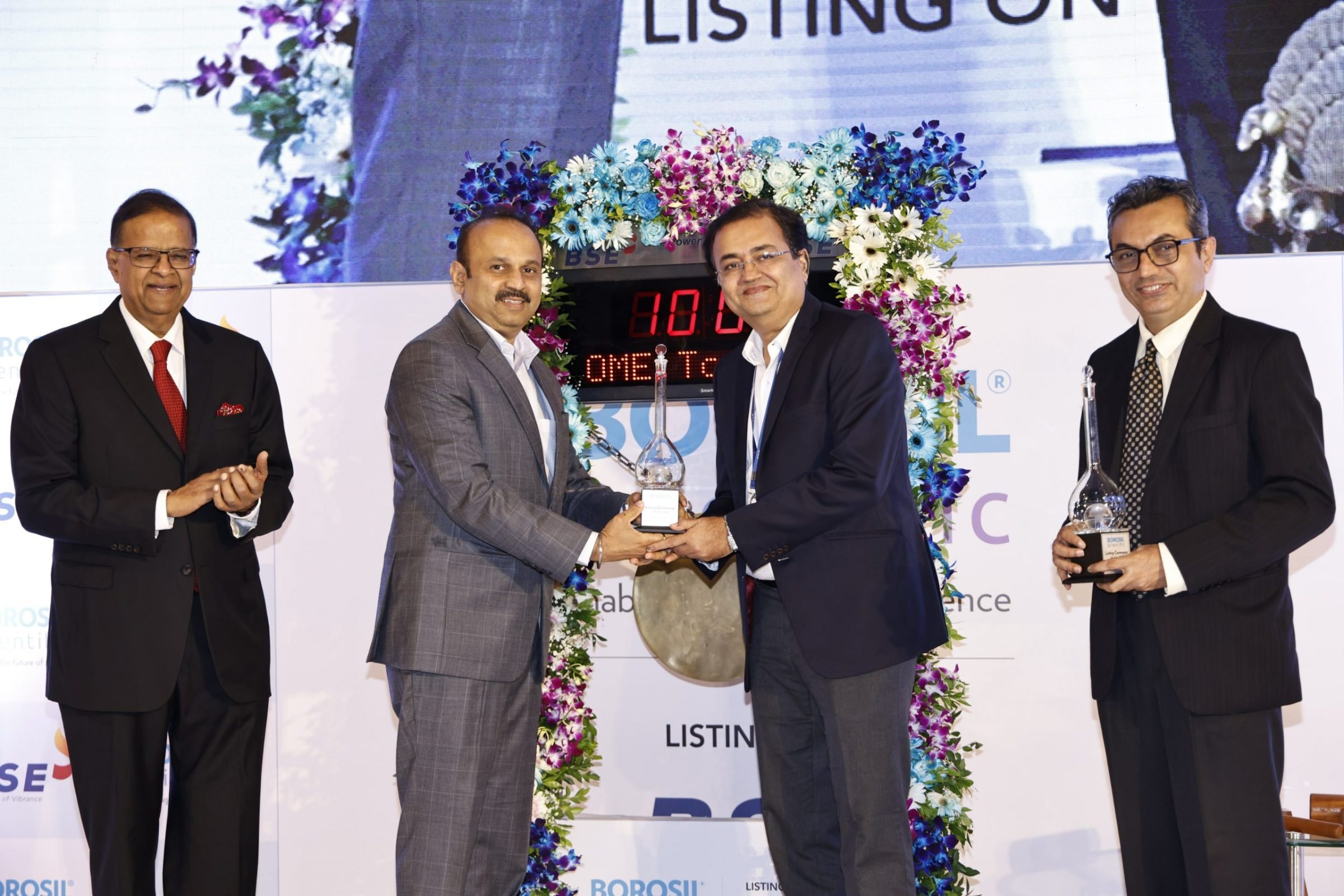
Demerged and listed in June 2024, this company is India’s largest manufacturer of laboratory glassware and one of the country’s leading producers of pharma vials and ampoules. If it holds chemicals, Borosil probably made it.
But don’t confuse this with its better-known sibling, Borosil Ltd, which makes the kitchen jars your mom keeps sugar in. Borosil Scientific caters to labs, pharma companies, and research institutions — basically, the people figuring out how to make better painkillers or more dangerous energy drinks.
With pharma clients forming 61% of revenue, schools and universities taking 13%, and government research institutions 14%, this company is literally “the glass behind science.” The remaining 12%? Probably people like us who break glassware at home and pretend we’re scientists.
In Q2FY26, BSL had a rare “oops” moment with an exceptional loss of ₹6.61 crore from a VRS (Voluntary Retirement Scheme). Because apparently, even lab glassmakers need a break. The result? A muted PAT — not surprising when your cost-cutting includes, well, paying people to leave.
3. Business Model – WTF Do They Even Do?
Imagine a business that sells glass vials to pharma companies, beakers to labs, and borosilicate serveware to fancy cafes. That’s Borosil Scientific.
Their empire stands on two pillars:
A) Scientific Segment (65% of Q1FY25 revenue)
This is their bread, butter, and burette. It covers:
- Lab Glassware: From conical flasks to quartzware. They even added filter paper products, because why not?
- Lab Equipment: Sold under the LabQuest brand — includes stirs, water baths, mixers, bottle-top dispensers, and nitrogen estimation systems (for that one scientist who still prefers nitrogen jokes).
- Process Systems: After acquiring Goel Scientific, Borosil entered the chemical process equipment space — reactors, lab automation systems, and industrial setups.
B) Glassware Segment (35% of Q1FY25 revenue)