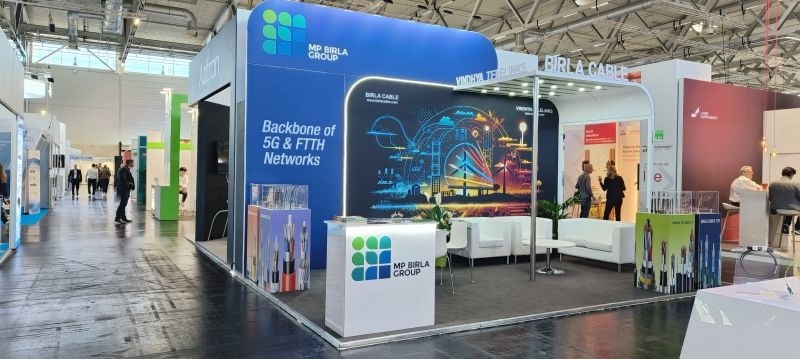
Birla Cable Ltd Q2/H1 FY26 – The Optical Fibre Show That Lost Its Spark: Margins Choked, PAT Collapsed 65%, Yet the Birlas Keep Smiling Through the Cable Maze
1. At a Glance
Ladies and gentlemen, welcome to the electrifyingly non-electric world of Birla Cable Ltd (BCL) — a ₹444 crore market cap member of the mighty M.P. Birla family that seems to have accidentally plugged itself into a low-voltage socket this quarter. The company, trading at ₹148 per share (down 31% YoY), flaunts a stock P/E of 88.2x, an ROE of just 1.98%, and an OPM that’s slipped to 4.1%, proving once again that not every wire in the cable universe conducts profits.
In Q2 FY26, sales stood at ₹176 crore, down 3.1% QoQ, while PAT nosedived 65.5% to just ₹0.69 crore — the corporate equivalent of sending a WhatsApp voice note when everyone expected a 4K video. With a ROCE of 5.14%, debt of ₹112 crore, and a debt-to-equity ratio of 0.41, the company’s balance sheet looks balanced mainly because both sides are equally tired.
Still, the Birla Cable saga continues — with new capacity additions, European anti-dumping drama, and a proud Rewa-based plant that keeps spinning 36 lakh fibre kilometres per year like a marathoner running on electrolytes and optimism.
2. Introduction
Birla Cable’s story reads like a Bollywood remake of “Fibre Wars: The Return of Copper.” Born in 1992, this MP Birla Group company has grown from a simple cable maker to a multi-format manufacturer dealing in everything from optical fibre and structured LAN cables to telecom accessories and copper wires.
But here’s the twist — even as the world binge-watches Netflix on fibre broadband, Birla Cable’s growth story seems to be buffering endlessly. Its sales growth over the past 3 years is just 7.3%, while profit growth has fallen by nearly 39%. Imagine trying to stream profits on a 1 Mbps connection.
To be fair, the company has made efforts — capital expenditures, new product lines, and a focus on exports (which make up 28% of revenue). Yet, despite these buzzwords, BCL’s profitability graph looks like a sagging ethernet cable.
Why? Because while optical fibre demand is booming globally, intense competition, pricing pressures, and geopolitical trade issues (like the EU’s 8.3% anti-dumping duty slapped in June 2025) have left even seasoned players like BCL gasping for signal strength.
Still, Birla Cable soldiers on — expanding its LAN Ethernet capacity by 10,000 boxes per month, acquiring 1.5 MW of green energy capacity, and extending corporate guarantees to its larger cousin Vindhya Telelinks Ltd worth ₹600 crore. Who needs thrillers when Indian corporate families write scripts like these?
3. Business Model – WTF Do They Even Do?
If you ever wondered who makes the invisible arteries that carry India’s digital blood (read: broadband data), Birla Cable is one of them — though currently more a nervous capillary than a throbbing artery.
At its core, BCL makes and sells:
Fibre Optic Cables – For telecom networks, broadband, and FTTX installations. Variants include Aerial, Underground Duct, Microduct, and Micromodule.
Telecom Accessories – From Connectors and Pigtails to Joint Closures, basically everything your JioFiber technician can misplace.
Structured Copper Cables – CAT 5E to CAT 7, ensuring old-school LAN networks don’t feel left out.
Cable Accessories – Patch cords, keystones, patch panels — basically the LEGO set for telecom engineers.
Their plant at Rewa (Madhya Pradesh) produces an impressive 36 lakh fibre km annually, and they even have a subsidiary in Dubai (Birla Cable Infrasolutions DMCC) for international trading.
In short, they sell the cables, the accessories, and sometimes, the patience to handle telecom orders.
But let’s be honest — in an industry dominated by Sterlite Technologies, Tejas Networks, and foreign behemoths, Birla Cable is like that dependable regional player who shows up on time but never tops the scoreboard.