1. At a Glance
Bharat Seats Limited (BSL) is currently operating at a scale that is impossible to ignore, and the latest financial disclosure for the year ending March 31, 2026, proves exactly why. While many auto component players are struggling with margin pressures, BSL has just reported a staggering ₹574 crore in quarterly sales, marking a 46.2% YoY growth. This isn’t just a minor uptick; it is a full-blown structural shift in the company’s revenue profile.
However, where there is rapid growth, there is often a trail of financial complexity. The company is walking a tightrope between aggressive expansion and tax-related headwinds. An income tax search from a previous year still hangs over the books like a dark cloud, with demand orders amounting to ₹22.4 crore plus penalties being contested. While the management is putting on a brave face and appealing these demands, the “Emphasis of Matter” in the auditor’s report serves as a stark reminder that regulatory risks are very real here.
The numbers gaining investor attention are hard to miss:
- TTM Sales Growth: 51%
- TTM Profit Growth: 33%
- Latest Quarter PAT: ₹13.2 crore
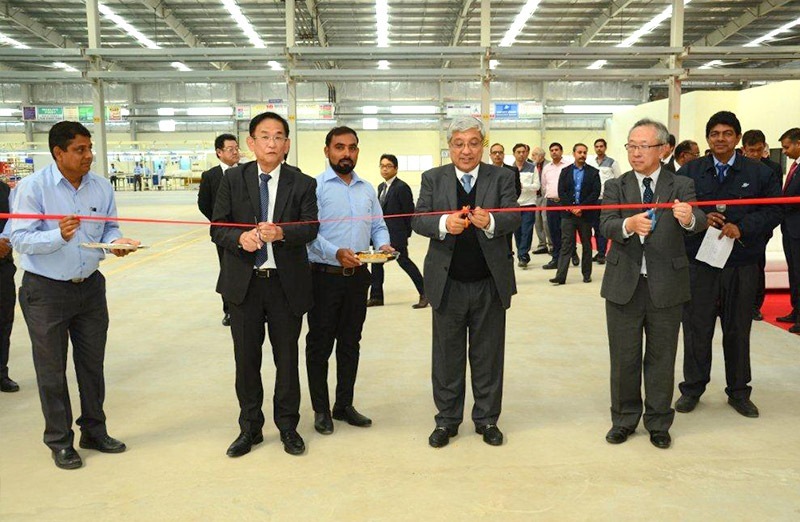
The company has just greenlit a fresh ₹86.61 crore capex for new programs with Maruti Suzuki. This follows a high-intensity year where they already operationalized a new plant in Kharkhoda. They are essentially doubling down on their relationship with the Suzuki group, which already accounts for over 85-90% of their revenue. Is this deep integration a golden ticket or a dangerous level of client concentration?
2. Introduction
Bharat Seats Ltd is not your average auto parts manufacturer. Born in 1986, it is a specialized Joint Venture that brings together heavyweights: Suzuki Motor Corporation (Japan), Maruti Suzuki India Ltd (MSIL), and the Relan Family. This triple-threat ownership structure gives BSL a “moat” that is difficult for competitors to breach.
The company’s primary playground is the manufacturing of complete seating systems, carpets, NVH (Noise, Vibration, and Harshness) components, and body sealing parts. If you are sitting in a Maruti car or riding a Suzuki motorcycle in India, there is a very high probability that Bharat Seats is literally supporting you.
In the last 12 months, the stock has delivered a 122% return, far outperforming the broader automotive indices. This rally has been fueled by the company’s transition from a steady-state supplier to an aggressive growth engine. With the recent commencement of 2W wheel assembly and new seating models for upcoming MSIL vehicles, the revenue streams are diversifying, even if the client list remains concentrated.
The latest results show a company that is finally utilizing its balance sheet to capture a larger share of the Indian automotive boom. However, with a current ratio of 0.88, liquidity is tight. They are spending heavily on the future, betting that the volume growth from Maruti Suzuki will keep the cash registers ringing.
3. Business Model – WTF Do They Even Do?
To put it simply: Bharat Seats makes the stuff that makes a vehicle comfortable and quiet. They aren’t under the hood dealing with greasy engines; they are in the cabin.
The Product Portfolio
- Seating Systems: Their bread and butter, accounting for roughly 89% of revenue. This includes seats for 4-wheelers, 2-wheelers, and even Indian Railways.
- NVH & Interior: Carpets and sound-deadening components that stop your car from sounding like a tin box.
- Body Sealing: Windshield moldings and extrusions to keep the rain out.
- Metal Range: Frames for two-wheeler seats.
The “Special” Relationship
The business model is essentially built on being an extension of the Maruti Suzuki production line. They are one of only two suppliers for MSIL car seats and the sole supplier for several key models.
This model is high-volume but carries a “golden cage” risk. They don’t have to spend much on marketing or finding new customers because their order book is virtually guaranteed by their promoters. The downside? Their margins are effectively capped by their customers, who also happen to be