At a Glance
The heavy-duty giant of the Kalyani Group is currently navigating a high-stakes transition that should keep every serious investor on their toes. While the headline revenue of ₹16,812 crore suggests a steady ship, the underlying currents are turbulent. Bharat Forge is aggressively pivoting away from its traditional automotive roots, and the numbers tell a story of both incredible promise and glaring inefficiencies.
The company is sitting on a massive ₹10,961 crore defense order book, a figure that would have been unthinkable for a private Indian player a decade ago. This isn’t just “growth”—it is a structural re-rating of what Bharat Forge actually is. However, the path to glory is littered with landmines. The company just took a brutal ₹450 crore impairment on its e-mobility division (KPTL), essentially admitting that its previous strategy for electric vehicles hit a dead end.
While the Indian operations are firing on most cylinders, the overseas subsidiaries remain a drag. Despite management’s repeated promises of a “turnaround,” the US and European manufacturing units are barely gasping for air with modest operating profits. The European steel business is under a “restructuring” phase that won’t conclude until 2027, which is code for a long, painful wind-down.
Investors are looking at a dual-speed machine: a high-octane defense and aerospace business in India versus a struggling, low-margin forging business in the West. With a Stock P/E of 82.3, the market is pricing in a perfection that the consolidated balance sheet hasn’t fully delivered yet. The bridge between the current automotive cyclicality and the future high-margin industrial powerhouse is under construction, and the tolls are getting expensive.
Introduction
Bharat Forge is no longer just a “forging company.” It is a multi-sector industrial conglomerate with deep roots in automotive, defense, aerospace, and energy. As the flagship of the USD 3 Billion Kalyani Group, it holds the title of India’s largest manufacturer and exporter of auto components. But the real story in 2026 is its metamorphosis into a critical defense supplier for both India and the world.
The company operates through 15 manufacturing locations across the globe, including Sweden, Germany, France, and North America. This “dual-shore” strategy was designed to put them close to global OEMs like Mercedes, Volvo, and Scania. However, this global footprint has become a double-edged sword. While it provides market access, it also exposes the company to high energy costs in Europe and shifting trade tariffs in the US.
In the domestic market, Bharat Forge is a dominant force. From crankshafts to front axle assemblies, if it’s a heavy commercial vehicle in India, there’s a high probability Bharat Forge made a critical part of it. Recently, they’ve expanded into industrial castings by acquiring JS Auto Cast and ventured into the axle business through K-Drive Mobility.
The management, led by B.N. Kalyani, is now pushing the envelope in high-tech manufacturing. They have established AI-driven digital centers and are co-developing next-gen artillery platforms with US-based partners. The transformation is bold, but it requires massive capital and flawless execution.
Business Model – WTF Do They Even Do?
If you thought Bharat Forge just hammered hot steel into shapes, you’re living in the 1990s. Today, they are essentially a high-end engineering supermarket for anything that requires extreme durability and precision.
1. The Automotive Muscle (The Cash Cow)
They make the “bones” and “heart” of trucks and cars. This includes crankshafts, front axles, and transmission parts. They are a Tier-1 supplier to global giants. If the world stops moving goods by road, this segment dies. Fortunately for them, that’s not happening, though the shift to Electric Vehicles (EVs) is a lurking threat that they are trying—and sometimes failing—to master.
2. Defense & Aerospace (The Glory Child)
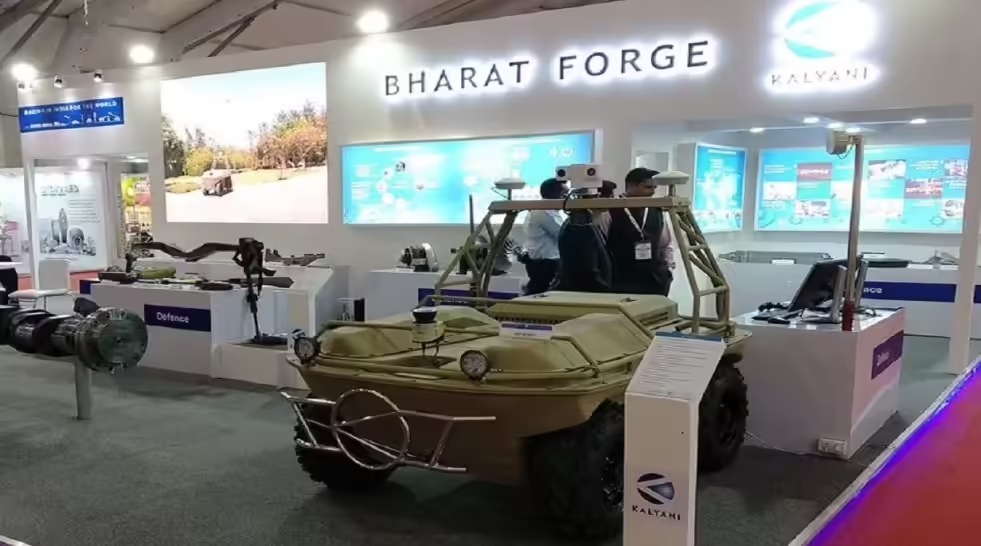
This is where the “Badass” factor lives. Through Kalyani Strategic Systems (KSSL), they build artillery guns (like the ATAGS), protected vehicles, and ammunition. They aren’t just assembling; they are designing. In Aerospace, they supply structural and landing gear components. These are high-margin, long-gestation businesses that