Section 1 — At a Glance
A massive operational divergence has emerged at Belding India Ltd (formerly Synthiko Foils Ltd). For the financial year ended March 31, 2026, headline figures present a corporate structure in the middle of an aggressive structural transformation. The core operating business has ground to a near-total standstill, with reported annual sales plunging to just ₹0.03 crore, down from ₹21.16 crore in the previous fiscal year. Yet, the stock price closed on May 29, 2026, at ₹1,599.30, giving the company an aggregate market capitalization of ₹2,315.60 crore.
This multi-thousand-crore valuation is entirely detached from the legacy aluminum packaging business. On December 24, 2025, the company executed a massive preferential share-swap allotment of 1.36 crore shares valued at ₹769.16 per share, aggregating to ₹1,046.74 crore, to acquire 100% of an entity called DC&T Global. This transaction instantly expanded the equity capital from ₹0.87 crore to ₹14.48 crore and ballooned reserves to ₹1,034.88 crore.
While the legacy manufacturing assets generated a deep operating loss, a sudden surge of ₹8.22 crore in other income kept the reported profit before tax positive at ₹4.05 crore, though an extreme tax provision of ₹7.59 crore ultimately drug net profit down to negative ₹3.55 crore. Meanwhile, raw working capital indicators have blown out completely, with debtor days ballooning to an astronomical 41,853 days. When asset bases grow exponentially through corporate actions while core operating sales simultaneously collapse, financial statements require a forensic separation of corporate engineering from commercial execution. The critical question is whether this newly acquired corporate shell can generate operating cash flows that justify its multi-billion rupee premium valuation.
Section 2 — Introduction
Welcome to the corporate theatre of Belding India Ltd. If you took a nap at the end of FY25 and woke up today, you would not recognize the place. Founded back in 1995 under the name Synthiko Foils Ltd, this outfit spent nearly three decades in the steady, unglamorous trade of manufacturing, printing, and coating aluminum foils. It was a quiet existence built on food-grade packaging and modest regional supply chains.
Then came FY26, and management decided that manufacturing foil wasn’t quite dramatic enough. In a rapid-fire sequence of board meetings, they changed the company’s name, reshuffled the executive deck, approved a brand-new fair disclosure code, and pivoted into an entirely different universe by absorbing an expansive cross-border entity. The foil business was packed up and moved out, leaving behind a highly capitalised public shell that is now drawing immense interest from specialized investment funds. It is no longer an industrial micro-cap; it is an ambitious financial vehicle designed for something far larger.
Section 3 — Business Model: WTF Do They Even Do?
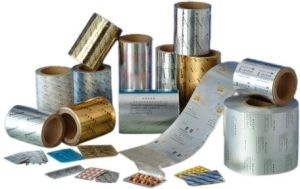
Historically, the answer to this section’s title was simple: they wrapped your medicine tablets and chocolate bars. The legacy product profile includes Alu Alu foils, blister foils, lidding laminates, and printed packaging solutions distributed across the pharmaceutical, dairy, and confectionery sectors. They sourced basic metal slabs from authorized vendors, rolled them down to micron thicknesses, and printed corporate logos on them.
In FY26, however, production volumes dropped off a cliff. The industrial sheds that once hummed to churn out 576 metric tonnes of aluminum products in FY25 spent the last twelve months practically silent. Management explicitly transferred away the core foil operations during the year.
Today, Belding India is effectively a corporate holding chassis. Through its massive ₹1,046.74 crore share-swap acquisition of DC&T Global, the company has added international consulting, logistics, and newly minted defense subsidiaries like DC&T Defence into its portfolio mix. They have traded aluminum rolling mills for global corporate infrastructure and strategic defense supply capabilities.
Section 4 — Financials Overview